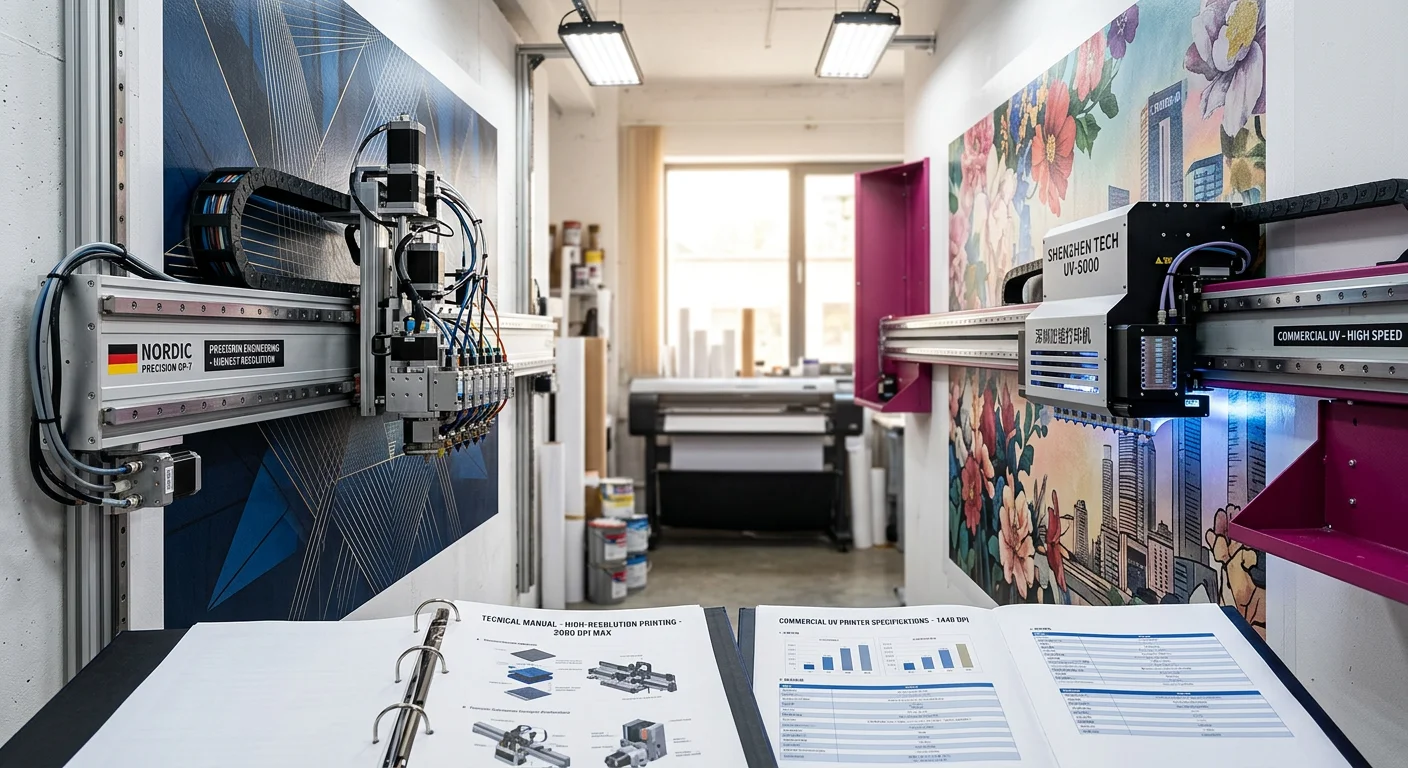
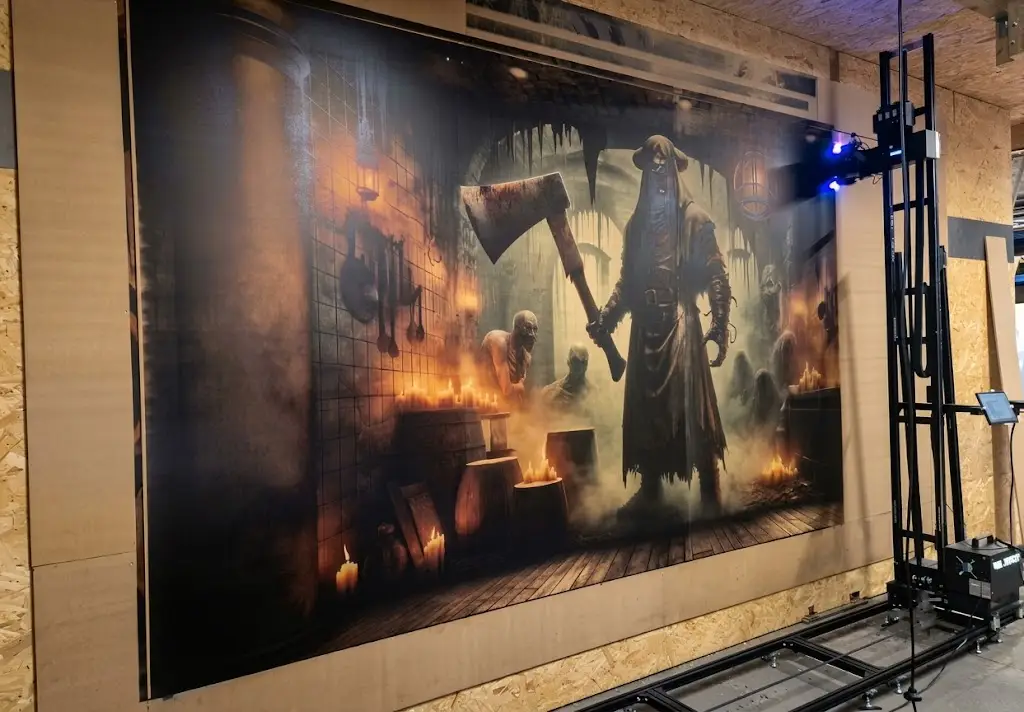
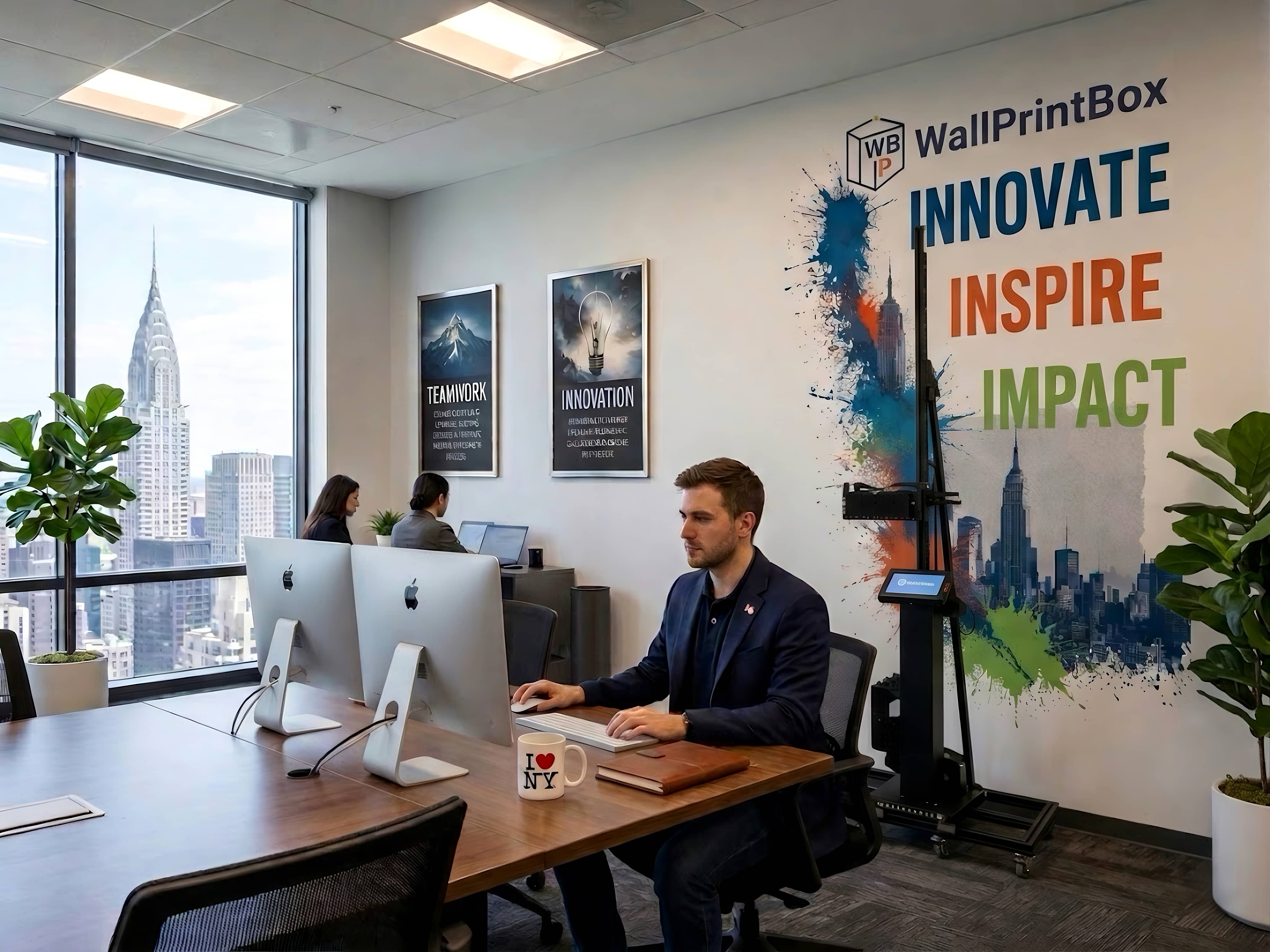
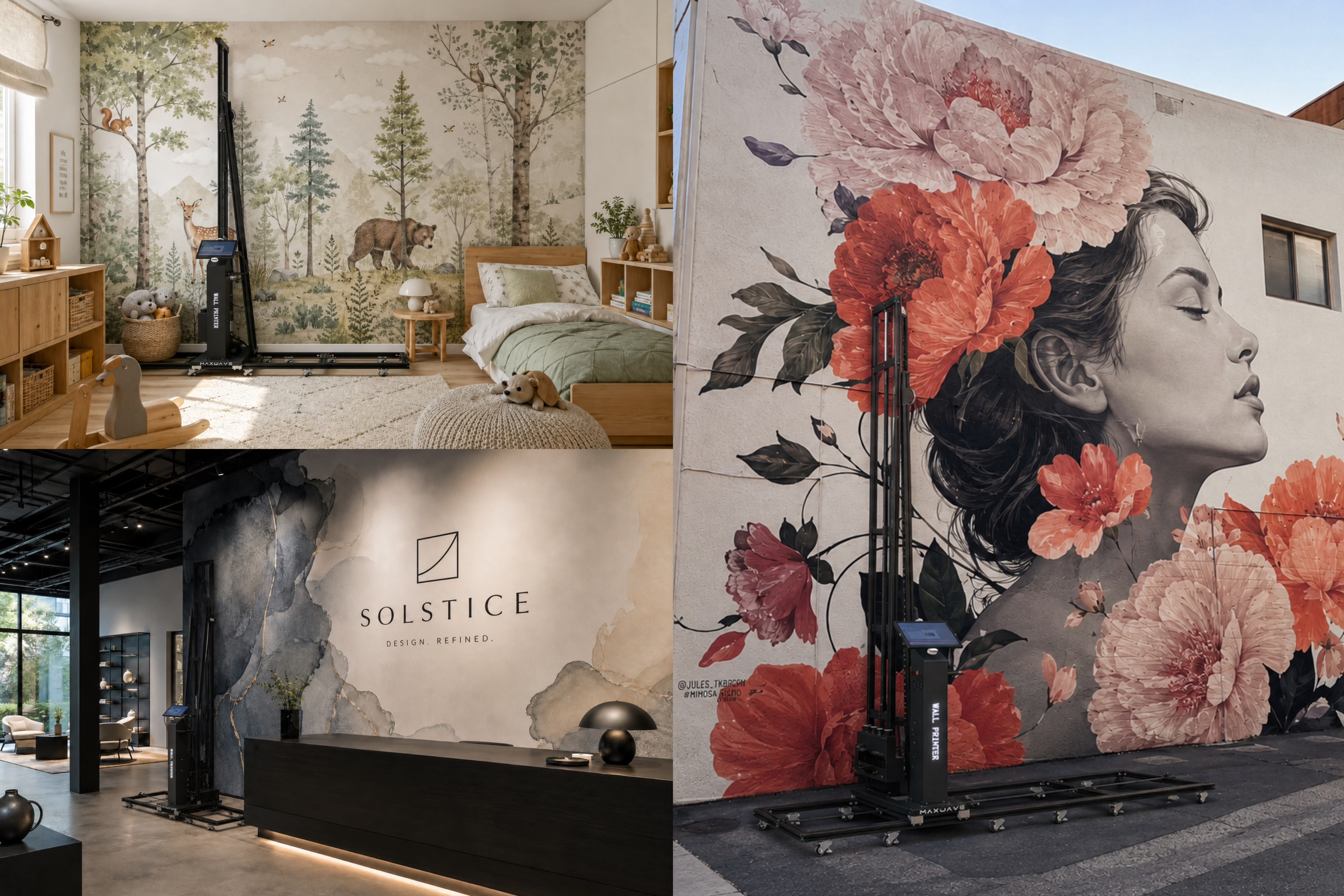
Choosing a wall printer is not simply about comparing prices or technical specifications.
Different wall printers are designed for different applications. A machine that works perfectly for indoor home murals may not be suitable for outdoor concrete walls, while an industrial printer may be unnecessary for a small startup business.
The main differences between wall printers come from:
Ink technology
Printing surface compatibility
Indoor or outdoor applications
Business scale and production requirements
Before choosing a wall printer, it is important to understand the main types available and which projects each type is designed for.
Quick Comparison Of Different Types Of Wall Printers
Wall Printer Type | Best For | Suitable Surfaces | Key Advantage | Recommended Users |
|---|---|---|---|---|
UV Wall Printer | Residential, commercial & outdoor murals | Walls, concrete, glass, wood, metal | Most versatile, CMYK+White printing | Businesses needing multiple applications |
Water-Based Wall Printer | Indoor murals | Painted walls, drywall, plaster | Low cost, low odor | Startups & home decoration businesses |
Latex Wall Printer | Commercial indoor projects | Interior walls & panels | Durable, low odor printing | Hotels, offices, retail spaces |
Eco-Solvent Wall Printer | Outdoor advertising | Brick, concrete, stone | Strong adhesion & outdoor durability | Outdoor mural businesses |
Portable Wall Printer | Mobile printing services | Various surfaces | Easy transport and flexible operation | Startups & mobile operators |
Industrial Wall Printer | Large-scale projects | Large walls & production sites | Higher productivity and stability | Commercial printing companies |
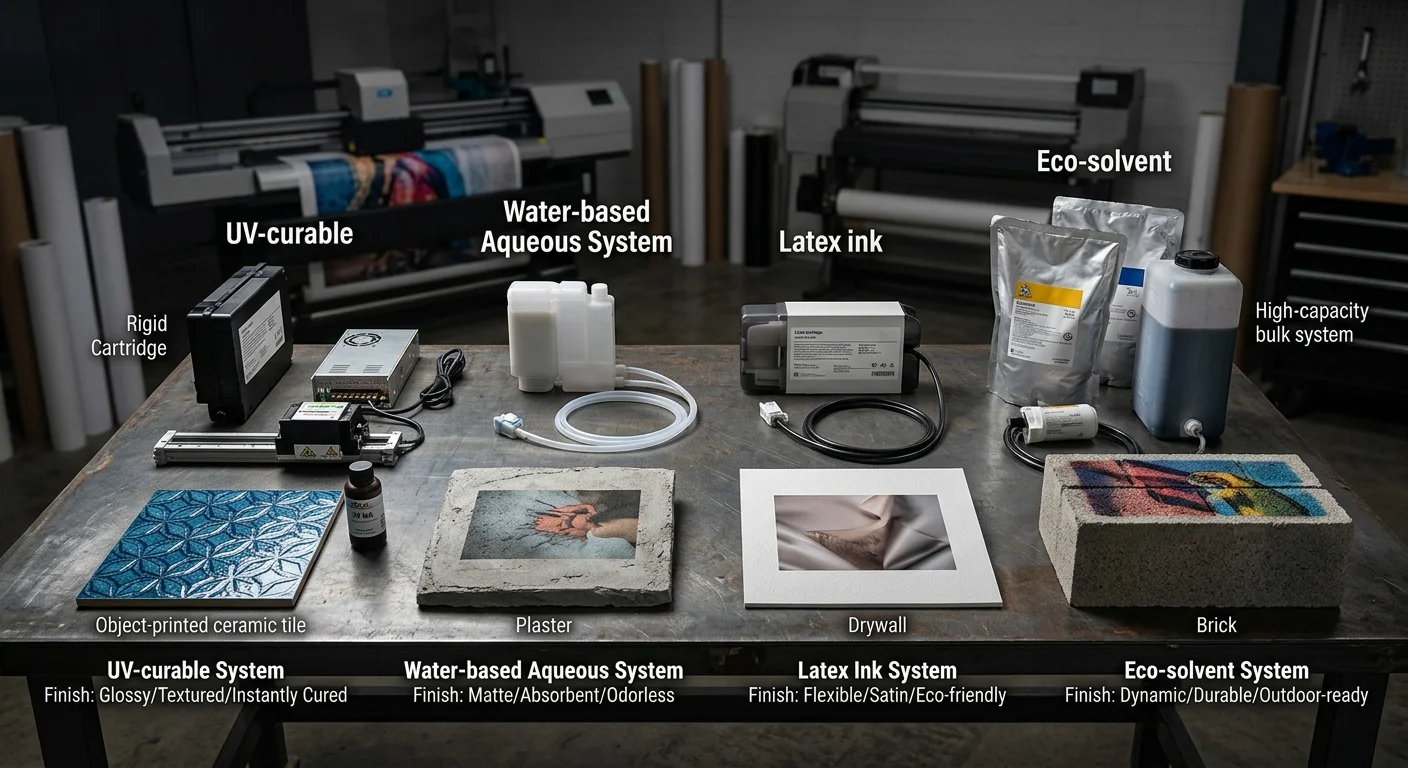
1. UV Wall Printer: The Best Choice For Flexible Business Applications
UV wall printers are currently one of the most popular choices for professional wall printing businesses because they offer the widest application range.
Unlike water-based inks that rely on absorption, UV ink is cured instantly by UV light and forms a durable layer on the surface. This allows UV wall printers to print on many different materials, including:
Painted walls
Concrete
Brick
Wood
Glass
Metal
Ceramic tile
The biggest advantage of UV wall printers is flexibility.
A commercial project may require printing on different surfaces within the same location. For example, a restaurant may need a painted feature wall, a glass logo wall, and a decorative wood panel. A UV wall printer can handle these applications with the same machine.
Most professional UV wall printers support CMYK + White ink, which is especially important for dark surfaces. Without white ink, colors printed on black walls, glass, or metal may appear less vibrant because the background affects color performance.
Why Businesses Choose UV Wall Printers
UV wall printers are commonly used for:
Residential murals
Retail decoration
Restaurants and cafés
Hotel interiors
Corporate branding walls
Outdoor murals
Their main advantages include:
Wide material compatibility
UV printers can handle more surfaces than most other ink technologies.
Outdoor durability
UV-cured ink provides better resistance against sunlight, moisture, and surface wear compared with basic indoor printing systems.
Higher business flexibility
One machine can support multiple project types instead of limiting the business to only residential or only indoor applications.
Limitations Of UV Wall Printers
UV technology also has some considerations:
Higher initial investment
Higher ink cost compared with basic water-based systems
Requires regular maintenance for long-term reliability
However, for businesses that want to accept different types of projects, a UV wall printer is often the most versatile long-term investment.
2. Water-Based Wall Printer: The Entry Choice For Indoor Murals
Water-based wall printers are designed mainly for indoor applications where low odor and cost control are important.
These systems use water-based pigment or dye ink, which works by absorbing into suitable wall surfaces. They perform best on:
Latex-painted walls
Drywall
Plastered walls
Prepared interior surfaces
The biggest advantage of water-based wall printers is their simplicity.
They are commonly used for:
Home decoration
Children's rooms
Schools
Offices
Personalized artwork
For many residential projects, customers care more about image quality, safety, and clean installation than maximum production speed.
A typical home wall mural project may only involve one or two walls, meaning a lower-cost machine with reliable indoor performance can already support a profitable service.
Why Businesses Choose Water-Based Wall Printers
Water-based systems are attractive for beginners because:
Equipment cost is usually lower
Ink cost is more affordable
Operation is relatively simple
They are suitable for occupied indoor spaces
Limitations Of Water-Based Wall Printers
The biggest limitation is surface compatibility.
They are generally not suitable for:
Glass
Metal
Outdoor concrete
Unprepared rough surfaces
If your business mainly focuses on indoor residential murals, a water-based wall printer can be a practical starting point.
However, businesses planning to expand into commercial decoration or outdoor projects may eventually need a more flexible solution.
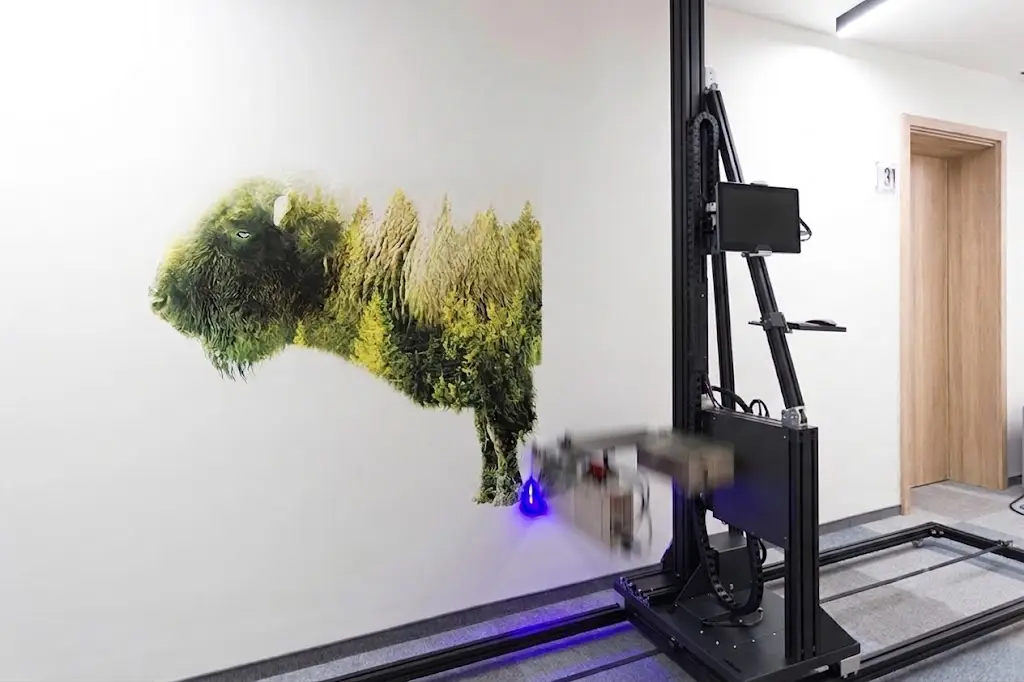
3. Latex Wall Printer: A Professional Solution For Commercial Interiors
Commercial wall printer use water-based latex ink technology but create a more durable printed layer through heat curing.
They are often selected by businesses that need reliable indoor performance in professional environments.
Typical applications include:
Hotels
Office buildings
Retail stores
Exhibition spaces
Commercial branding projects
Why Businesses Choose Latex Wall Printers
Latex technology offers several advantages:
Low odor operation
This makes it suitable for commercial environments where people may still be working during installation.
Good durability
Latex prints provide better resistance against scratches and daily wear compared with basic water-based systems.
Professional indoor applications
Latex is often chosen when businesses need consistent results for commercial spaces.
Limitations Of Latex Wall Printers
Latex systems usually require more complex equipment because the ink needs controlled heating during curing.
They are also generally less flexible than UV printers when printing on materials such as glass, metal, or outdoor surfaces.
For companies focused mainly on professional indoor projects, latex wall printers can provide a good balance between quality, durability, and working environment requirements.
4. Eco-Solvent Wall Printer: Designed For Outdoor And Rough Surfaces
Eco-solvent wall printers are mainly used for applications where strong adhesion and outdoor durability are important.
Unlike water-based systems, eco-solvent ink contains solvent components that help the ink bond with surface textures.
This makes it suitable for:
Brick walls
Concrete surfaces
Stone
Outdoor advertising walls
Why Businesses Choose Eco-Solvent Wall Printers
Eco-solvent systems are useful for:
Outdoor murals
Building decoration
Industrial markings
Exterior advertising projects
Their biggest advantage is strong adhesion on challenging outdoor surfaces.
Limitations Of Eco-Solvent Wall Printers
The main limitation is the working environment.
Because solvent-based inks produce stronger odors, proper ventilation is required.
They are generally not recommended for:
Homes
Schools
Healthcare environments
For businesses focused mainly on outdoor advertising and exterior projects, eco-solvent technology can be a suitable option.
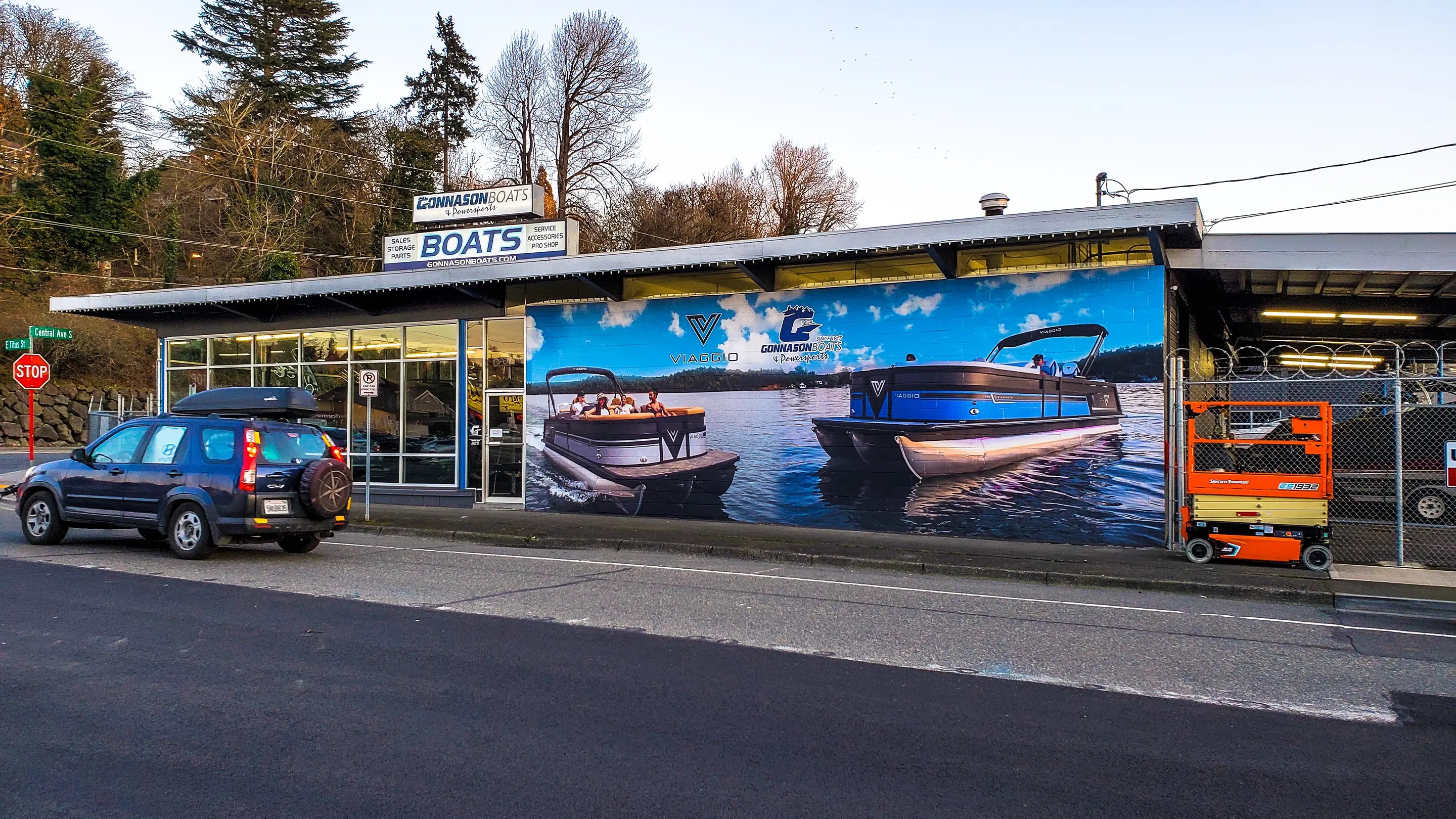
5. Portable Wall Printer vs Industrial Wall Printer
Besides ink technology, wall printers can also be classified by machine structure.
The right choice depends on how your business operates.
Portable Wall Printer: Best For Startups And Mobile Businesses
Portable wall printers are designed for businesses that need flexibility.
They are commonly used by:
Startup entrepreneurs
Interior designers
Small decoration companies
Mobile printing services
Their advantages include:
Easy transportation
Faster installation
Lower investment
Ability to work at customer locations
For entrepreneurs entering the wall printing market, portability can reduce operating costs because there is no need for a dedicated production facility.
Solutions such as WallPrintBox are designed around this business model, helping operators move from purchasing equipment to building a practical wall printing service.
Industrial Wall Printer: Best For Large Commercial Projects
Industrial wall printers are designed for businesses with higher production requirements.
They are suitable for:
Large commercial murals
Advertising projects
Corporate installations
High-volume printing services
Their advantages include:
Higher productivity
Better stability
More automation
Ability to handle larger workloads
The higher investment makes sense when a company already has stable customer demand and needs equipment for continuous operation.
How To Choose The Right Type Of Wall Printer?
The right wall printer machine depends on three factors: your main applications, printing surfaces, and expected workload.
Generally:
Residential murals: Water-based wall printers are suitable for simple indoor projects, while UV wall printers provide more flexibility for businesses that want to handle different materials.
Commercial projects: UV and latex wall printers are better choices when durability, consistency, and professional results are required.
Outdoor printing: UV and eco-solvent wall printers are more suitable because they offer better adhesion and environmental resistance.
Before purchasing, consider:
What surfaces will you mainly print on?
Are your projects indoor, outdoor, or both?
How much printing volume do you expect?
Do you need a portable or industrial solution?
Does the supplier provide reliable support after purchase?
Choosing the right printer category before comparing brands will help you avoid unnecessary costs and select a machine that matches your business needs.
Conclusion
Wall printers are not designed for the same applications, and the best choice depends on how you plan to use the machine.
UV wall printers offer the widest application range and are often the best choice for businesses that want to handle different materials and project types. Water-based wall printers are suitable for indoor residential murals where affordability and low odor are priorities, while commercial-focused systems are better for professional interior projects. Eco-solvent wall printers are more suitable for outdoor applications that require stronger adhesion and durability.
The right wall printer should match your customers, printing surfaces, project requirements, and business goals — not simply have the highest specifications on paper.
The best wall printer is the one that helps you complete more profitable projects, expand your service opportunities, and build a sustainable wall printing business.
If you are looking for a wall printer to start or grow your business, explore WallPrintBox and find a complete wall printing solution that matches your project needs and business goals.