Choosing the right wall printer is not about buying the machine with the highest DPI or fastest advertised speed. It is about finding the equipment that matches your business model, target customers, and project requirements.
With wall printers ranging from a few thousand dollars to over $20,000, choosing the wrong machine can lead to limited applications, unnecessary costs, and a slower return on investment.
Before purchasing a wall printing machine, you should consider four key factors:
Your business application
Print quality and production capacity
Budget and expected ROI
Long-term operating costs
This guide will help you understand how to choose a wall printer for your business and avoid common buying mistakes.
1. Choose A Wall Printer Based On Your Business Model
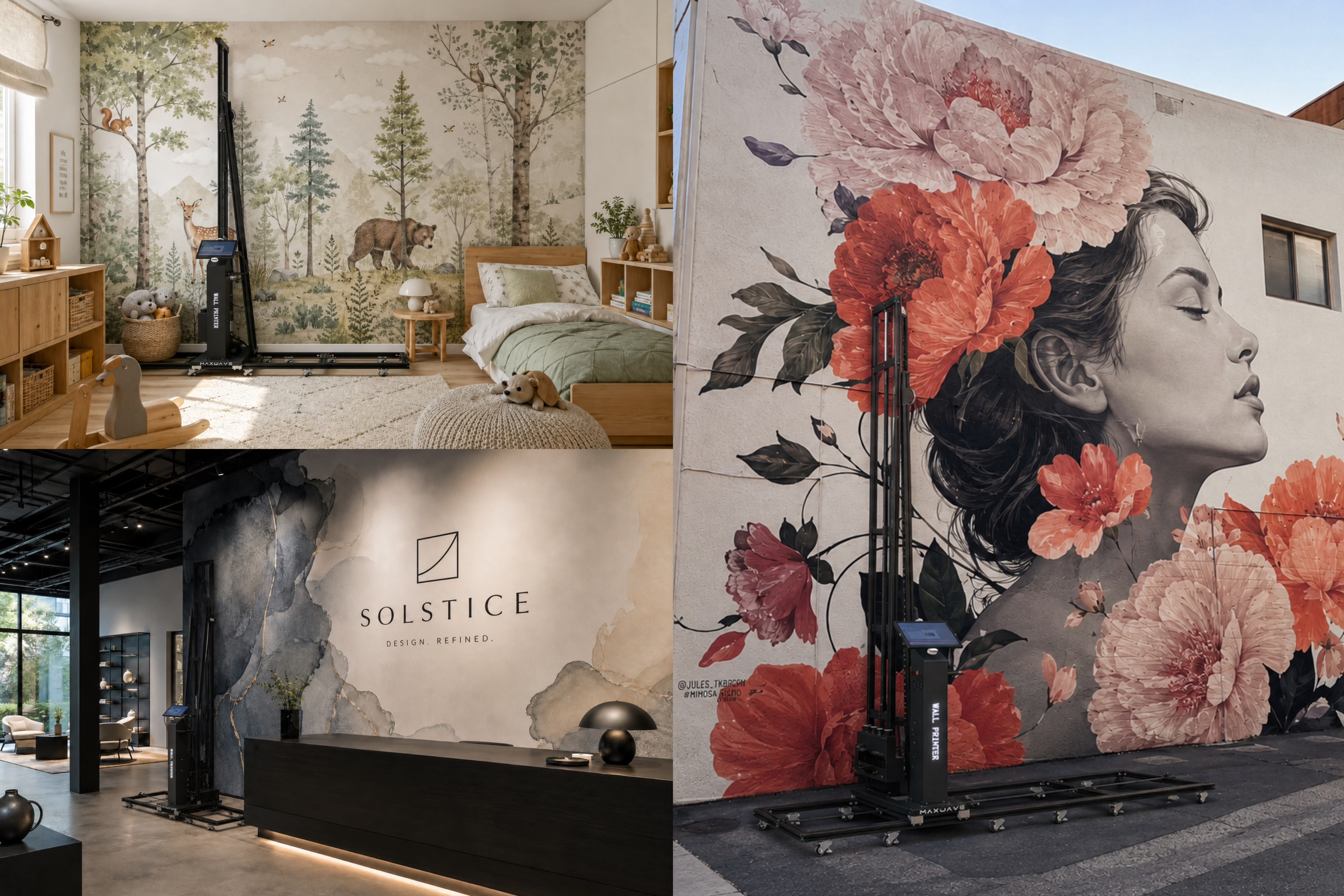
The first step is identifying what type of wall printing business you want to build.
Different businesses require different wall printer capabilities. A machine suitable for a small interior decoration company may not be the right choice for a commercial printing service handling hotels, restaurants, and retail projects.
Wall Printer For Residential Decoration
Residential wall printing is one of the easiest ways for beginners to enter this market. Typical projects include home murals, children's rooms, living room artwork, and personalized wall decoration.
For this type of business, customers usually care most about image quality, accurate colors, and clean indoor printing results.
A suitable residential wall printer should provide stable color performance, support high-resolution artwork, and work well on common indoor surfaces such as painted walls and drywall.
Since most residential projects involve one or two walls, extreme printing speed is usually less important than reliability and ease of operation.
For entrepreneurs entering the wall printing market, a portable and easy-to-operate wall printer can reduce the learning curve and help them start accepting projects faster.
Solutions such as WallPrintBox are designed for entrepreneurs who want to start a wall printing business with a more complete setup, helping reduce the challenges of moving from equipment purchase to actual customer projects..
Wall Printer For Commercial Projects
Commercial applications require a different approach.
Hotels, restaurants, offices, retail stores, and brand spaces often require larger murals and consistent results across multiple locations.
Commercial wall printer machines should focus on productivity, stability, and long-term operation.
Important capabilities include:
Stable printing performance
Professional software support
Ability to handle larger projects
Support for different materials
For growing wall printing companies, a flexible machine that can handle both residential and commercial projects can provide better business scalability.
Instead of purchasing only a machine, businesses can build a complete wall printing service around the equipment.
White ink capability is also important because dark walls, glass, wood, and special surfaces often require white ink to achieve strong color contrast.
Wall Printer For Outdoor Printing
Outdoor wall printing is one of the most demanding applications because the machine must handle challenging surfaces and environments.
Exterior walls are often made from materials such as concrete, brick, or textured surfaces. For these applications, a UV wall printer is often a better choice because UV-cured ink provides better adhesion, weather resistance, and long-term color stability on outdoor surfaces.
Since outdoor walls are rarely perfectly flat, an automatic wall distance adjustment system helps maintain a consistent printhead gap, improving print quality and reducing the risk of damage.
If your business focuses on outdoor murals or advertising walls, surface adaptability, UV ink performance, and distance control are more important than simply choosing the lowest-priced machine.
A machine designed only for indoor walls may perform well in a showroom but struggle on real outdoor projects.
2. Consider The Printing Technology And Real Performance
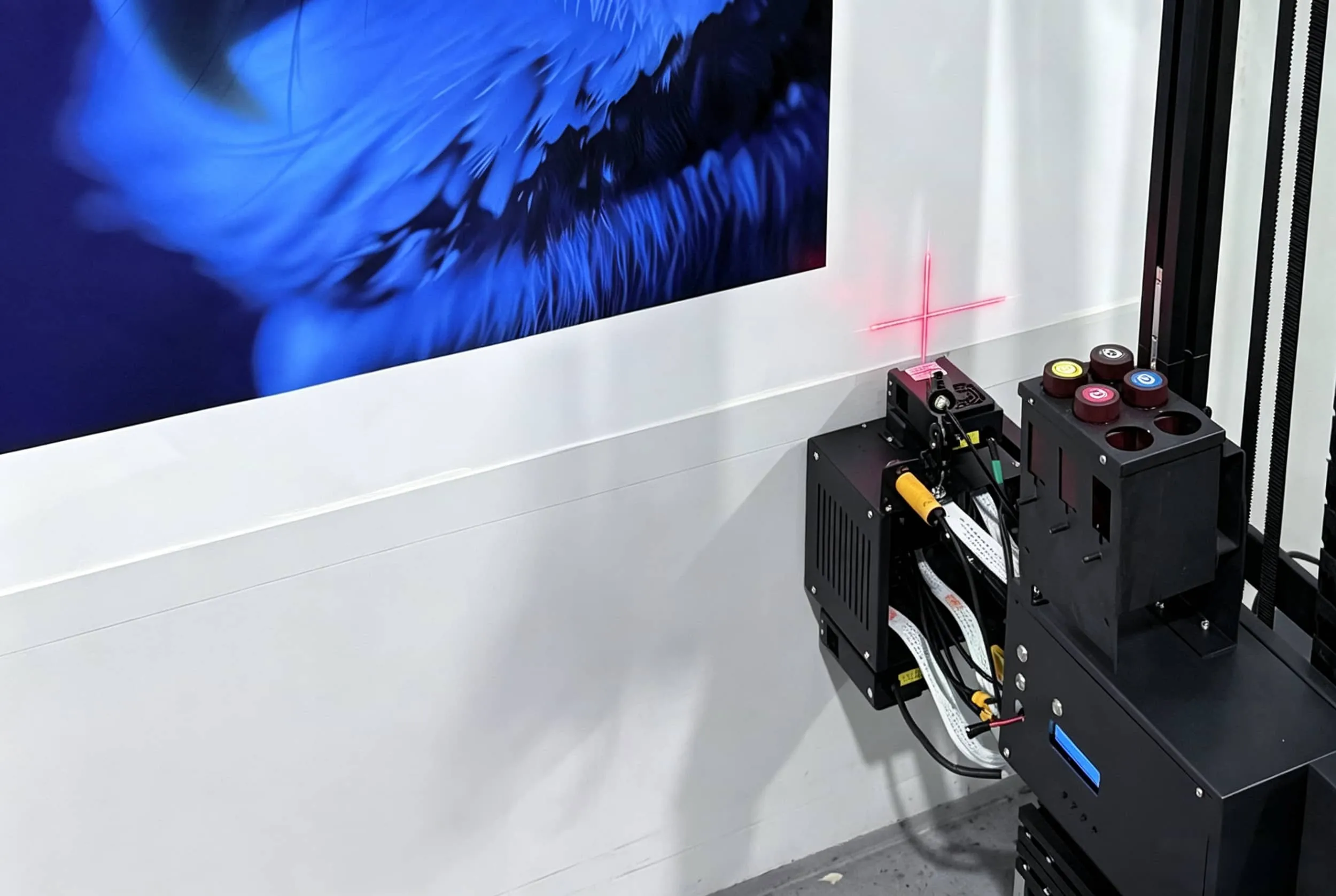
When comparing wall printers, many buyers immediately focus on DPI numbers and advertised printing speed. However, these specifications do not always represent real business performance.
Actual printing results depend on several factors, including:
Printhead quality
Ink system
Machine stability
Wall surface compatibility
Distance control technology
For example, a wall printing machine advertising 1440 dpi or 2880 dpi does not automatically produce better murals. On smooth indoor walls, higher resolution can improve image details, but on rough surfaces such as brick or concrete, ink control, printhead stability, and distance accuracy often have a greater impact on the final result.
Printing speed is another area where buyers should be careful. Many manufacturers advertise maximum speeds measured under ideal conditions with simple images and flat surfaces. In real projects, setup, calibration, wall adjustment, and image complexity can reduce actual production speed by 20–50% compared with the advertised maximum speed.
For most wall printing businesses:
3–5㎡/hour is usually suitable for residential murals and small decoration projects.
5–8㎡/hour is a better range for regular commercial projects such as restaurants, offices, and retail spaces.
8㎡/hour or higher is generally preferred for larger commercial or outdoor applications.
For new entrepreneurs, production efficiency is not only about printing speed. A machine that is easy to set up, transport, and operate can often create more value than a higher-spec machine that requires a more complicated workflow.
This is why some startup-focused wall printing solutions, such as WallPrintBox, are designed around the complete business process rather than only the hardware itself. By combining a portable wall printer system with practical operation support, this type of approach helps beginners reduce the difficulty of turning a machine purchase into a real printing service.
A better question is not:
"How fast can this machine print?"
Instead ask:
"How many completed customer projects can this machine handle every month?"
Because business profitability depends on real production capacity, not laboratory test speed.
3. Choose The Right Wall Printer Budget
The right budget depends on your business stage, target customers, and expected project volume.
A common mistake is choosing a wall art printer only based on the lowest purchase price. A cheaper machine may reduce initial investment, but if it limits the types of projects you can accept, it may slow down business growth.
Instead, choose a machine based on how much revenue you expect it to generate.
Entry-Level Wall Printer ($3,000–$8,000)
Entry-level wall printers are suitable for entrepreneurs who want to test the market with a smaller investment.
They are mainly designed for:
Residential murals
Small decoration projects
Part-time or startup businesses
At this stage, the goal is not maximum production capacity. The priority is proving market demand while keeping financial risk low.
A typical startup operator may begin with smaller projects such as home murals, children's rooms, or personalized wall decoration. If the average project value is around $300–$1,000, completing several projects per month can help validate whether wall printing is a suitable business opportunity.
However, lower-cost machines usually have limitations in speed, automation, and large-scale production. As customer demand grows, many operators eventually upgrade to a more professional system.
Mid-Range Wall Printer ($8,000–$15,000)
Mid-range wall printers are often the best choice for growing wall printing businesses because they provide a stronger balance between investment, reliability, and production capability.
They are suitable for businesses targeting:
Residential projects with higher volume
Restaurants and cafés
Retail decoration
Office murals
Interior design partnerships
For many first-time buyers, the challenge is not only choosing the machine but also understanding how to turn the equipment into a profitable service.
This is why some startup-focused solutions, such as WallPrintBox, focus on reducing the gap between purchasing a machine and operating a real wall printing business. Instead of providing only hardware, this type of solution combines the wall printer system with essential accessories, training resources, and practical startup guidance.
For many operators, this category offers the best growth potential. A machine capable of completing around 5–8㎡ per hour can support regular customer projects while keeping investment at a manageable level.
For example, a business completing 10–20 projects per month can often justify a mid-range investment much faster than a low-cost machine limited to smaller jobs.
Professional Wall Printer ($15,000+)
Professional wall printers are designed for businesses with stable customer demand and larger commercial opportunities.
They are suitable for:
Hotels
Shopping centers
Corporate spaces
Large advertising murals
Multi-location brand projects
The higher investment is justified by:
Higher production efficiency
Better long-term stability
Lower downtime
Ability to handle larger projects
Professional machines often support higher workloads, with production capacity reaching 8㎡/hour or more depending on the wall surface and printing mode.
Although the initial cost is higher, the payback period can be shorter if the machine allows you to accept higher-value projects. For example, commercial mural projects can range from hundreds to several thousand dollars per job, making productivity and reliability more important than the initial equipment price.
How To Choose The Right Budget
The best wall printer budget depends on your business plan:
A startup testing the market may benefit from a lower-cost machine to reduce risk.
A growing business should usually choose a mid-range wall printer that can support more customers and larger projects.
A professional operator with stable demand should focus on productivity and reliability rather than saving on the initial purchase price.
The right question is not "How much does the machine cost?" but "How much revenue can this machine help me create every month?"
4. Calculate Your Wall Printer ROI Before Buying

A wall printer should be viewed as a business investment, not simply a piece of equipment.
The most important question is:
How quickly can the machine recover its cost?
Your payback period depends on four main factors:
Project pricing
Monthly order volume
Ink consumption
Maintenance cost
For most wall printing businesses, revenue is generated by charging customers based on printing area. Typical wall printing prices vary depending on location, project type, and customer segment, but many operators charge around $150–$300 per square meter for custom wall printing services.
Ink cost is usually not the biggest expense. For UV wall printing, ink consumption may cost around $0.40–$0.50 per square meter, meaning the largest factor affecting profitability is not ink cost, but your ability to consistently generate paid projects.
For example, a business completing:
100㎡ of projects per month at $70/㎡ can generate around $14,000 monthly revenue
300㎡ of projects per month at $70/㎡ can generate around $42,000 monthly revenue
The actual profit depends on labor, transportation, marketing, and operating costs, but this calculation shows why project volume has a much greater impact on ROI than small differences in ink cost.
This is also why some new operators choose a complete wall printing business solution instead of purchasing equipment alone.
WallPrintBox focuses on helping entrepreneurs move from buying a machine to operating a wall printing business by combining the equipment with essential accessories, training resources, and startup support.
A machine with better reliability and workflow efficiency may have a higher initial price, but it can often recover its cost faster by allowing you to complete more projects with fewer interruptions.
5. Evaluate The Supplier Before Purchasing
Choosing the wall printer supplier is just as important as choosing the machine.
A wall printer is specialized equipment, and supplier support can directly affect your ability to complete customer projects and generate revenue.
Unlike standard office equipment, wall printers involve printheads, ink systems, software settings, calibration, and mechanical components. When problems occur, the cost is not only the repair fee — it is also the potential loss from delayed projects.
For example, if a commercial mural project is worth $1,000–$5,000, several days of machine downtime can quickly cost more than the price difference between two suppliers.
Before buying, evaluate the supplier based on:
Real customer applications
Training and installation support
Warranty coverage
Spare parts availability
Technical response time
A reliable manufacturer should be able to provide:
Real printing videos from actual projects
Customer application examples
Installation guidance
Operation training
Spare parts availability is especially important for business users. A supplier that can provide key components such as printheads, ink system parts, and control boards quickly can significantly reduce downtime.
The cheapest supplier is not always the lowest-cost choice. A slightly higher initial investment with better support can often save more money through fewer interruptions, faster troubleshooting, and more reliable business operation.
6. Common Mistakes When Buying A Wall Printer
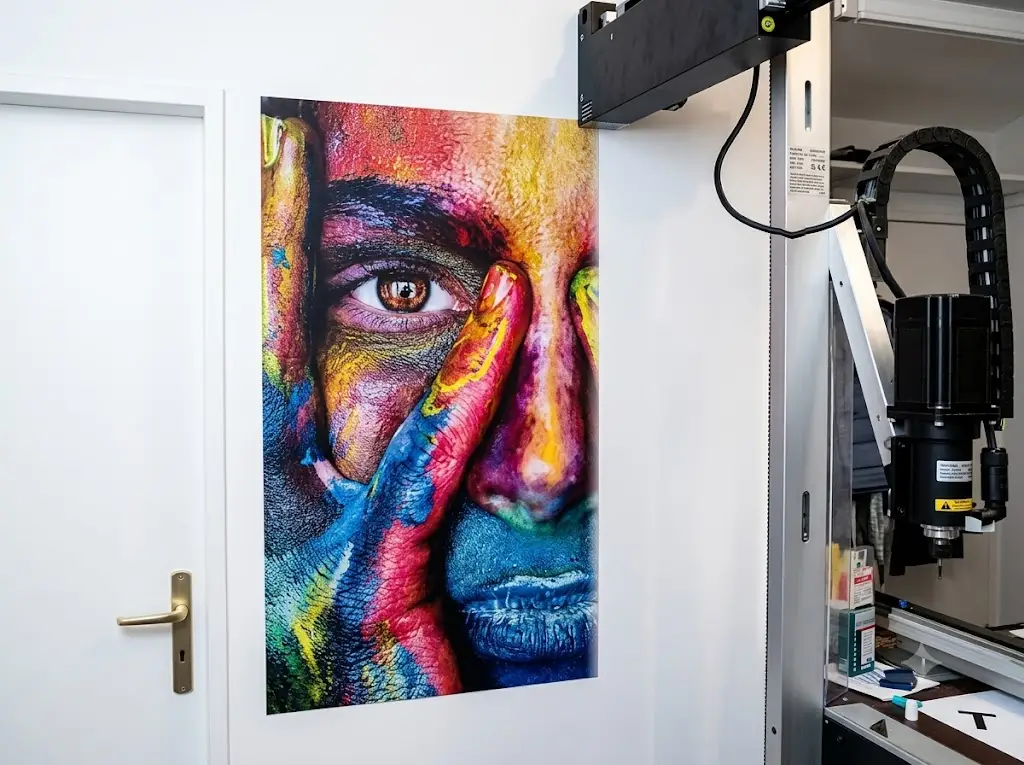
One of the biggest mistakes buyers make is choosing a wall printer based only on specifications.
A machine may advertise high DPI, fast printing speed, or advanced features, but these numbers do not always translate into better business results. A printer that performs well in a showroom may struggle when handling real customer projects, uneven walls, or long working hours.
For example, a machine advertised at 10㎡/hour may achieve much lower real production speed after including wall preparation, calibration, image adjustment, and surface changes. In actual business operations, workflow efficiency often matters more than the maximum speed shown on a specification sheet.
Another common mistake is choosing the cheapest wall mural printer without considering future growth.
A lower-cost machine may be suitable for small residential projects, but if your business later receives larger commercial orders, upgrading equipment can become an additional expense. A second purchase may cost thousands of dollars more than choosing a machine with enough capacity from the beginning.
Buyers should also consider long-term operating costs, including:
Ink compatibility and consumption
Maintenance requirements
Replacement parts availability
Technical support response time
These factors can directly affect profitability. For example, if a machine is unable to operate for several days because of a printhead issue or missing spare parts, the lost revenue from cancelled projects may exceed the original savings from buying a cheaper machine.
Before purchasing, ask suppliers about:
Real customer printing videos
Warranty coverage
Spare part availability
Training and technical support
The goal is not to buy the cheapest wall printer. The goal is to choose a machine that can consistently complete profitable projects, support your business growth, and minimize unexpected downtime.
Conclusion
Choosing a wall printer is a business decision, not just a technical purchase.
The right machine depends on your customers, project types, budget, and growth plans. A startup may prioritize affordability and portability, while a commercial printing company may need higher productivity and reliability. Outdoor printing businesses may require stronger durability, UV ink performance, and better surface adaptability.
Before making a decision, focus on the factors that directly affect your business results: choose the right machine for your application, evaluate real printing performance, calculate your ROI, and work with a supplier that can support your long-term growth.
The best wall printer is not the one with the highest specifications. It is the machine that helps you complete more profitable projects and build a sustainable wall printing business.
For entrepreneurs and businesses looking to enter or expand the wall printing market, WallPrintBox provides a complete wall printing solution designed to help operators move from equipment purchase to real business operation.
Explore WallPrintBox and find a wall printer solution that matches your business goals.