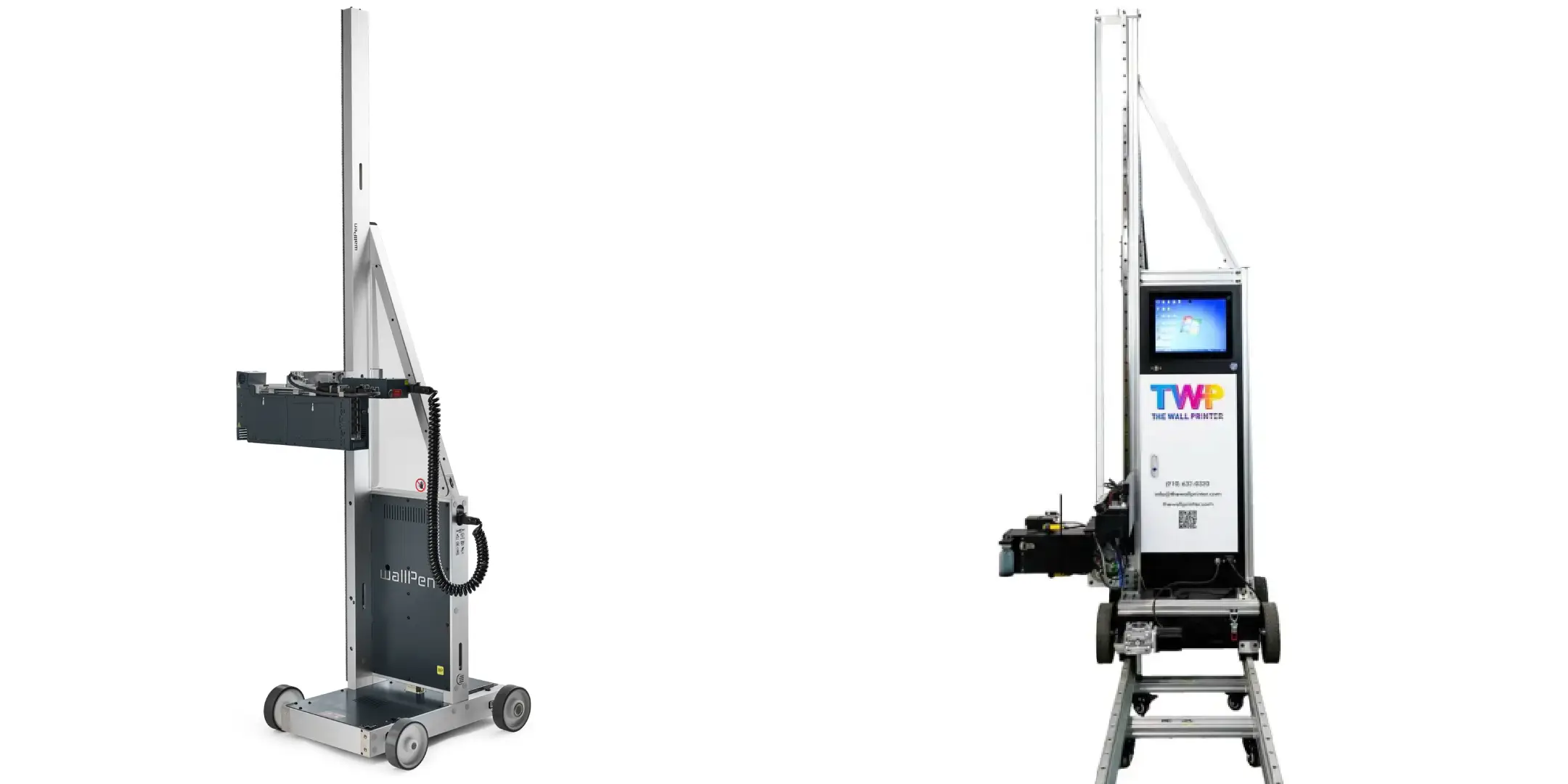
WallPen and TWP both sell premium commercial wall printers, but they are built around different priorities.
WallPen emphasizes German engineering, portability, modular Ricoh printheads, tall-wall capability, and relatively low published ink consumption. TWP focuses on lower initial pricing, Epson printheads, standard white ink, U.S.-based training, lifetime technical support, and a broader business-support ecosystem.
The right choice is not simply the machine with the highest DPI or the lowest price.
It is the wall printer that best matches your project types, location, expected workload, support requirements, and available cash flow.
This comparison focuses on the factors that matter most to buyers: purchase price, print quality, production workflow, ink costs, service, and long-term business fit.
Prices and package details were checked against public U.S. pages on July 29, 2026. Final prices and terms should always be confirmed in writing.
WallPen vs TWP: Quick Comparison
Comparison Factor | WallPen E2 | TWP Tech / Pro Series |
|---|---|---|
Published price | Starts around $49,630; U.S. packages may reach $69,770 | Tech: $39,995; Pro: $44,995 |
Printhead system | Four or five separate Ricoh GH2220 heads | Tech: Epson DX7; Pro: Epson i3200 |
Maximum resolution | Up to 1,200 DPI | Up to 2,880 DPI on Tech; 2,400 DPI on Pro |
White ink | Optional fifth printhead | Included as standard |
Published print speed | Approximately 2–5 m²/h, depending on quality | Request a timed sample at the intended quality setting |
Maximum print height | Up to 13 ft with extensions | Up to approximately 11 ft with the extended rail |
Published ink cost | Approximately $2–$5/m² | Approximately $0.50/ft², or $5.38/m² |
Training and support | Regional packages vary; confirm written terms | In-person training, lifetime technical support |
Best fit | Premium vertical projects, tall walls and portable operation | U.S.-based businesses wanting lower entry cost and structured support |
WallPen currently advertises a starting U.S. price of around $49,630, while another U.S. package page lists $53,990 for a basic package and $69,770 for a complete package. TWP lists its Tech Series at $39,995 and Pro Series at $44,995.
Which Wall Printer Costs Less?
Based on current published starting prices, TWP wall printer machine requires the lower initial investment.
The TWP Tech Series is approximately $9,635 less than WallPen’s advertised starting price. The newer TWP Pro Series is approximately $4,635 less.
However, the initial price difference does not show the complete cost.
WallPen’s published price includes a one-year ink flat rate, with some packages offering an optional second year. WallPen also promotes its own software, modular printhead architecture, extensions, training, and support as part of the wider package.
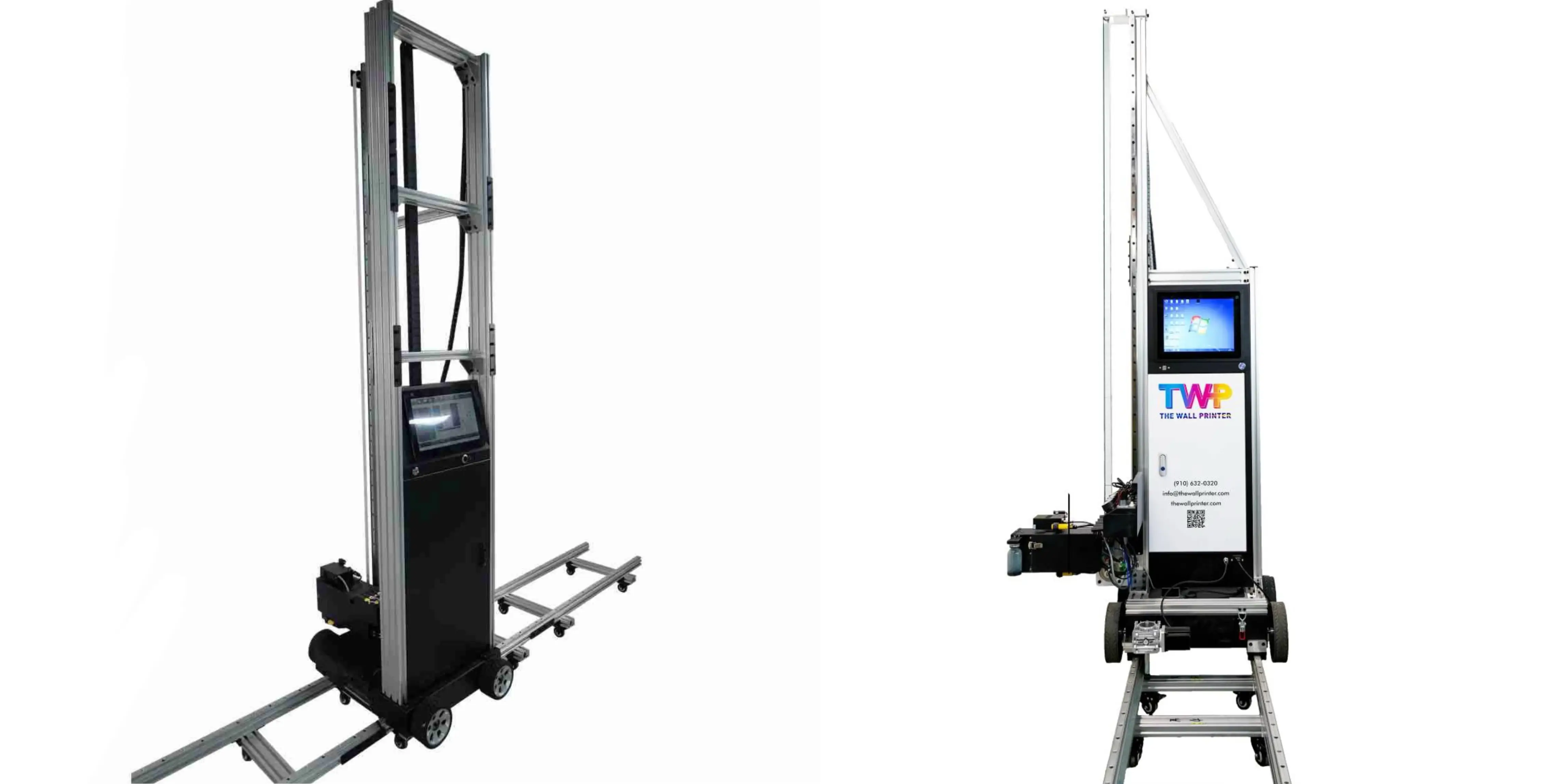
TWP includes white ink, a touchscreen-based operating system, its PumpBox ink-management system, a modular rail configuration, training at its Wilmington headquarters, and lifetime technical support.
When comparing quotations, ask both suppliers to itemize:
Printer and printhead configuration;
White-ink capability;
Standard and extended rails;
Software and future update fees;
Training;
Shipping and import costs;
Starter ink and cleaning supplies;
Transport cases;
Spare parts;
Warranty and post-warranty support.
Compare the complete delivered and ready-to-print cost, not only the figure shown on the product page.
Printhead and Image Quality
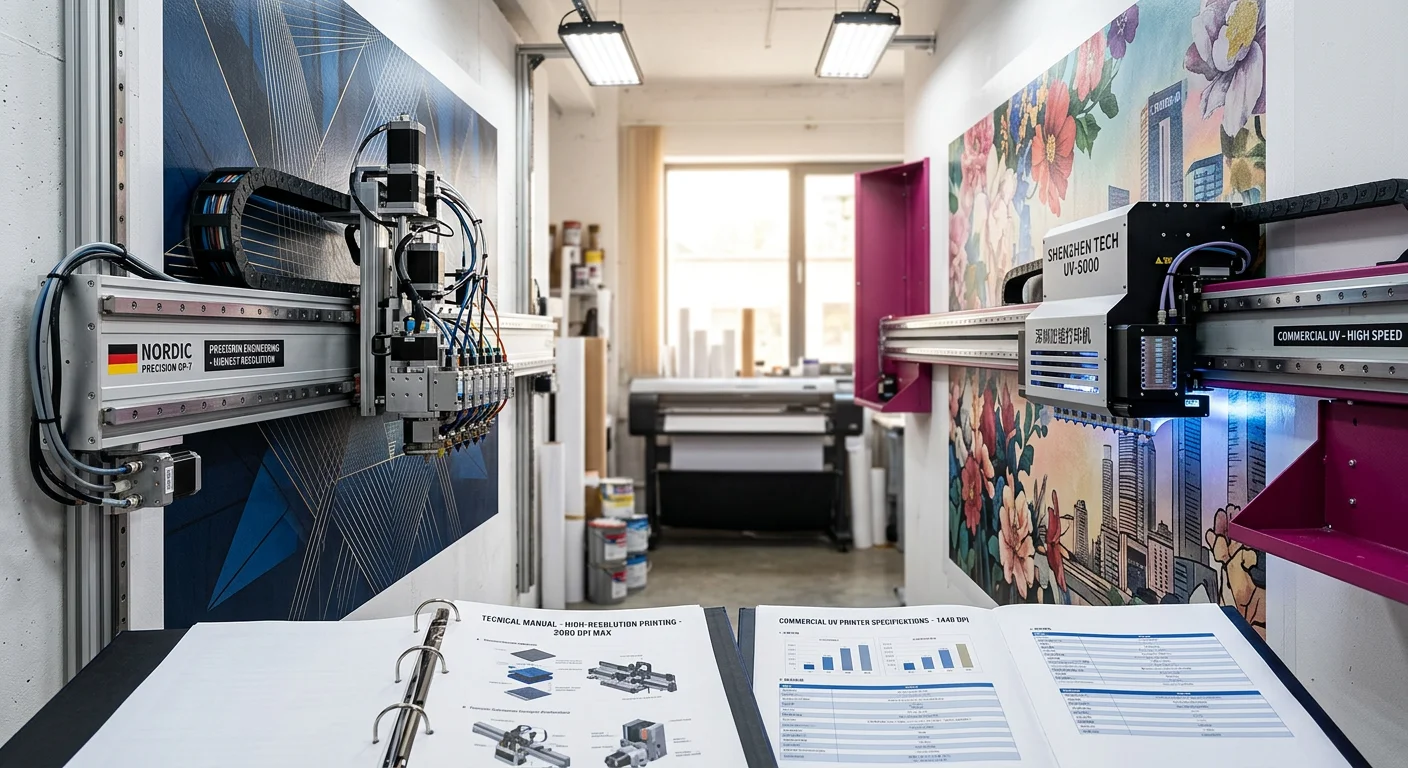
The two brands use different printhead architectures.
WallPen: Separate Ricoh Printheads
The WallPen E2 uses four individual Ricoh GH2220 printheads for CMYK, with an optional fifth head for white ink.
Its official resolution range is 300 to 1,200 DPI, with 600 × 720 DPI described as a practical setting for many real wall-printing projects. The advantage of separate heads is modularity: if one color head fails, only that head may need replacement rather than the complete color system.
This architecture may appeal to buyers who prioritize maintainability and long-term component replacement.
TWP: Epson DX7 or i3200
The TWP Tech Series uses an Epson DX7 printhead and advertises resolution up to 2,880 DPI.
The Pro Series uses an Epson i3200 with 3,200 nozzles and eight channels, allowing CMYK and white ink to be printed through one head. TWP advertises resolution up to 2,400 DPI for this system.
The i3200 provides a high nozzle count and integrated color channels, while the DX7 is a more established printhead used in TWP’s previous commercial systems.
Does Higher DPI Mean Better Murals?
Not necessarily.
Maximum DPI figures are difficult to compare directly because the machines use different printheads, pass settings, software, ink delivery systems, and movement structures.
A 2,880-DPI claim does not mean that every customer project is printed at that resolution. Higher-quality modes normally require more passes and reduce production speed.
For a fair test, send both suppliers the same design and wall material. Ask them to record:
Print dimensions;
DPI and pass count;
White-ink use;
Setup time;
Actual printing time;
Total ink consumption;
Close-up image quality;
Results after several hours of continuous operation.
A timed sample printed at your intended production setting is more valuable than comparing maximum DPI figures.
Speed, Height and Job-Site Setup
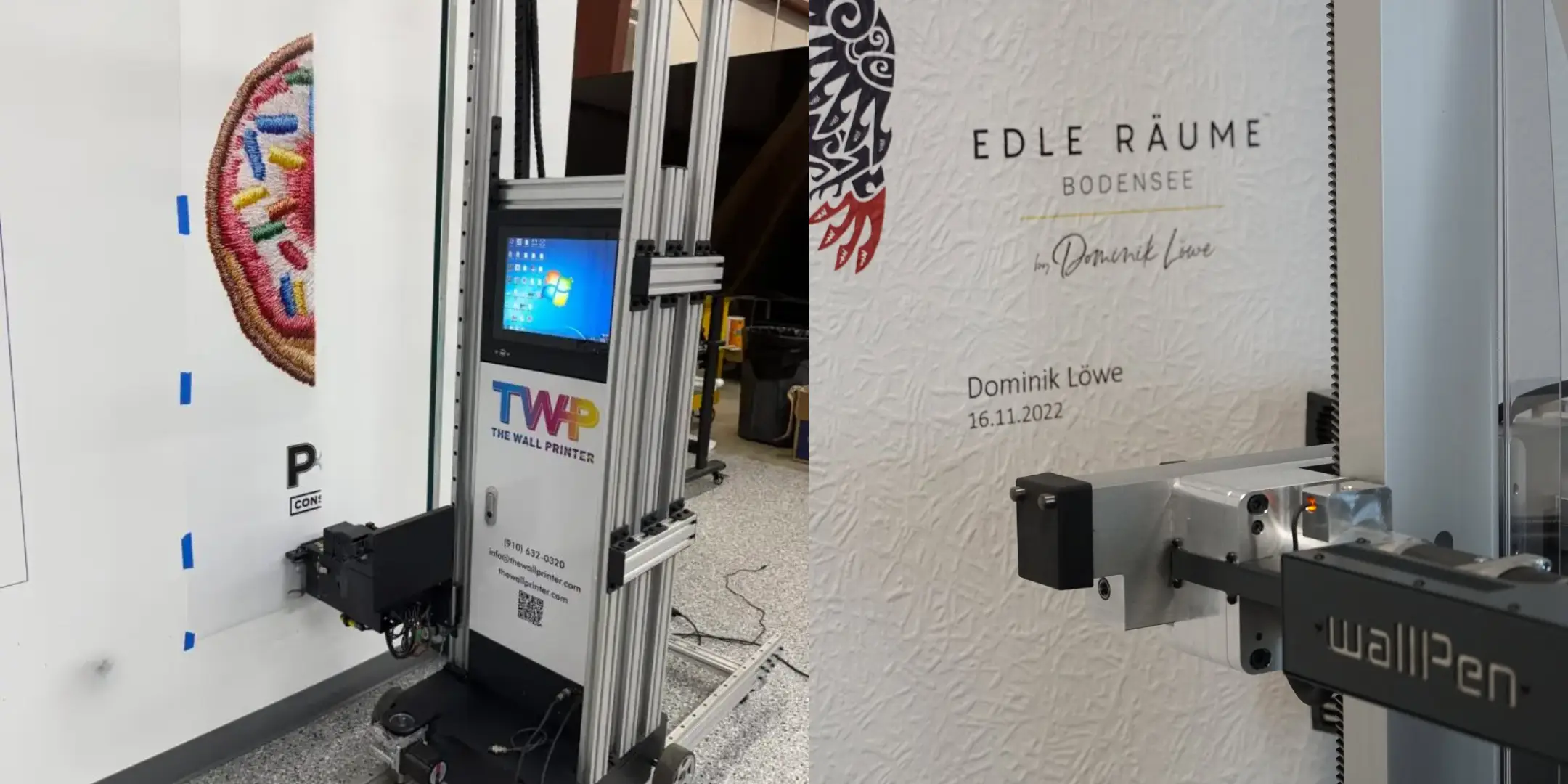
WallPen publishes a practical production range of around 2–5 m²/h, depending on the quality setting. Its FAQ states that approximately 2–3 m²/h often provides a useful balance between print quality and speed.
WallPen can be extended to a maximum height of approximately 13 ft, with unlimited horizontal print width. It is transported in six bags, with the heaviest bag weighing around 49 lb. The company states that the system can be assembled in about five minutes under suitable conditions.
This makes WallPen particularly relevant for businesses that frequently work in:
Hotels and large lobbies;
Stairwells;
Museums;
Tall commercial interiors;
Different customer locations where transportability matters.
TWP uses a modular track and rail system. Its extended configuration reaches approximately 131.9 inches, or just under 11 ft. The rail system may require more floor space, but it is designed to maintain stable horizontal positioning across larger commercial walls.
TWP does not currently publish a directly comparable standardized production-speed figure on its main printer page. Buyers should therefore request a timed test at the exact resolution and ink mode they plan to use.
Do not compare WallPen’s practical production speed with a TWP maximum-speed claim unless both tests use the same image, wall, pass count and white-ink mode.
Ink Cost and Material Compatibility
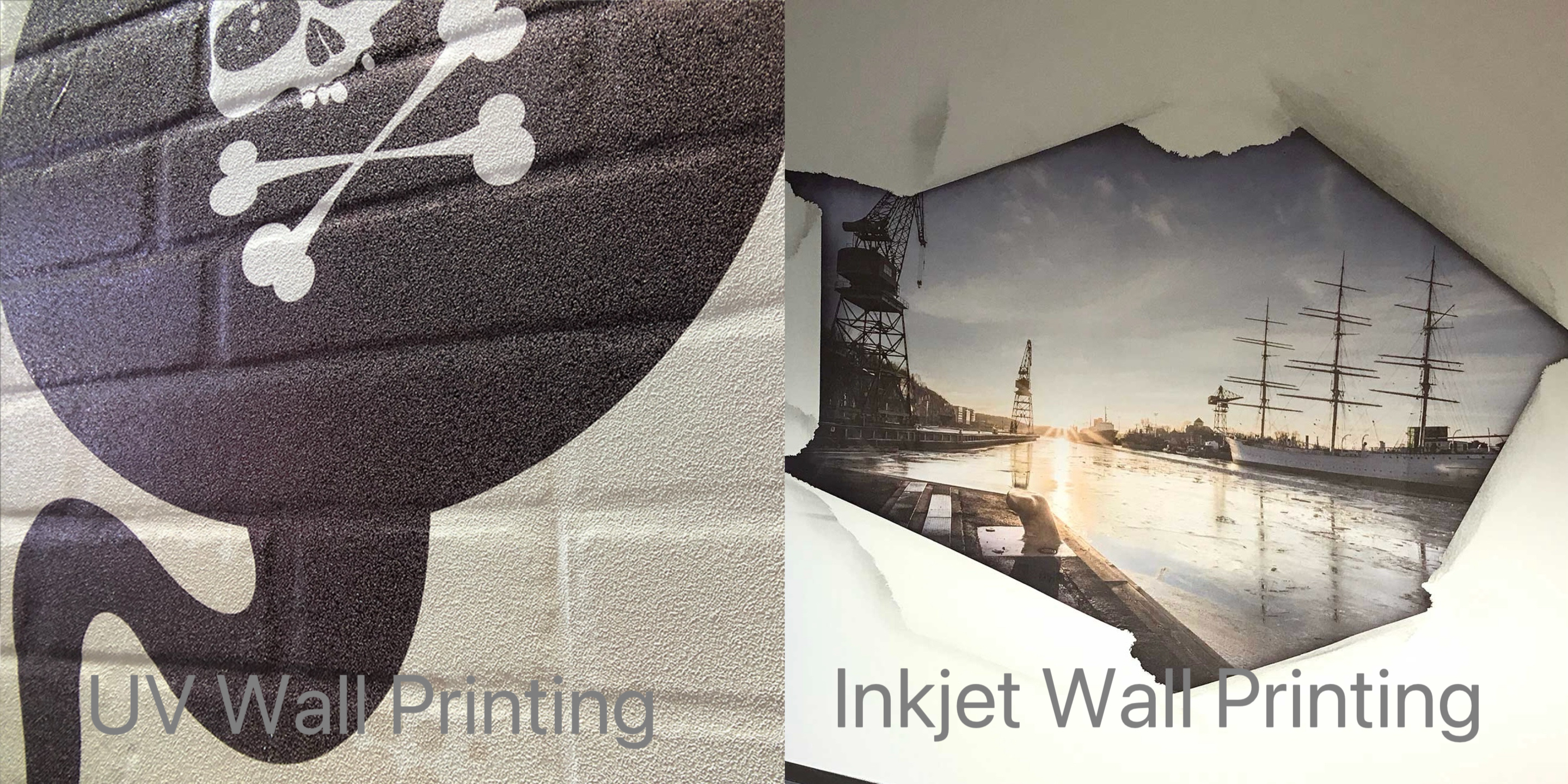
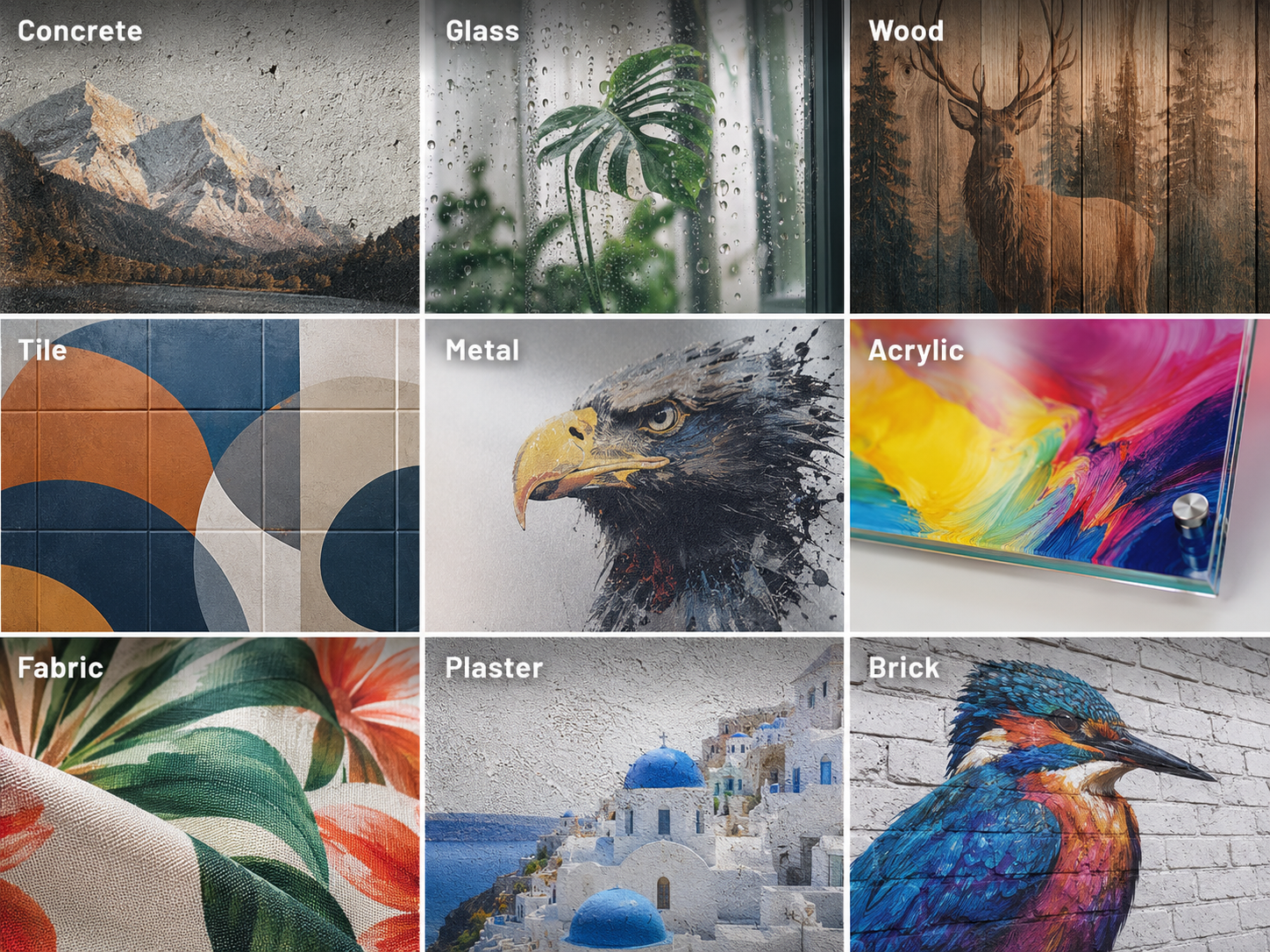
Both brands use UV-curable ink, allowing images to cure during printing and adhere to a range of prepared surfaces.
WallPen publishes an ink consumption of approximately 5–10 ml/m², with an estimated cost of $2–$5/m². Its starting package also includes a 12-month ink flat rate, with an optional extension in some markets.
TWP publishes an operating ink cost of approximately $0.50/ft², which is equivalent to about $5.38/m². White ink is included as standard on its current Tech and Pro wall printers.
These figures are not perfectly comparable.
WallPen quotes ink cost per square meter based on motif-dependent consumption, while TWP describes an approximate operating cost per square foot. Coverage, white underprinting, wall porosity, cleaning cycles and wasted ink can all change the result.
Before purchasing, ask both suppliers to print the same test image and record the ink consumed.
You should also test the materials most common in your market, such as:
Painted drywall;
Brick;
Concrete;
Wood;
Glass;
Ceramic tile;
Dark walls requiring white ink.
WallPen says it can print on many vertical surfaces and compensate for wall irregularities using laser sensors. TWP also promotes UV printing on walls, concrete, glass, tile and brick, with standard white ink for darker surfaces.
Maintenance, Warranty and Technical Support
This is where the two brands present noticeably different business propositions.
TWP Support
TWP publicly advertises:
In-person training at its Wilmington, North Carolina headquarters;
Lifetime technical support by phone, email and video;
Direct access to the team that manufactures the equipment;
A five-year manufacturer warranty;
A community of more than 300 owners;
Optional marketing and CRM resources.
For a U.S.-based operator with limited technical experience, this support structure may reduce the difficulty of starting and operating the business.
WallPen Support
WallPen provides proprietary software, manuals, support resources, spare-parts ordering, and manufacturer assistance through regional partners or its German headquarters. For businesses entering or expanding in wall printing, the availability of long-term technical support can be just as important as the machine’s initial specifications.
However, its public pages currently describe warranty and support terms differently. The FAQ states that one year of warranty, phone support and software updates is included, while the U.S. homepage advertises a five-year warranty and free technical support.
This does not necessarily mean the terms are incorrect. They may relate to different regions, promotions or packages.
It does mean buyers should request written confirmation of:
Warranty duration;
Printhead coverage;
Labor charges;
Shipping responsibility;
Software-update terms;
Support after the first year;
Spare-parts delivery location and lead time.
Do not rely on a general “five-year warranty” statement without checking which components and services are actually included.
How to Compare Three-Year Total Cost
Avoid using unverified assumptions such as fixed annual failure rates or guaranteed downtime.
A more reliable formula is:
Three-year TCO = delivered machine cost + paid ink and consumables + maintenance and parts + labor and travel + downtime losses − resale value
Ask each supplier for the information needed to complete the calculation.
Cost Area | What to Request |
|---|---|
Initial investment | Machine, extensions, software, training, freight and taxes |
Ink | Cost per liter, test-print consumption and white-ink usage |
Maintenance | Cleaning supplies, filters, pumps, capping components and sensors |
Printhead replacement | Current price, warranty coverage and estimated shipping time |
Downtime | Support hours, remote diagnosis and parts-delivery process |
Software | Renewal charges and future update fees |
Resale value | Transferability of warranty, software and support |
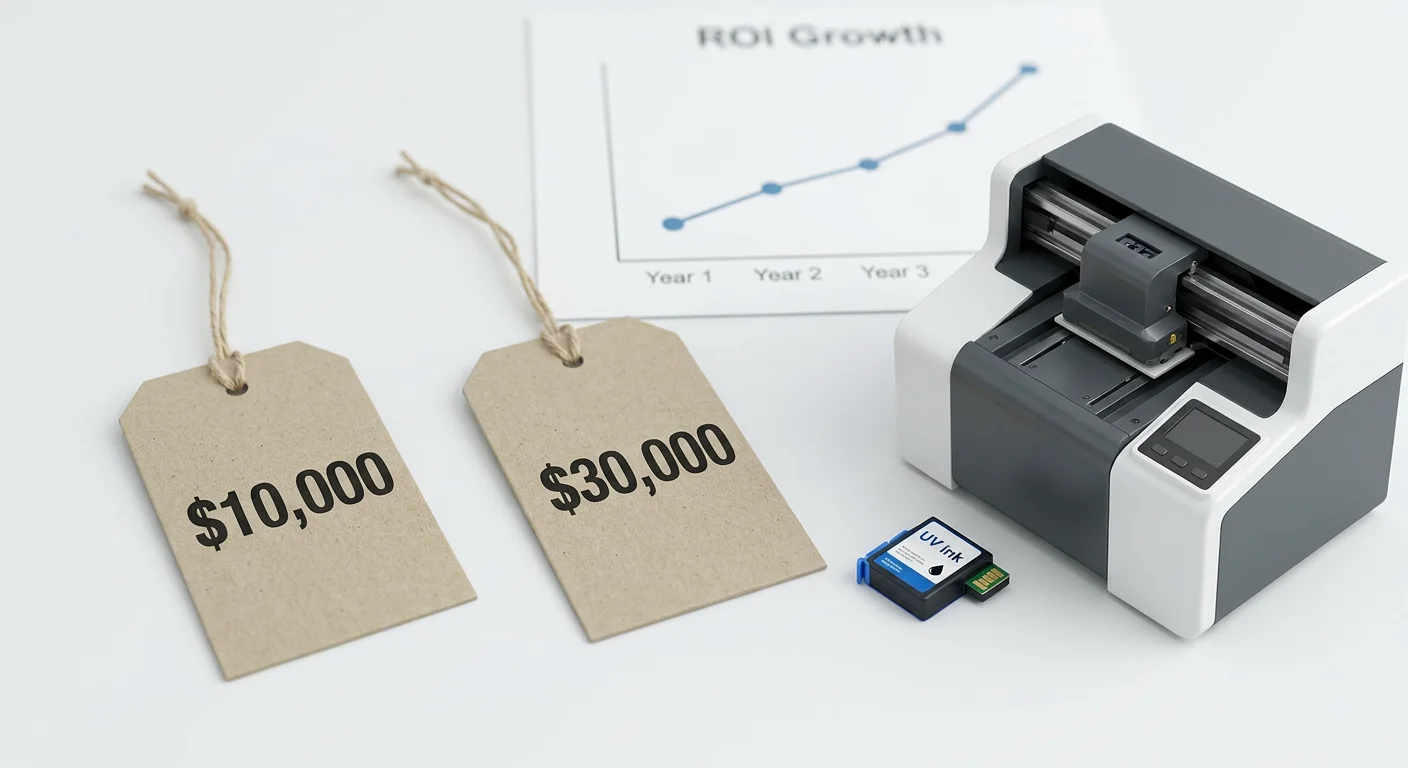
The published figures suggest that TWP has the lower initial wall priting machine price, while WallPen publishes a lower estimated ink cost and includes an initial ink flat rate.
Which advantage matters more depends on how much you print.
A low-volume operator may care more about purchase price and access to training. A high-volume business may care more about ink consumption, replacement parts and downtime over several years.
Which One Is Right for Your Business?
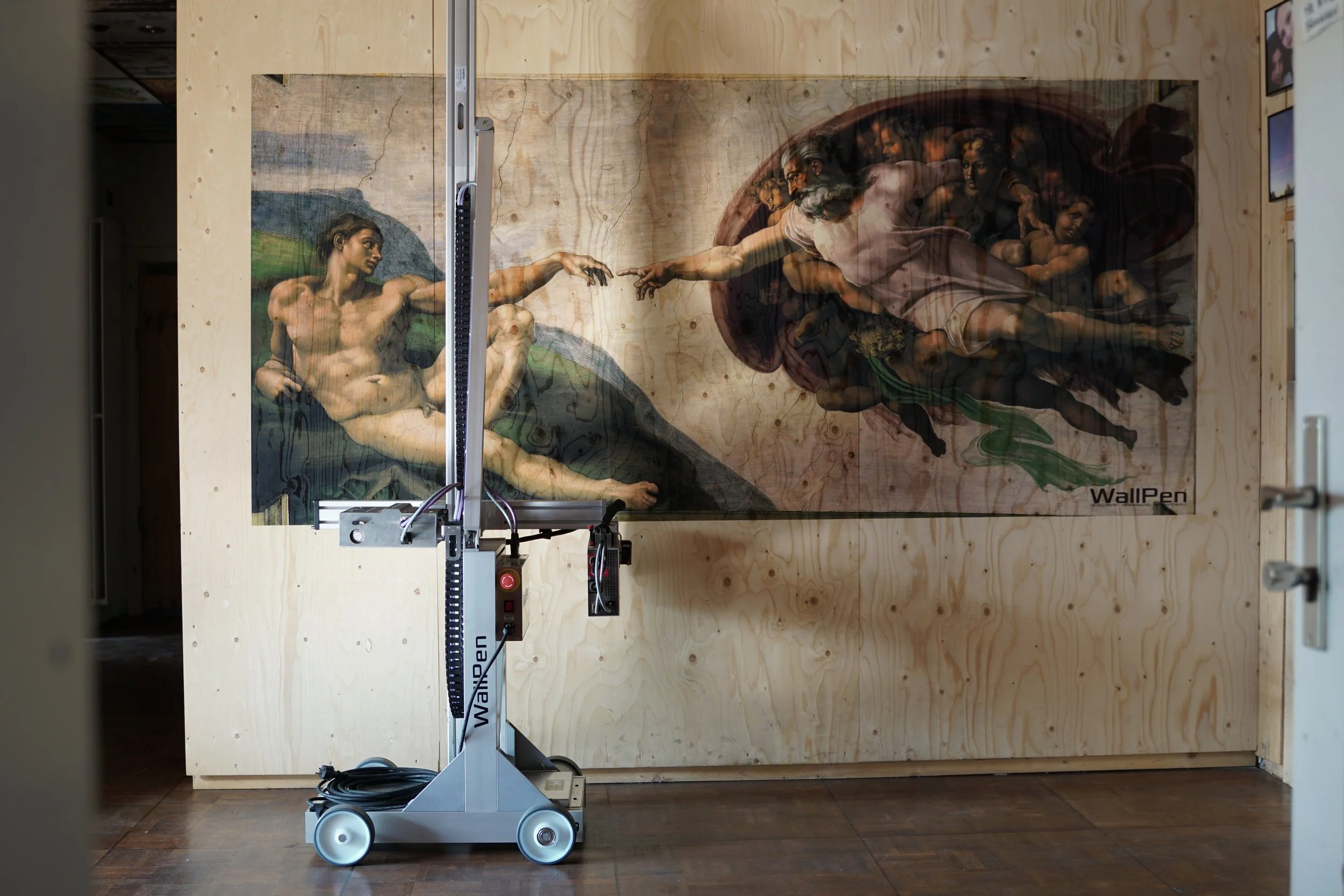
Choose WallPen When:
WallPen may be the stronger fit when your business prioritizes:
Tall vertical walls up to approximately 13 ft;
Frequent transport between different locations;
A modular multi-printhead design;
Low published ink consumption;
Premium interior, museum, hotel or architectural projects;
German manufacturing and European component sourcing;
Primarily vertical printing rather than floor printing.
Its higher purchase price is easier to justify when project margins are strong and the machine’s height, portability or printhead architecture solves a real business need.
Choose TWP When:
TWP may be more suitable when you prioritize:
A lower initial price for a new premium machine;
Standard CMYK plus white ink;
U.S.-based in-person training;
Lifetime technical support;
A publicly advertised five-year manufacturer warranty;
An established owner community;
Business-development and marketing resources;
Access to separate wall and floor printer product lines.
For a North American entrepreneur entering the market for the first time, the support and training structure may be more valuable than a small difference in ink cost.
Consider Neither Yet When:
Neither wall art printer brand should be treated as a low-risk entry-level purchase.
Both require an investment of around $40,000 or more before shipping, marketing, insurance and working capital are considered.
When customer demand is still unproven, first validate:
Local selling prices;
Monthly lead volume;
Typical project size;
Customer acquisition cost;
Travel distance;
Access restrictions;
Seasonal demand.
A premium machine cannot produce a reliable ROI without a realistic sales pipeline.
Final Verdict
WallPen and TWP are both commercial wall-printing systems, but they are designed around different buyer priorities.
WallPen may be the better fit for businesses that value tall-wall capability, portable operation, modular Ricoh printheads, and lower published ink consumption.
TWP may appeal more to buyers seeking a lower initial price, standard white ink, U.S.-based training, lifetime technical support, and a more established owner community.
However, the final decision should not be based on a specification table alone. Ask both suppliers to print the same artwork on the same wall material, then compare the actual setup time, print quality, ink consumption, delivered price, spare-parts cost, and written warranty terms.
Still unsure which wall printer fits your business? Send us your wall material, typical mural dimensions, expected monthly workload, project location, and budget. We can help you compare the right configuration, estimate operating costs, and identify the option that best matches your real project pipeline.