Yes, wall printing with UV-curable ink can be used indoors safely when the correct ink, curing system and ventilation practices are used.
But “UV ink” does not automatically mean “odorless,” “zero emissions” or “no ventilation required.”
During printing, a wall printer deposits liquid UV-curable ink directly onto the wall and immediately exposes it to UV light. The ink cures rapidly, which is one reason this process produces much less solvent evaporation than traditional solvent-based printing.
However, operators still need to think about three things:
UV light exposure.
Uncured or partially cured ink.
Odor and ventilation during and shortly after printing.
For buyers comparing a wall printer for indoor projects, these factors matter just as much as print resolution, speed and maximum print height.
The practical answer is:
Wall printing with UV-curable ink is suitable for homes, offices, hotels, restaurants, retail stores and many other indoor commercial spaces, provided the ink is properly cured and the work area has appropriate airflow.
1. Is Wall Printing With UV Ink Safe Indoors?
For normal decorative wall applications, the main safety concern is not the finished mural sitting on the wall.
The more important period is while the printer is operating and while the ink is curing.
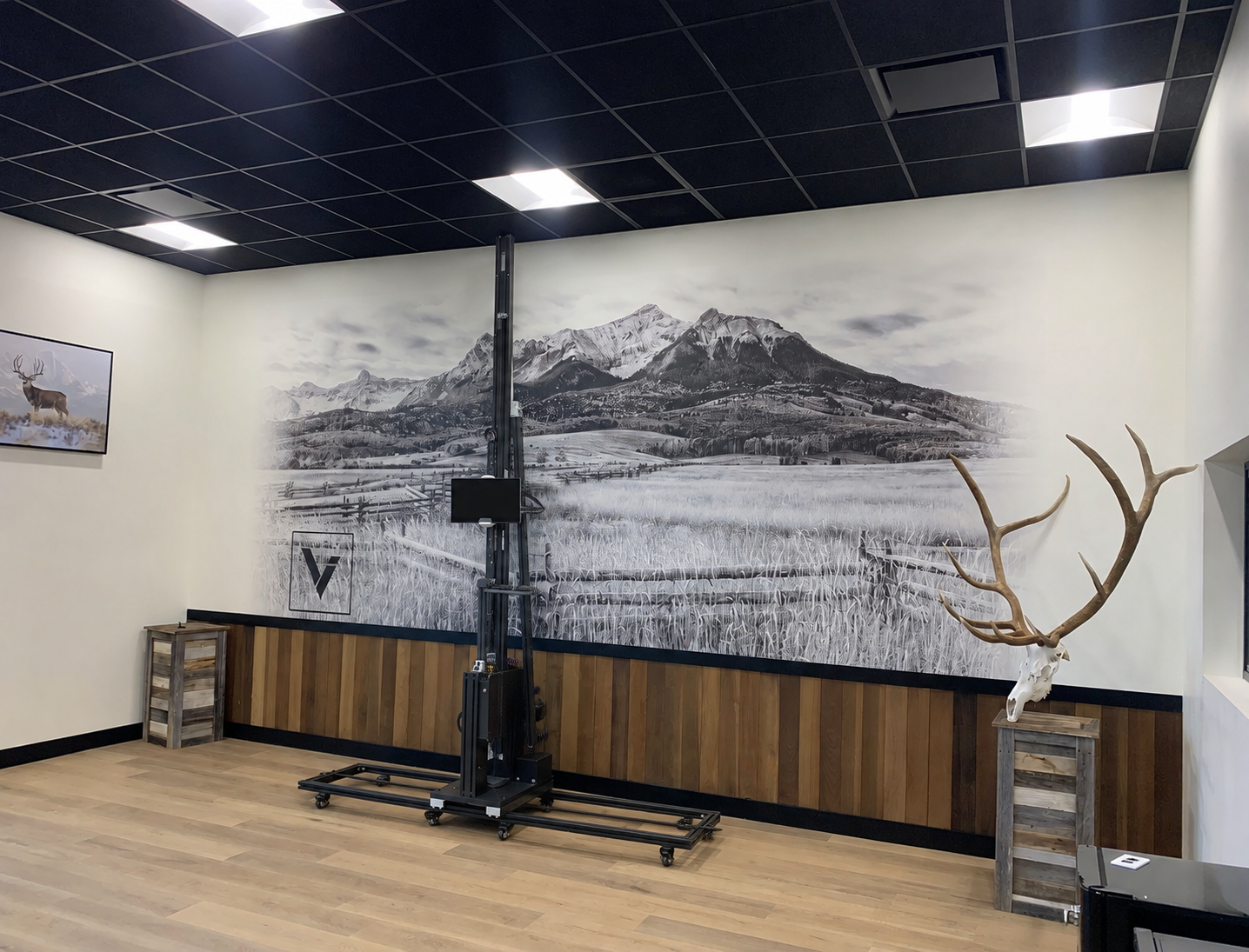
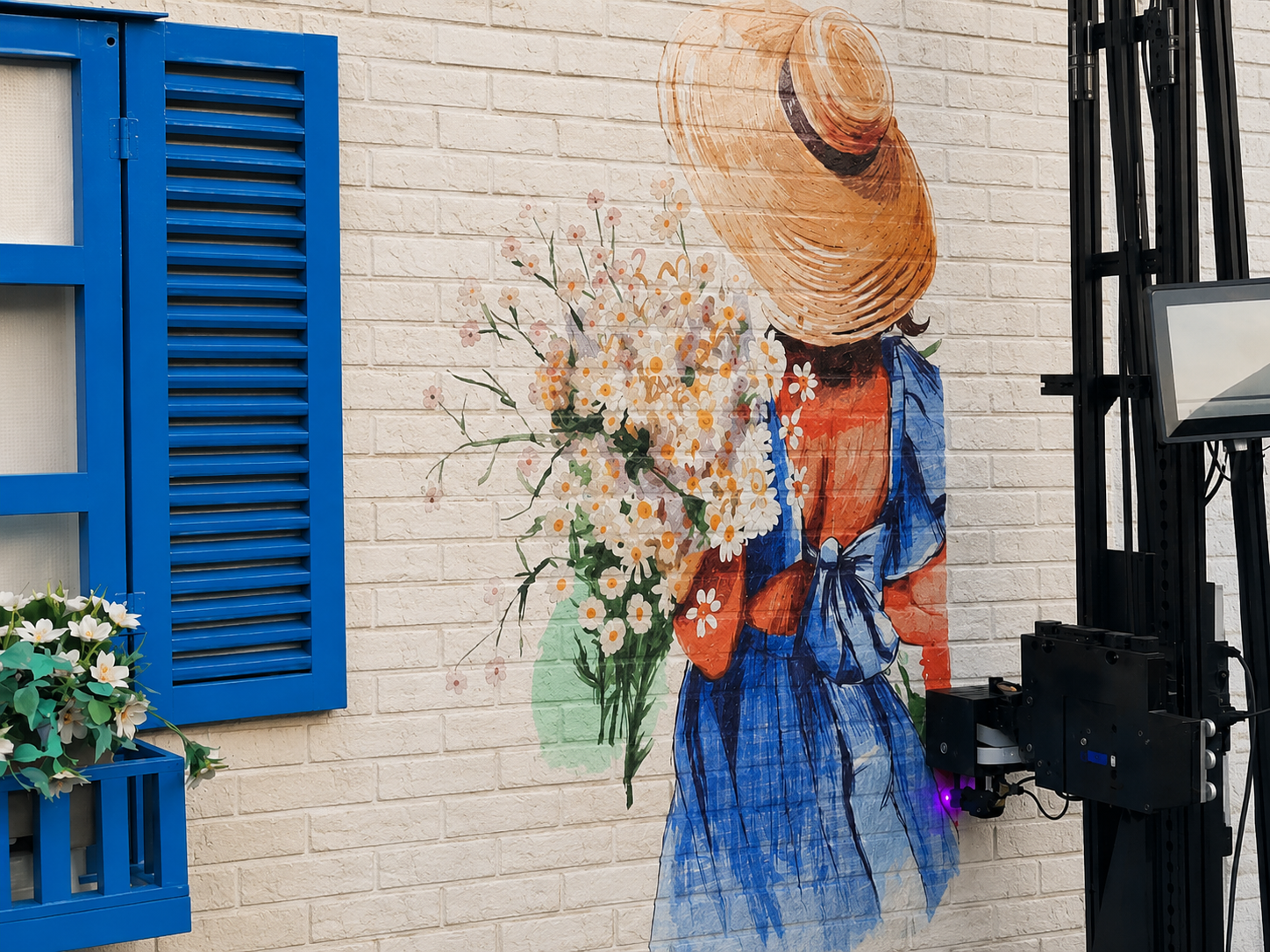
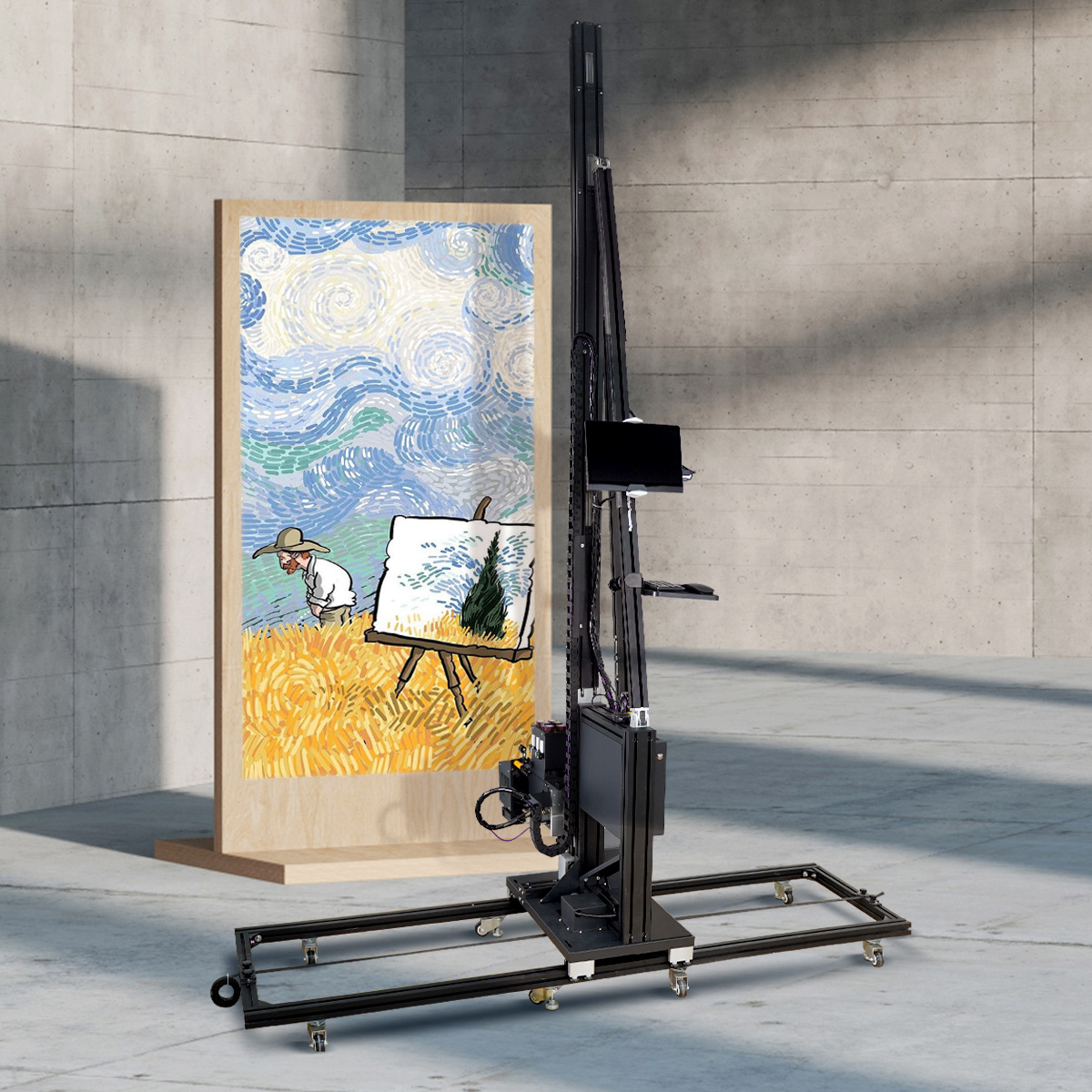
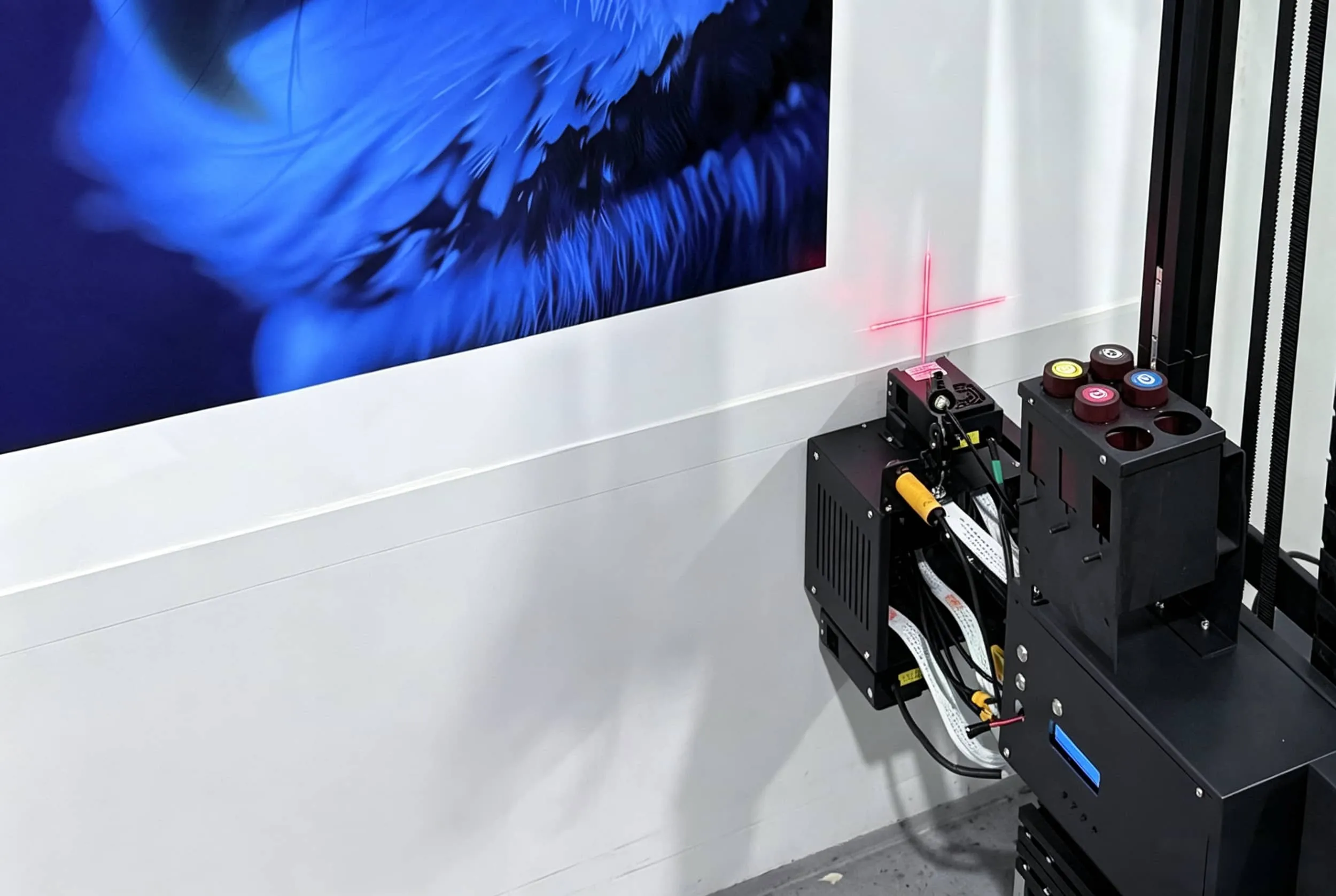
A professional wall printing machine moves vertically along the surface while depositing ink and curing it close to the wall. Unlike a conventional flatbed printer that operates inside a dedicated production area, a wall printer is often used directly inside the customer's home, office, hotel or commercial space.
That makes proper operating procedures especially important.
Avoid Direct Exposure to the UV Curing Light
UV curing LEDs are powerful light sources and should not be treated like normal room lighting.
Operators should avoid staring directly into the active curing source and should keep hands away from the UV LEDs while the machine is running.
Children, customers and unnecessary personnel should also remain away from the immediate printing area.
This does not mean the entire room becomes unsafe whenever the machine is operating.
The UV source is concentrated close to the printhead and wall. The main requirement is to operate the equipment correctly and follow the manufacturer's shielding and safety instructions.
Uncured UV Ink Needs More Care Than a Finished Mural
Liquid UV ink contains reactive components that polymerize during UV curing.
The greater exposure risk therefore comes from activities such as:
Handling liquid ink.
Refilling or replacing ink.
Cleaning the printhead.
Dealing with leaks or waste ink.
Touching an incompletely cured print.
Maintaining the ink system.
Once the mural has been properly cured, everyday contact with the finished wall is a very different situation from handling uncured liquid ink.
This distinction is particularly important when evaluating a wall printer for residential or commercial indoor work.
Do not simply ask a supplier:
“Is your ink safe indoors?”
Instead ask:
Which ink does the machine use?
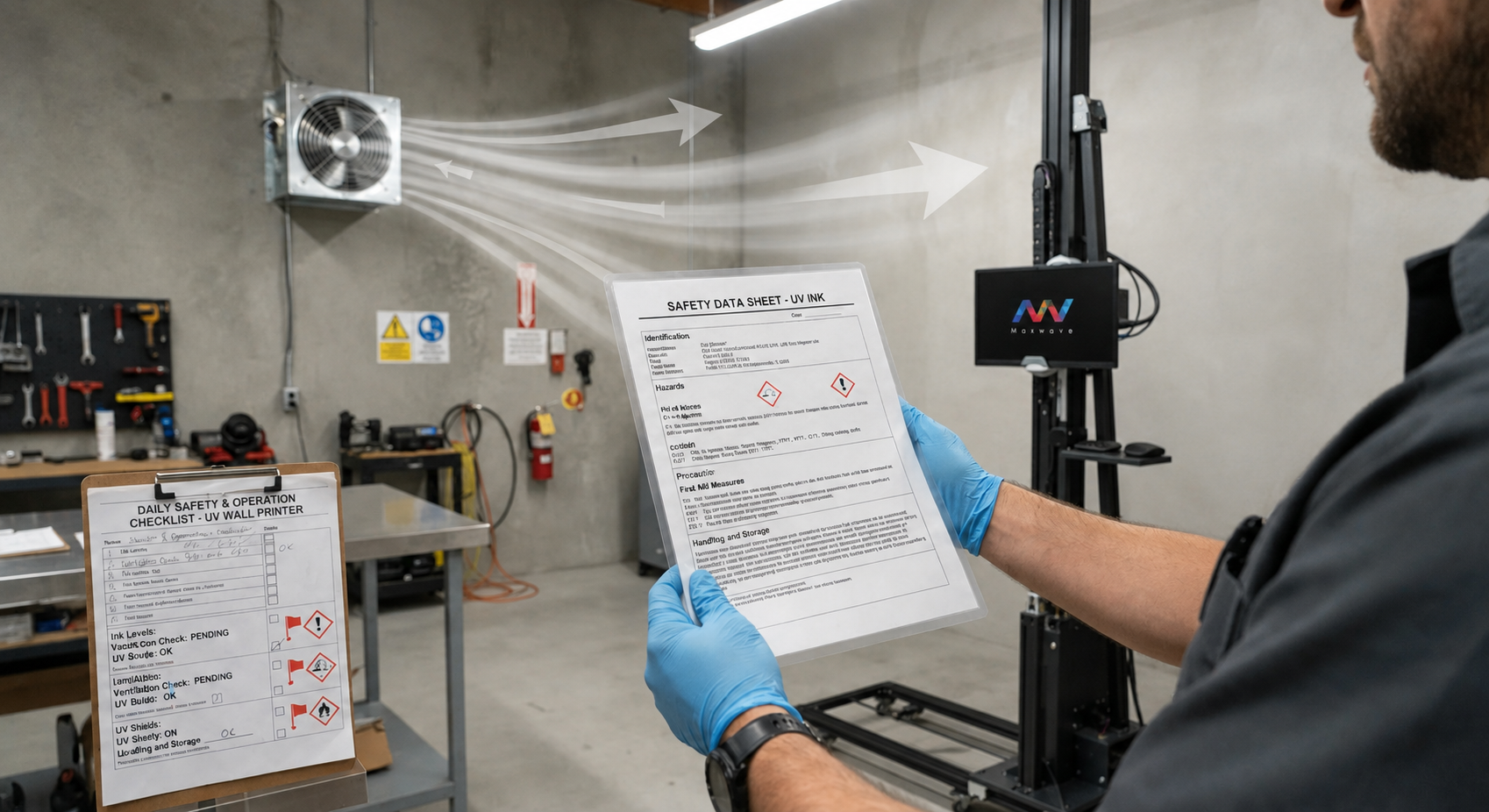
Can you provide the SDS?
How is the ink cured?
How can I confirm that curing is complete?
Those questions provide much more useful information than a generic claim such as “eco-friendly ink.”
2. Why Does Wall Printing Sometimes Smell?
A noticeable smell during or immediately after printing does not automatically mean the process is dangerous.
But it should not simply be ignored because a supplier describes the ink as “low VOC.”
UV-curable inks contain photoinitiators and other reactive components that change chemically when exposed to UV energy. Because of this, some prints can produce a recognizable odor during curing or for a period shortly after the mural is completed.
This is especially relevant when using a wall mural printer inside bedrooms, hotel rooms, restaurants, offices or other environments where customers may return shortly after the job is finished.
Low VOC Does Not Mean Odorless
One of the most important distinctions is:
Low VOC and low odor are not exactly the same thing.
An ink can produce relatively low solvent emissions and still have a noticeable smell.
Likewise, the absence of a strong smell does not automatically prove that indoor air quality is perfect.
Instead of relying on smell alone, operators should use the ink manufacturer's Safety Data Sheet and operating guidance.
The SDS should explain how the liquid ink should be handled, what personal protection is recommended and whether ventilation or local exhaust is required.
Strong or Persistent Odor Can Indicate a Curing Problem
A mild temporary odor may occur during printing.
But if the smell remains unusually strong or persists much longer than expected, check the curing process.
Possible causes include:
Too much ink being deposited.
Insufficient UV output.
Incorrect print settings.
A curing lamp or LED unit that is not operating correctly.
Ink and curing wavelengths that are poorly matched.
Environmental conditions affecting the curing process.
The original article correctly identified incomplete curing as an important reason odor may remain after printing.
This is why buyers should not evaluate a wall printing system only by how sharp the image looks.
Curing quality is also part of print quality.
If the printed surface remains tacky, transfers when touched or produces an unusually persistent chemical odor, the correct response is not simply to open a window and continue using the room.
The operator should first confirm that the ink has cured correctly.
3. Does Indoor Wall Printing Need Ventilation?
For most indoor projects, some level of ventilation is a sensible operating practice.
But there is no single airflow number that applies to every wall printer, every ink and every room.
Ventilation requirements depend on:
The specific UV ink formulation.
How much ink is being printed.
Mural size and ink coverage.
How long the printer is operating.
Room size.
Existing HVAC.
Whether windows and doors can be opened.
Whether people remain in the room during printing.
The ink manufacturer's SDS and machine instructions.
A 10 m² bedroom with closed windows is very different from a large hotel lobby with commercial HVAC.
Normal Indoor Jobs Usually Start With Fresh Air
For many residential and commercial mural projects, basic air exchange is the first step.
Depending on the site, this can include:
Opening windows or doors.
Using the building's mechanical ventilation.
Using portable extraction equipment.
Keeping the printing area temporarily separated from occupied areas.
Allowing the room to ventilate after printing if some odor remains.
If the project is inside a very small enclosed room with little natural airflow, additional extraction becomes more important.
The fact that a wall printer is compact or portable does not mean it can be operated indefinitely in a sealed room.
Mobile Wall Printing Means Every Job Site Is Different
A vertical wall printer is often transported from one customer location to another.
One day the operator may print a restaurant mural in a large open dining area.
The next day it may be a bedroom, retail fitting room or small office.
This means a wall-printing business should not depend on one fixed ventilation setup.
Operators should be able to assess the room before beginning the job.
Useful questions include:
Can windows or doors be opened?
Is mechanical ventilation already operating?
How large is the room?
How long will the mural take to print?
Will customers remain nearby?
Can the space remain ventilated afterward?
If the answer to most of these is unfavorable, bringing portable local extraction may be the better choice.
Local Extraction Can Be Better Than Simply Circulating Room Air
For businesses using a wall printer frequently indoors, local extraction can become useful.
The idea is simple:
Capture fumes and airborne material close to where they are generated instead of allowing them to spread through the room first.
This becomes more relevant for:
Long printing sessions.
Large murals with high ink coverage.
Small enclosed rooms.
Repeated daily printing.
Dedicated wall-printing workshops.
Operators spending several hours around the machine.
Exactly what extraction system is required should be based on the actual ink SDS and machine instructions rather than copying ventilation specifications from another printer.
What About Bedrooms, Schools, Hotels and Restaurants?
These environments deserve slightly more conservative planning because people may return soon after printing.
For these projects, prioritize:
Good ventilation during the job.
Keeping unnecessary occupants away from the immediate machine area.
Proper UV curing.
Allowing any remaining odor to dissipate.
Following the specific ink manufacturer's safety instructions.
If a client is particularly sensitive to odors, schedule the work when the room can remain unoccupied and ventilated for a period after completion.
This is not only a safety issue.
It is also part of providing a professional customer experience.

4. What Should You Check Before Buying a Wall Printer for Indoor Work?
If most of your target customers are homes, offices, restaurants, hotels, schools or retail interiors, indoor operating conditions should be part of your purchasing decision.
Do not wait until your first customer complains about odor before asking your supplier how the ink system works.
Ask What Ink the Machine Uses
“UV ink” is not enough information.
Ask for:
Ink manufacturer and model.
Safety Data Sheet.
Recommended handling procedures.
Compatible curing wavelength.
White-ink information if the machine supports white ink.
Recommended ventilation.
Any restrictions on intended applications.
A supplier who cannot provide basic ink documentation is giving you less information than you need to run professional indoor jobs.
Ask How the Ink Is Cured
When evaluating a direct to wall printer, ask the supplier to explain the complete curing process.
Find out:
Where the UV LED unit is positioned.
Whether curing intensity can be adjusted.
How the system matches ink deposition with UV output.
How operators identify incomplete curing.
Whether different surfaces require different curing settings.
The printing process is not finished simply because the artwork looks good.
The ink also needs to be properly cured.
Ask Whether You Need UV Ink for Every Indoor Project
Not every indoor wall necessarily requires the same ink configuration.
For smooth and absorbent indoor surfaces, water-based ink can sometimes be attractive when very low odor is a priority.
UV-curable ink becomes especially useful when you need broader material compatibility or features such as white ink.
This may include surfaces such as:
Dark painted walls.
Glass.
Metal.
Tile.
Acrylic.
Certain coated or non-porous materials.
A business printing mainly on normal painted drywall may therefore have different requirements from a company targeting hotels, retail stores and commercial interiors with many different wall materials.
This is another reason the best wall printer configuration should be chosen according to your customer applications rather than simply selecting the highest specification.
Ask for a Real Indoor Demonstration
Before buying, ask the supplier to show the complete workflow rather than only the final mural.
A useful demonstration should show:
Machine setup.
Printing.
UV curing.
White-ink operation if applicable.
Operator position.
Ink handling.
Shutdown.
Printhead cleaning.
Then ask directly:
How noticeable is the odor during printing?
What ventilation do you recommend?
How do I know the ink is fully cured?
What precautions do you recommend when printing inside homes?
Can you provide the ink SDS?
A real indoor demonstration gives you much more useful information than a brochure describing the ink as “green” or “environmentally friendly.”
Simple Indoor Wall Printing Checklist
Before beginning an indoor job, use this quick check:
Question | What to Confirm |
|---|---|
Is the wall suitable? | Clean, dry, stable and compatible with the ink |
Is fresh airflow available? | Windows, HVAC or suitable extraction |
Is the curing system operating normally? | No obvious LED or printhead fault |
Is the work area controlled? | Customers and children away from the active printer |
Is the ink fully cured? | No obvious tackiness or transfer |
Does strong odor remain? | Continue ventilation and investigate curing if necessary |
Do you have the ink SDS? | Safety and handling instructions available |
You do not need to turn every residential mural into an industrial ventilation project.
But you do need to understand the ink system you are bringing into the customer's building.
Conclusion
So, is wall printing with UV-curable ink safe indoors?
Yes. It can be used safely indoors when the ink is handled correctly, the curing system is working properly and the work area has appropriate ventilation.
But avoid three common assumptions:
“UV ink means zero odor.” — Not necessarily.
“The mural feels dry, so curing must be perfect.” — Not necessarily.
“A wall printer never needs ventilation.” — Do not assume that without checking the actual ink and manufacturer guidance.
For a professional wall-printing business, the safest workflow is straightforward:
Know your ink → assess the room → provide ventilation → control access around the machine → verify proper curing → allow residual odor to dissipate before normal occupancy.
And if indoor projects will make up most of your business, choose a professional wall printer based on the complete workflow—not only resolution, maximum print height or advertised printing speed.
Ink type, surface compatibility, curing, white-ink capability, setup time, indoor operating procedures and technical support all matter once the machine starts visiting real customer sites.
If you are comparing machines, send WallPrintBox your typical project types—homes, offices, hotels, restaurants, schools or retail stores—along with the wall materials you expect to print on. The team can help you compare ink configurations, surface compatibility and the setup that best matches your wall-printing business.