Yes—one person can run a wall printing business.
For many startups, a solo model is actually one of the most practical ways to begin because wall printing does not normally require a large production crew. One operator can handle customer communication, artwork preparation, machine setup, printing, quality control, and most small-to-medium mural projects.
But “one person can run it” does not mean one person should do everything.
The real challenge is not operating the printer. It is managing the complete workflow around the printer: finding customers, preparing artwork, traveling to job sites, checking walls, setting up equipment, printing, cleaning the machine, quoting the next project, and handling administration.
For someone considering a wall printing business for one person, success depends mainly on three things:
Choosing equipment that one person can transport and set up, keeping project sizes within a manageable range, and knowing when to outsource work that does not require your direct involvement.
The original workflow is right to focus on real production capacity rather than maximum machine speed, because quoting, travel, setup, troubleshooting, and cleanup all reduce the amount of time available for actual printing.
1. What Can One Person Realistically Handle?
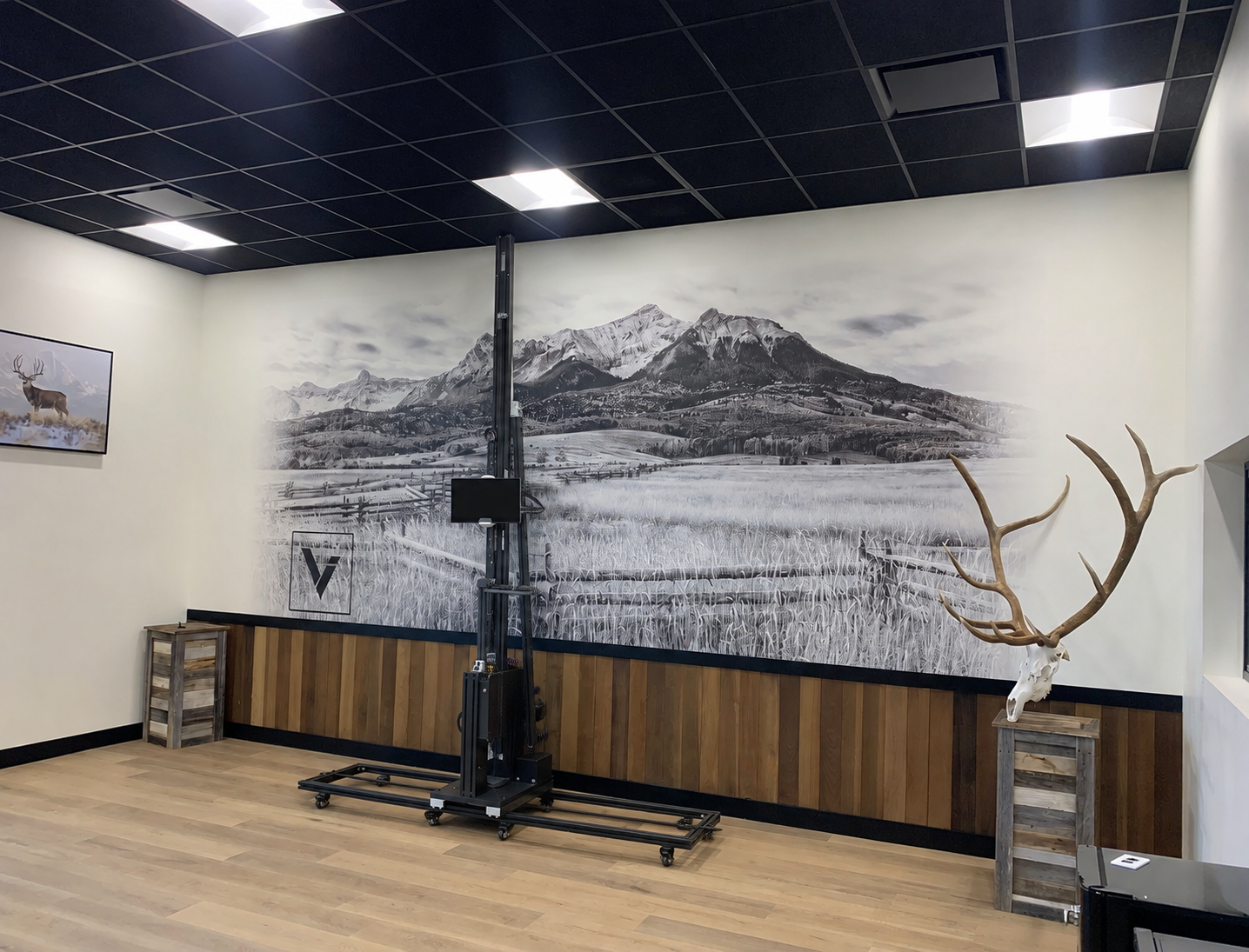
A solo wall-printing operator can normally manage the complete printing process on standard residential and small commercial jobs.
That includes client communication, site inspection, artwork preparation, machine positioning, calibration, printing, basic wall preparation, final inspection, and routine printer maintenance.
The jobs that fit this model best are usually:
Residential feature walls, children's rooms, cafés, restaurants, salons, offices, small retail stores, schools, reception areas, and other projects where the mural can be completed without complicated scaffolding or a large installation crew.
The key is to think in terms of the complete working day, not just printer speed.
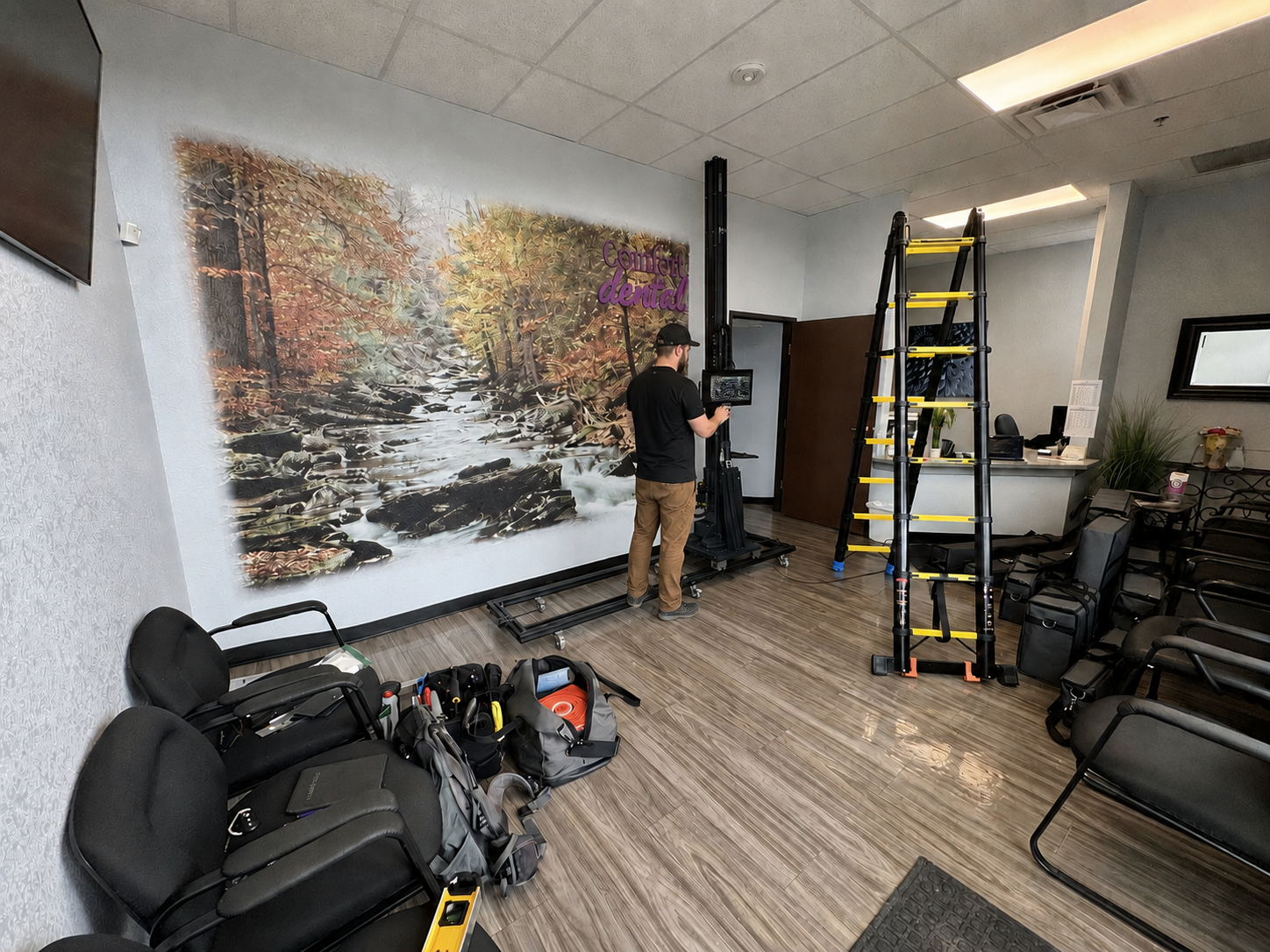
A machine may advertise a certain number of square meters per hour, but your day also includes loading equipment, driving to the site, checking the wall, assembling the printer, positioning the artwork, running a test, printing, cleaning the machine, packing everything again, and communicating with the customer.
That is why maximum output on a specification sheet should never be treated as your personal daily production capacity.
A solo operator with a well-organized workflow may complete one medium commercial wall or several smaller projects in a day, but there is no universal number of square meters that applies to every business. Wall material, image detail, white ink, print mode, travel time, machine setup, and surface preparation all change the result.
A more useful planning formula is:
Daily Capacity = Productive Printing Time × Real Production Speed
Then subtract time for setup, travel, testing, cleaning, and customer communication.
If a job requires several hours of preparation before the printer even starts, the effective output is very different from a clean, repeatable wall in a local café.
The Best Solo Jobs Are Repeatable
A one-person business becomes much easier when projects follow a similar pattern.
For example, if most customers are cafés, children's rooms, salons, and office feature walls, you gradually develop a repeatable process for site inspection, artwork sizing, wall preparation, pricing, setup, and printing.
The more standardized the work becomes, the less time you spend solving a completely new problem on every project.
This is one reason a wall mural printer for solo operators should be selected around the jobs you expect to sell most often—not the largest mural the machine could theoretically produce.
2. What Should You Do Yourself—and What Should You Outsource?
Running the business alone does not mean personally performing every task.
The most valuable activities to keep under your control are the ones that directly affect customer relationships and print quality.
That usually means keeping sales conversations, quoting, final artwork approval, printing, machine operation, and quality control in-house.
These are the areas where your experience and reputation directly affect whether the customer is satisfied.
The original article also makes an important distinction between being a solo owner and refusing to use outside help. Administrative work, bookkeeping, repetitive marketing, and unusually large installations do not necessarily need to consume the operator's printing time.
For example, bookkeeping can be outsourced to an accountant. Routine social-media editing can be handled by a freelancer. Complex graphic design can be sent to a designer when the client does not already have print-ready artwork.
And some physical projects should simply have a second person.
A normal residential mural may be completely manageable alone. A tall lobby wall, difficult staircase, large exterior surface, or project requiring scaffolding may be safer and faster with temporary help.
That does not make the business a “team business.”
It means you are using labor only when the project requires it.
A practical solo model is:
Keep Under Your Control | Outsource When Useful |
|---|---|
Customer consultations | Bookkeeping |
Pricing and quoting | Repetitive marketing work |
Final artwork approval | Complex design work |
Machine setup and printing | Large wall preparation |
Quality control | Scaffolding / difficult access |
Maintenance checks | Temporary second-person assistance |
The goal is not to minimize every outside expense.
It is to protect your highest-value hours.
If you can spend one hour printing a profitable mural instead of spending that hour chasing invoices, paying someone else to handle administration may actually increase your profit.
3. What Type of Wall Printer Is Best for a Solo Operator?
This may be the most important buying decision.
A machine designed for maximum industrial output is not automatically the best machine for someone working alone.
For a solo operator, portability and setup simplicity can be more valuable than maximum production speed.
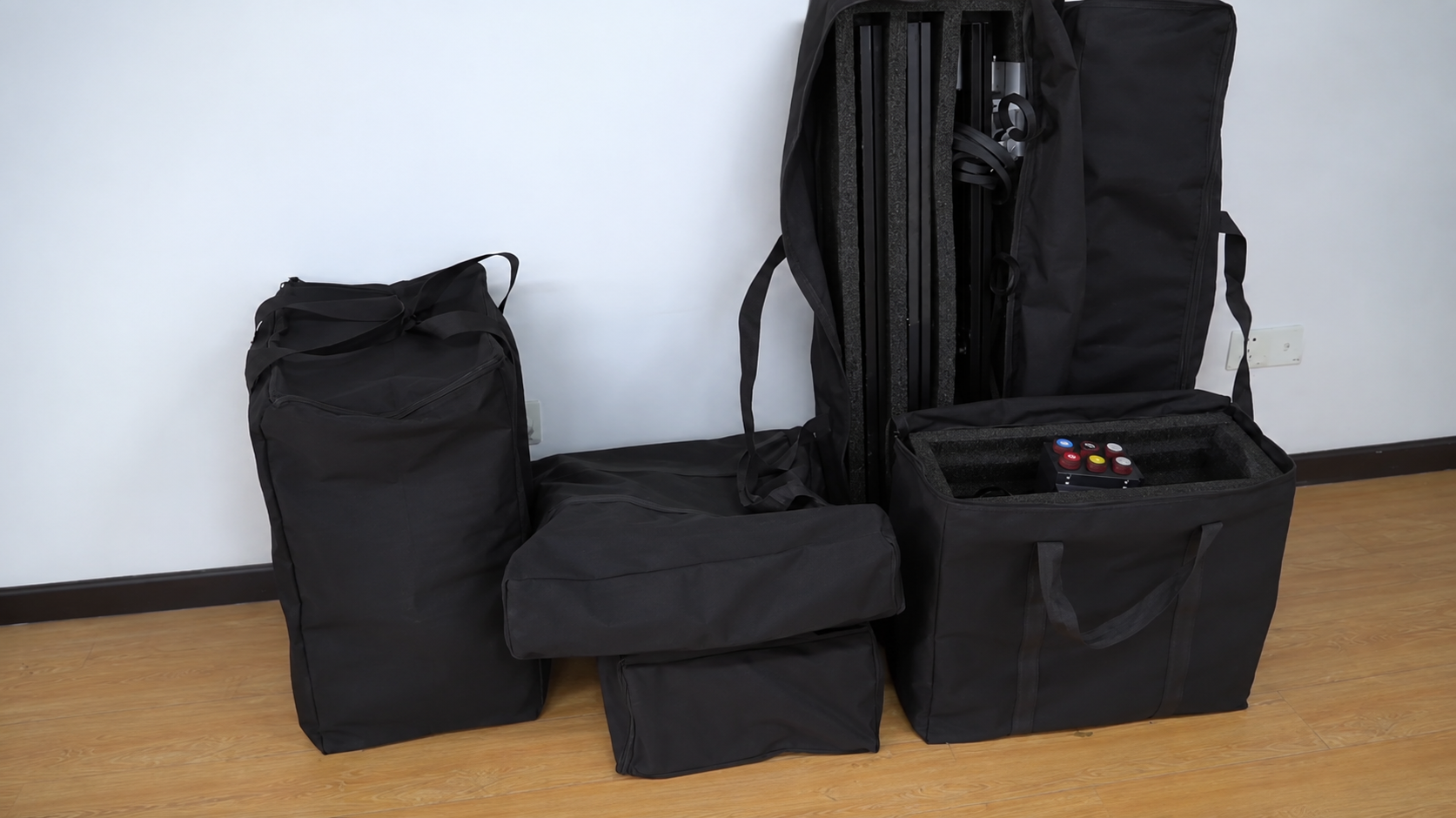
A good portable wall printer for small businesses should be manageable from vehicle to wall without requiring several people every time you accept a project.
Before buying, pay attention to six things.
Weight and modular design matter because you will repeatedly load, unload, assemble, and transport the equipment.
Setup time matters because every additional 30 minutes at a customer site reduces the number of productive hours available that day.
Wall-distance sensing matters because you may not have a technician standing beside you to constantly correct the machine.
White-ink management matters if you plan to print dark walls, wood, tile, glass, or other surfaces that require an underbase.
Software simplicity matters because you will be managing both the artwork and machine yourself.
And technical support matters because a solo operator has no internal maintenance department.
The equipment section of the original article correctly emphasizes portability, setup speed, durability, adjustability, and vendor support as priorities for a one-person operation.
Do Not Buy More Machine Than You Can Use
One of the easiest mistakes is assuming that a faster or more complicated machine automatically creates a more profitable business.
It does not.
Suppose most of your customers request 5–15 m² residential and small commercial murals.
You may gain very little from buying a machine optimized for huge industrial projects if the heavier frame makes it more difficult to transport and set up by yourself.
A wall printing machine for a startup business should first make the common jobs easier.
You can upgrade later when your order volume proves that additional production capacity will actually generate more revenue.
For a solo operator, I would prioritize:
Reliable output → easy setup → manageable transport → good support → sufficient speed
before:
Maximum speed → maximum height → every possible accessory
That order is much more closely aligned with how the business will actually operate.
Support Is More Important When You Work Alone
If you have employees, a technical issue may be handled by another team member while you continue selling or preparing jobs.
A solo operator does not have that luxury.
When the printer stops, the business may stop.
Before buying, ask the supplier what happens when you need help.
Can they connect remotely?
Do they provide online training?
Can they help diagnose nozzle, software, sensor, motor, and white-ink problems?
Are basic spare parts available?
Can you replace common components yourself with remote guidance?
For a one-person business, these questions may be more important than gaining another 2 m²/h of theoretical speed.
4. When Does a Solo Wall Printing Business Need Help?
The goal does not have to be staying alone forever.
A successful solo operator should add help when the business becomes more profitable by doing so.
There are usually three signs.
The first is when you are turning down paid printing jobs because administration consumes too much time.
The second is when customers increasingly request projects that are physically difficult to complete alone.
The third is when one person becomes the bottleneck between sales, printing, and customer service.
At that point, the first hire does not necessarily need to be a full-time printer operator.
A part-time assistant may provide more value by helping with transportation, setup, wall preparation, cleaning, photography, and packing equipment.
Likewise, outsourcing accounting or recurring marketing may free enough time for you to accept additional paid projects without adding a permanent employee.
Can You Run It as a Side Business?
Yes, but the business model needs to match your available time.
Weekend residential murals, restaurants, cafés, and small retail projects can work well because jobs can often be scheduled individually.
The limitation is customer communication.
Commercial clients may expect quotes, design approvals, and project updates during normal business hours even when the actual printing happens on weekends.
A side business therefore needs a good system for managing enquiries and scheduling.
Can You Scale Without Hiring a Large Team?
Yes.
Wall printing is well suited to a lean service model.
One operator can remain responsible for printing while using freelancers or temporary labor for design, accounting, marketing, wall preparation, or unusually large installations.
You may eventually operate several printers or hire additional operators, but you do not need to begin that way.
The most sensible path is usually:
One machine → one operator → prove demand → standardize workflow → add help only where a bottleneck appears.
That reduces startup risk and lets the business grow from actual orders rather than assumptions.
Conclusion
One person can absolutely run a wall printing business.
In fact, many of the most suitable early-stage projects—residential murals, cafés, restaurants, offices, salons, classrooms, and small retail interiors—can be sold, prepared, printed, and completed by one trained operator.
The limiting factor is not usually the printer itself.
It is everything surrounding the printer.
A solo business works best when the owner chooses a machine that is easy to transport and set up, focuses on manageable projects, creates a repeatable workflow, and outsources low-value or physically demanding tasks when necessary.
You do not need employees before your first customer.
You need a clear customer group, a manageable machine, enough technical support, and a realistic understanding of how much work fits into one day.
For someone evaluating a wall printer machine for a one-person business, the best machine is therefore not necessarily the fastest one.
It is the machine that one person can transport, set up, operate, maintain, and use profitably without depending on a second employee for every job.
Planning to start alone? Send WallPrintBox your typical mural size, target customers, wall materials, expected monthly workload, delivery country, and startup budget. The team can help you compare a suitable configuration and arrange a sample print so you can evaluate whether the machine and workflow are realistic for a one-person wall printing business.