Standing in front of a blank wall, the choice can feel simple at first.
Do you hire a mural artist?
Or do you use a wall printer?
But once budget, timeline, surface condition, and final visual effect enter the conversation, the answer becomes more practical than emotional.
A wall printer is better when you need speed, repeatability, clean detail, lower cost at scale, and consistent branding. Hand painting is better when you need texture, artistic originality, irregular surface handling, and a one-of-a-kind human finish.
There is no universal winner. The better choice depends on the wall, the project, and the result you want.
Cost Comparison: Which One Is More Affordable?
Cost is usually the first question because it changes everything else.
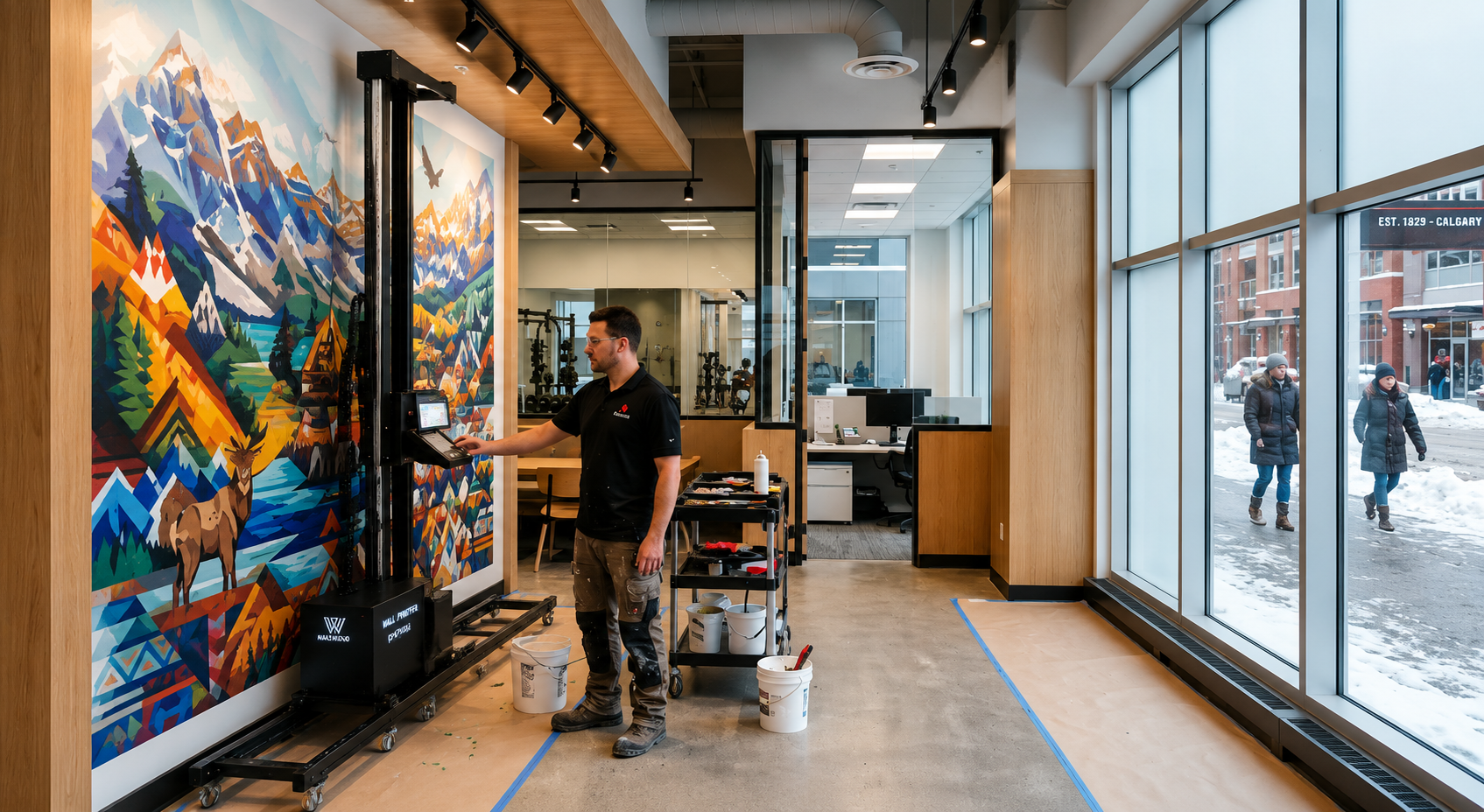
A wall printing service is usually more cost-effective for commercial murals, large walls, and repeatable designs. Once the design file is ready, the machine can reproduce the artwork quickly with low ink cost and limited labor.
Hand painting is more labor-intensive. Every square foot requires skilled time, and that time becomes expensive as the wall gets larger.
Cost Factor | Wall Printer | Hand Painting |
|---|---|---|
Typical service price | $10–$25/ft² | $25–$100+/ft² |
100 ft² wall example | Around $1,000–$2,500 | Around $2,500–$7,000+ |
Best cost advantage | Large walls and repeated designs | Small custom artistic walls |
Main cost driver | Machine setup + ink + operator | Artist time + design + materials |
For a restaurant wall, retail graphic, office logo wall, or hotel corridor, wall printing usually has the stronger cost advantage. For a small home accent wall or a one-off artistic piece, hand painting can still make sense because the project is smaller and the emotional value is higher.
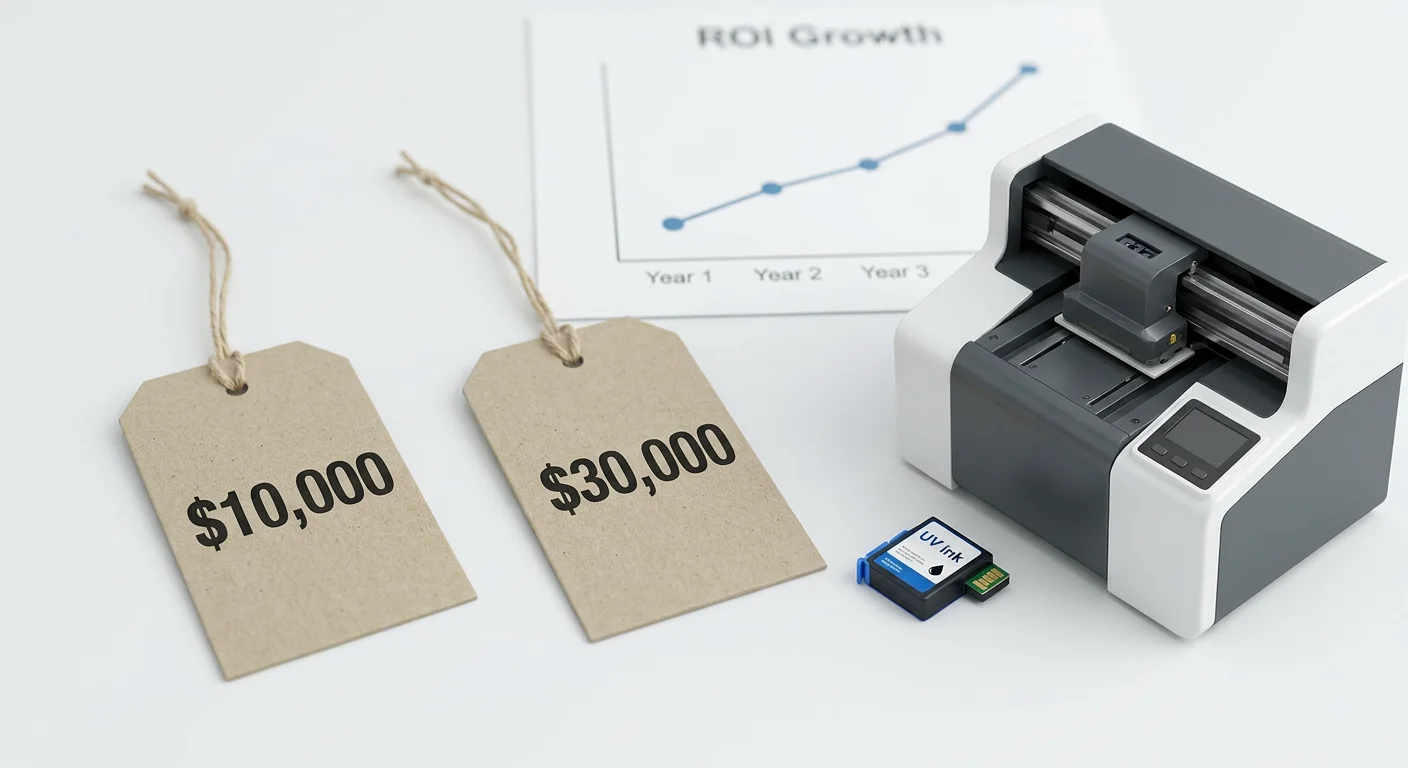
For entrepreneurs, the gap becomes even more important. A mid-range wall printer priced around $7,000–$12,000 can turn a strong profit when local demand exists, because machine operating cost is far lower than repeated artist labor. But for a one-time buyer, hiring a mural artist may be simpler than owning equipment.
Output Quality: Digital Precision vs Human Texture
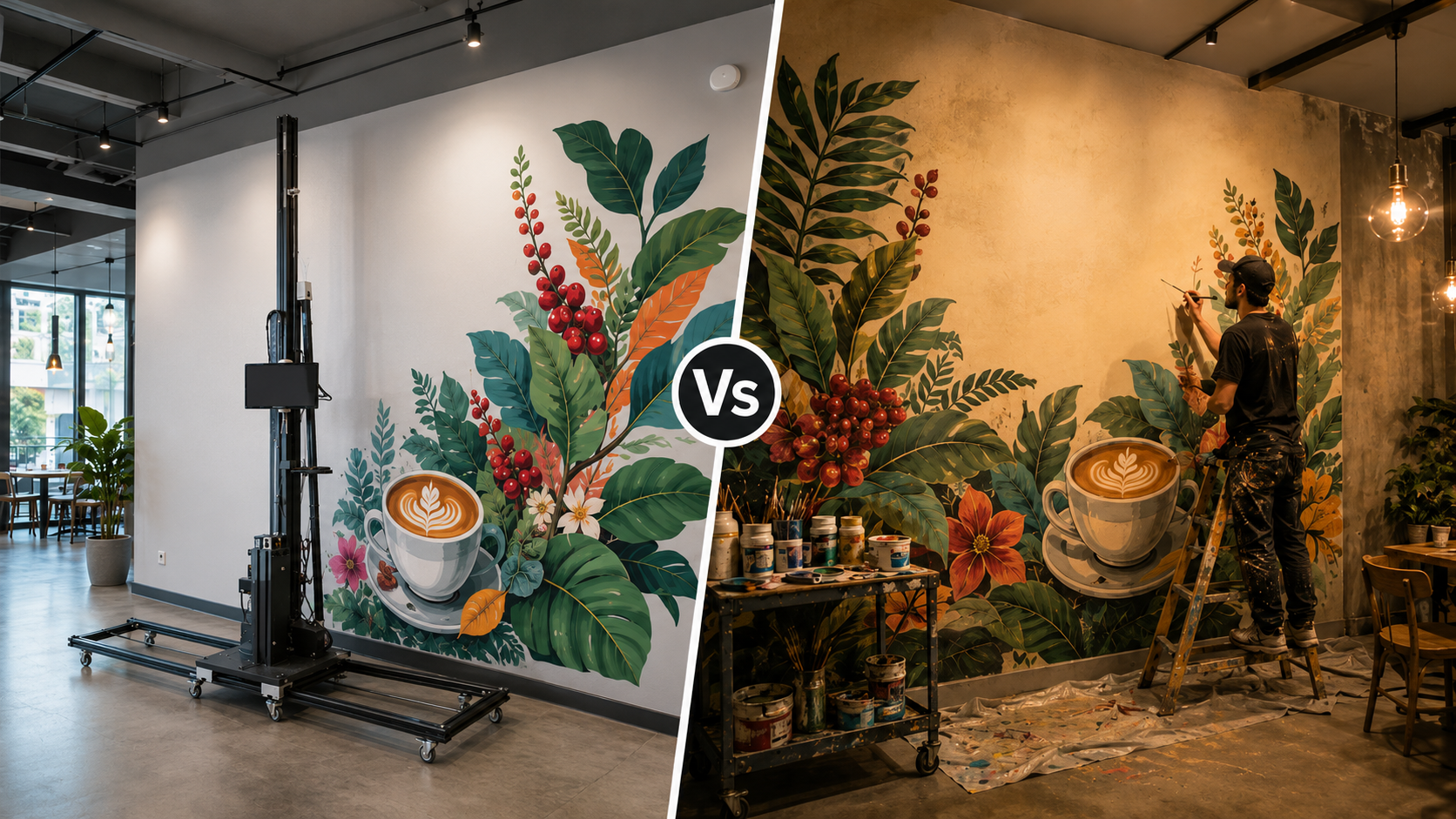
The biggest visual difference is not whether one looks “better.” It is what kind of beauty each method creates.
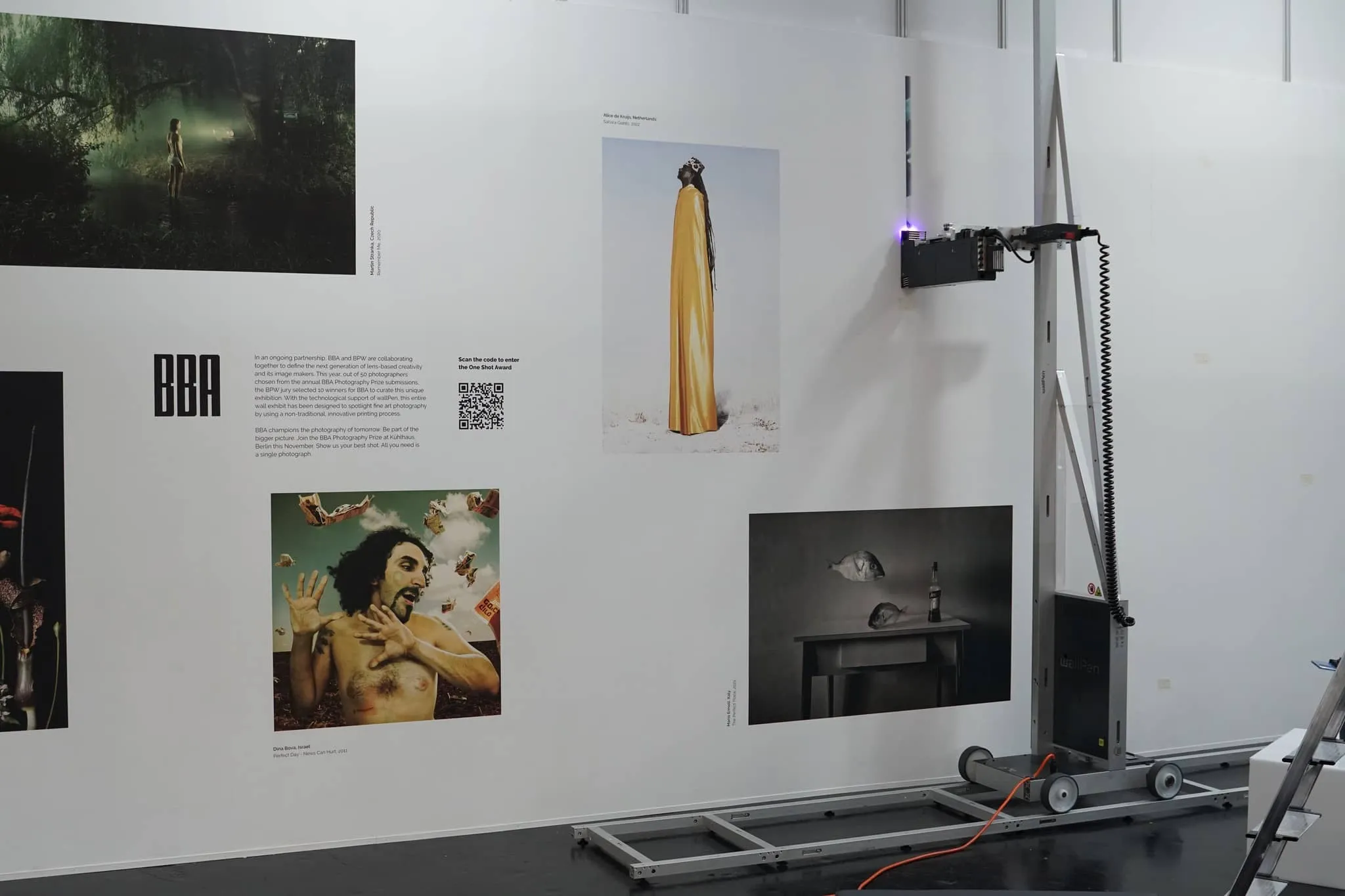
A digital wall printer delivers clean lines, sharp image reproduction, smooth gradients, and consistent color. It is especially strong for logos, branded graphics, photorealistic images, typography, and multi-location projects where every wall needs to look the same.
Hand painting delivers something different: brush texture, material depth, imperfect edges, and visible craftsmanship. These details make the wall feel more personal and more human. In luxury interiors, boutique hotels, restaurants, and artistic spaces, that handmade quality can be part of the value.
So the real distinction is simple:
Wall printer = precision, consistency, repeatability
Hand painting = texture, originality, emotional value
For corporate branding, commercial interiors, schools, retail spaces, and repeatable designs, wall printing usually wins. For fine-art murals, luxury feature walls, and expressive residential projects, hand painting has a stronger emotional effect.
Timeline: Which Method Is Faster?
Time is where wall printing has a major advantage.
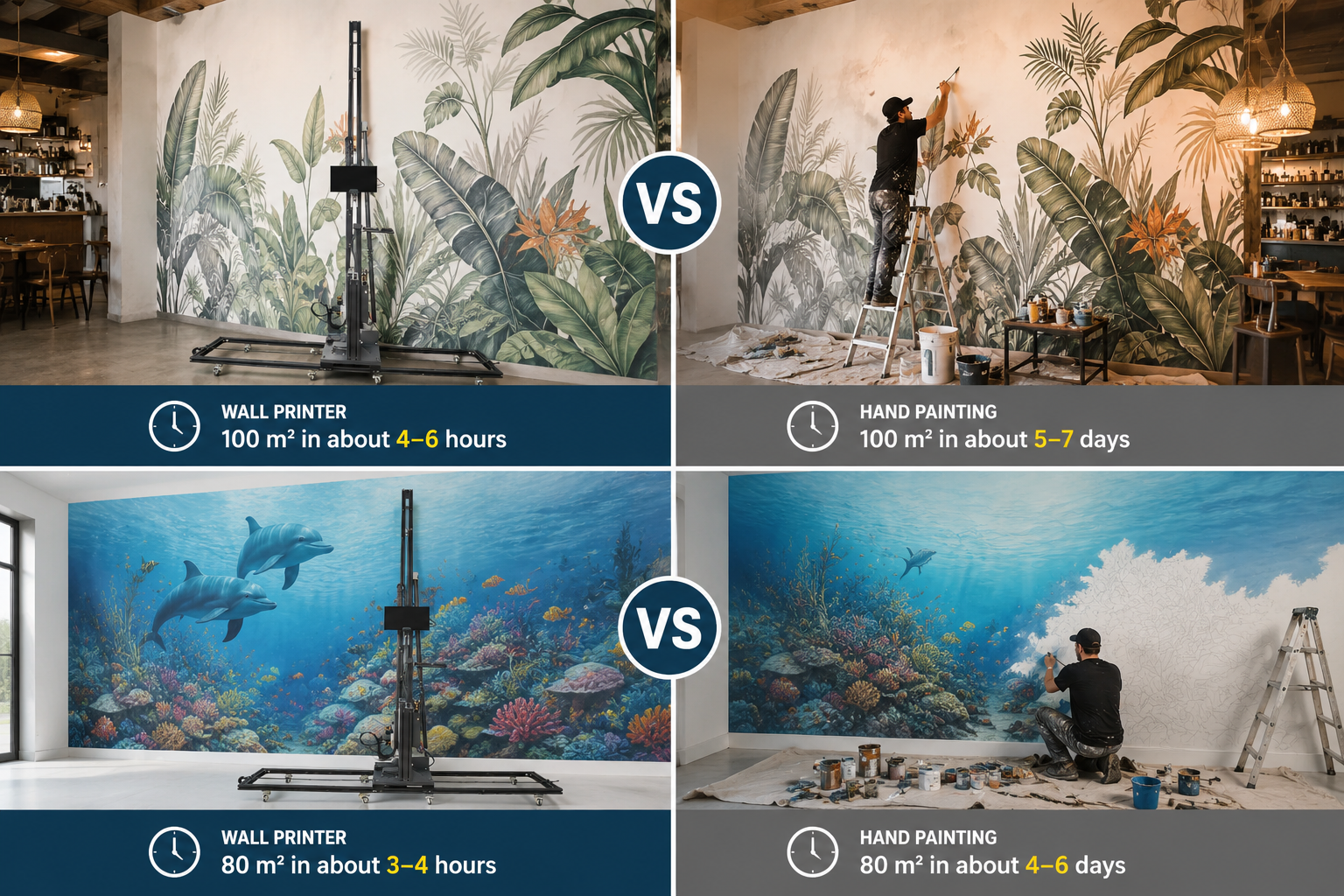
A UV wall printer can often complete a standard commercial wall in a single working day. The design work happens before the job. Once the machine arrives, the process is mainly setup, calibration, printing, and inspection.
Hand painting takes longer because the artist must transfer the design, paint in layers, make adjustments, and often wait for coatings or sealers to dry.
Timeline Factor | Wall Printer | Hand Painting |
|---|---|---|
100 ft² wall | Often same day | Usually 3 days to 3 weeks |
Drying time | UV ink cures instantly | Paint and sealer need drying time |
Business disruption | Low | Medium to high |
Best for urgent projects | Yes | Not ideal |
For restaurants, hotels, offices, and retail stores, this matters a lot. A wall printer can often work overnight and let the space reopen the next day. Hand painting may require several days of access, drying time, and disruption.
If your space cannot be closed for long, wall printing is usually the safer choice.
Durability and Maintenance
Both methods can last when done properly, but their maintenance behavior is different.
UV wall printing creates a cured ink layer that bonds to the wall surface. Indoors, a good UV wall print can stay vibrant for many years, especially away from direct sunlight and heavy abrasion. For commercial interiors, this makes it a strong long-term option.
Hand-painted murals can also last, but they are more sensitive to light, moisture, wall movement, and physical wear. They may require touch-ups over time, especially in bright or high-traffic spaces.
Durability Factor | Wall Printer | Hand Painting |
|---|---|---|
Indoor lifespan | Often 8–10 years with proper conditions | Often 3–5+ years before touch-ups |
Outdoor use | Needs suitable ink + protective coating | Needs exterior paint + protective coating |
Repair method | Reprint damaged section from original file | Artist touch-up required |
Color consistency | Easier to reproduce | Harder to match after aging |
For long-term commercial branding, wall printing has a clear maintenance advantage because the original digital file can be reused for repairs or repeated jobs. For hand painting, repairs depend on paint matching, artist availability, and how the original mural has aged.
Surface Conditions: When Hand Painting Still Wins
Wall printers work best on flat, stable, vertical surfaces.
Smooth drywall, plaster, concrete, glass, tile, and prepared interior walls are good candidates. If the wall is too rough, curved, cracked, or uneven, print quality may drop unless the surface is repaired first.
Hand painting is more flexible on difficult surfaces. A skilled artist can work with arches, columns, heavy texture, uneven masonry, stairwells, and irregular shapes. In some cases, the imperfect surface becomes part of the artwork.
So the surface itself can decide the method.
If the wall is flat and prepared, a wall printer is efficient and accurate.
If the wall is curved, rough, or highly irregular, hand painting is often the better choice.
Which Method Is Better For Your Project?
The easiest way to decide is by matching the method to the project type.
Project Type | Better Choice | Why |
|---|---|---|
Small residential accent wall | Hand painting | More personal and artistic |
Kids’ room or home studio | Hand painting or wall printer | Depends on budget and style |
Restaurant or café feature wall | Wall printer | Fast, clean, cost-effective |
Hotel corridor or lobby wall | Wall printer | Speed and consistency matter |
Multi-location retail branding | Wall printer | Same design across every site |
Luxury boutique or flagship space | Hybrid | Digital base + artist finishing |
Rough or curved wall | Hand painting | Artist can adapt to the surface |
Wall printing business startup | Own a wall printer | Better scalability and margin |
For many premium commercial interiors, the best answer is not one or the other. It is a hybrid workflow.
A wall printer can create the base image, brand elements, or detailed structure. Then an artist can add texture, metallic highlights, glazing, brushwork, or hand-finished details. This gives the project both speed and soul.
Simple Decision Guide
Choose a vertical wall printer if your project needs fast delivery, large-area coverage, accurate colors, sharp graphics, or repeated designs across multiple locations.
Choose hand painting if your project needs artistic texture, emotional value, irregular surface handling, or a truly one-of-a-kind result.
Choose a hybrid workflow if the space is high-end and needs both commercial precision and handcrafted richness.
The question is not simply which method looks better. The better question is:
What does this wall need to achieve?
If it needs to support branding, speed, and consistency, wall printing is usually the stronger choice. If it needs to feel personal, handmade, and unique, hand painting is hard to replace.
Conclusion
There is no single winner in the wall printer vs hand painting debate.
Wall printing machines win on speed, cost efficiency, consistency, and scalability.
Hand painting wins on texture, originality, flexibility, and artistic value.
For business spaces, branded interiors, large walls, and multi-site projects, a wall printer is usually the better practical choice. For residential art walls, luxury spaces, and irregular surfaces, hand painting may deliver a stronger emotional result.
The best wall mural is not always the most artistic one. It is not always the most precise one either.
It is the one that fits your budget, timeline, surface, and purpose.
Not sure whether your wall mural project needs a wall printer, hand painting, or a hybrid workflow? Start by comparing your wall size, surface condition, deadline, and budget — the right method will usually become clear.