Should you buy a UV wall printer or a water-based wall printer?
The answer depends less on advertised DPI and more on the jobs you plan to sell.
A water-based wall printer can be a practical choice when most of your work is indoor decoration on smooth, light-colored and absorbent walls.
A UV system becomes more attractive when your customers ask for dark walls, glass, tile, metal, commercial interiors, faster project handover or a wider range of surfaces.
The simplest buying rule is:
Water-based → simpler indoor wall-decoration workflow.
UV → broader surface range and greater commercial flexibility.
Neither technology is automatically better.
The right wall printer is the one that matches the walls, customers and project types you expect to handle most often.
Buying Factor | UV Wall Printer | Water-Based Wall Printer |
|---|---|---|
Best fit | Commercial and mixed applications | Indoor decorative walls |
Typical walls | Absorbent and non-porous surfaces | Mainly absorbent walls |
Dark walls | Stronger with white ink | More limited |
Drying | UV curing during printing | Absorption and evaporation |
Maintenance | More complex, especially with white ink | Usually simpler |
Project flexibility | Higher | Narrower |
Initial complexity | Higher | Lower |
1. What Changes Between UV and Water-Based Printing?
The biggest difference is how the ink behaves after it reaches the wall.
UV Ink Cures on the Surface
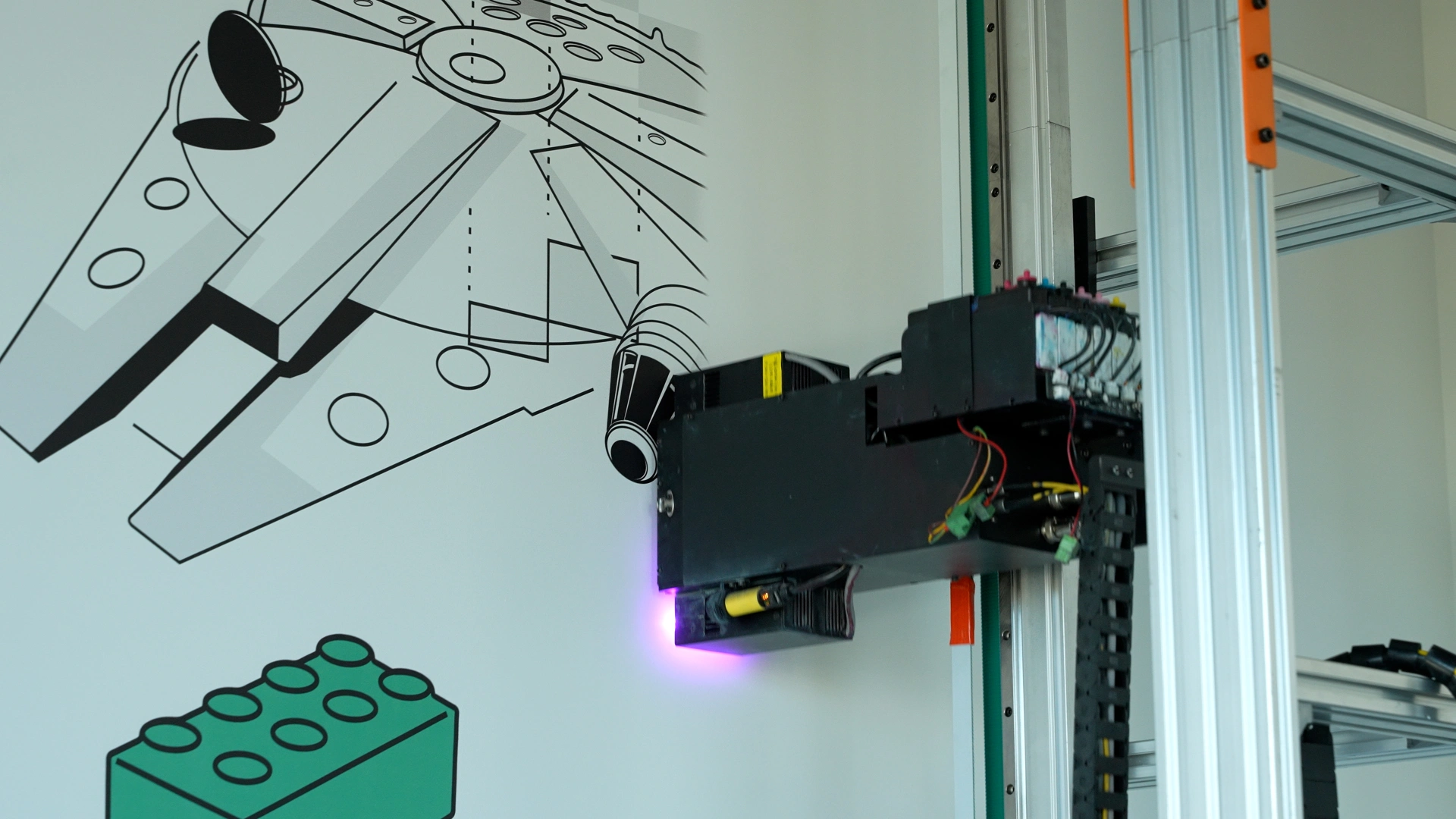
A UV wall printer deposits liquid ink and exposes it to UV light almost immediately.
The curing process creates a solid printed layer on the surface rather than relying mainly on the wall to absorb the ink.
This gives UV printing an important advantage on materials such as:
Painted walls
Concrete and brick
Glass and tile
Wood
Metal
That does not mean UV ink automatically adheres permanently to every material.
Highly polished glass, certain metals, plastics and difficult coatings may still require surface preparation or an adhesion promoter. WallPrintBox's current surface guidance likewise emphasizes that substrate preparation remains important even when UV ink is used. WallPrintBox
Water-Based Ink Needs More Absorption
Water-based ink relies more heavily on the substrate absorbing and holding the ink while moisture evaporates.
That makes it better suited to surfaces such as:
Painted drywall.
Plaster.
Other absorbent interior wall finishes.
If your business mainly prints residential murals on normal light-colored indoor walls, that narrower application range may not be a problem.
In fact, it can make the workflow simpler.
The limitation appears when customers begin asking for materials that do not absorb ink well.
White Ink Changes Dark-Wall Jobs
This is one of the most important buying differences.
UV systems commonly support CMYK + White configurations, allowing the printer to lay down a white underbase before the color image.
That becomes useful on:
Black walls.
Dark gray walls.
Strongly colored surfaces.
Glass or transparent materials.
A water-based machine without a practical white-ink channel will have more difficulty reproducing bright colors on those surfaces.
If commercial branding, restaurants, retail stores or dark feature walls are part of your target market, white ink can matter more than another increase in advertised DPI.
WallPrintBox's current buyer guidance also identifies white ink as particularly useful for dark walls, glass, metal and tile. WallPrintBox
Drying Changes Project Handover
UV ink cures during printing, so the finished area is generally ready for inspection and normal handling immediately after the printer completes that section.
Water-based printing depends more on wall absorption, room conditions and evaporation.
That does not necessarily mean every water-based project requires hours of waiting.
It means drying behavior depends more strongly on:
Wall porosity.
Humidity.
Ink coverage.
Room airflow.
For a residential mural scheduled with plenty of time, this difference may be minor.
For a commercial site with a short installation window, faster curing can become a real business advantage.
2. Which Jobs Fit Each Wall Printer?
Do not choose the technology from specifications first.
Look at the last ten projects you would actually like to sell.
Water-Based Fits Simple Indoor Murals
A water-based wall printing machine makes the most sense when your customers mainly want decorative murals on normal indoor walls.
Typical examples include bedrooms, living rooms, children's rooms, cafés and simple office interiors.
If these walls are smooth, light-colored and absorbent, you may not need white ink or broad non-porous material compatibility.
That makes water-based equipment particularly attractive when:
Your startup budget is limited.
You want a simpler workflow.
Most customers have white or light walls.
You are testing a new wall-printing business.
The narrower application range matters less if you never intended to sell glass, metal or dark-wall projects.
UV Fits Mixed Commercial Work
A UV vertical wall printer becomes more attractive once your customer mix expands.
Imagine one week includes:
A restaurant mural on dark paint.
An office logo on glass.
Artwork on brick.
A hotel feature wall.
A retail branding project.
Now the ability to work with more surfaces starts affecting revenue rather than simply adding specifications.
UV is particularly valuable when you expect customers to ask:
“Can you print directly on this?”
and the answer needs to be yes more often.
Dark Walls Favor UV Configurations
A normal CMYK image relies on a light-colored background.
On a dark wall, the existing wall color can reduce brightness and change the final appearance.
A UV system with white ink can create an opaque underbase before the CMYK layer.
For businesses targeting commercial interiors, this can expand the number of jobs you can accept without asking the customer to repaint the wall first.
Outdoor Jobs Need More Testing
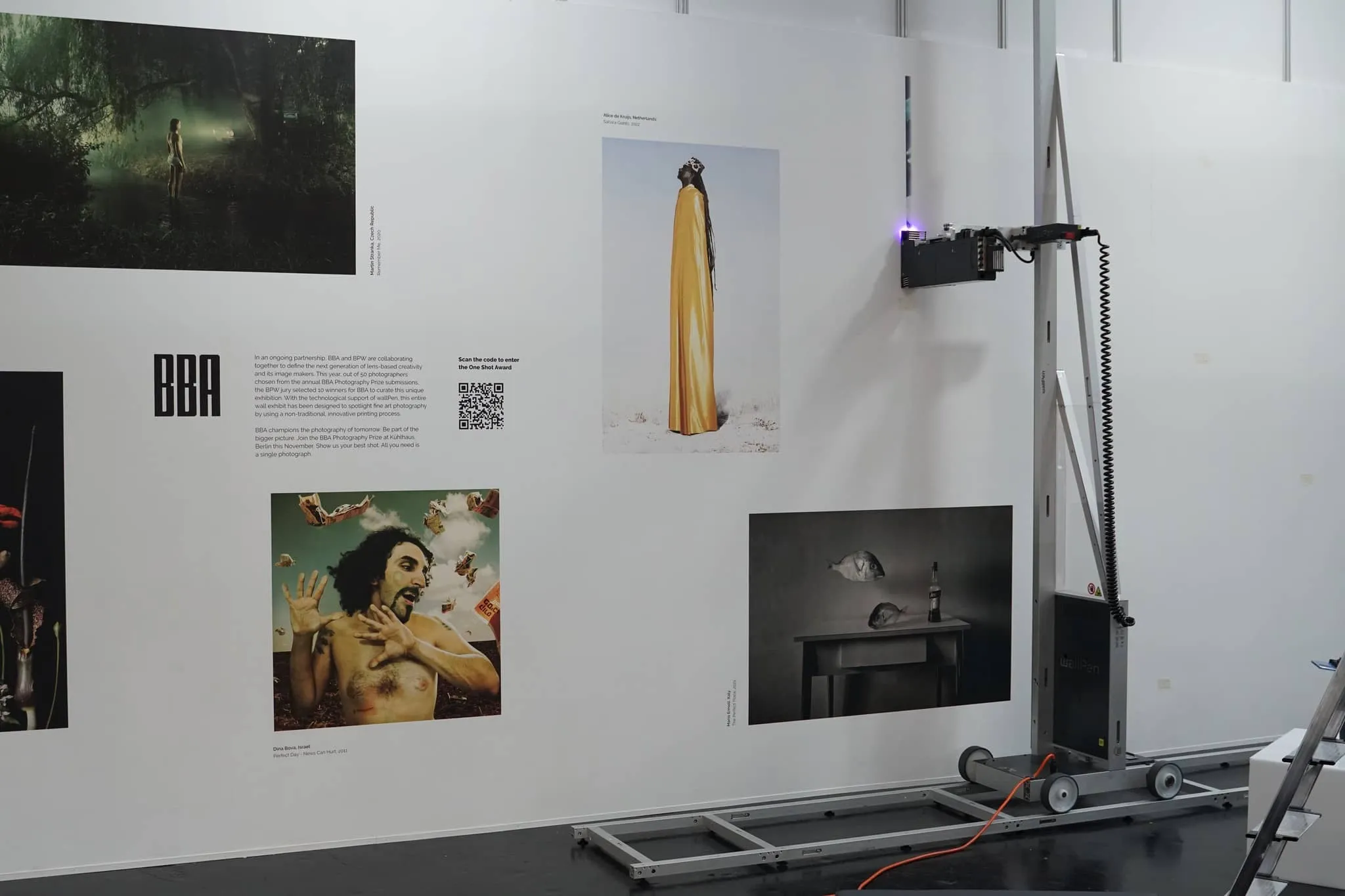
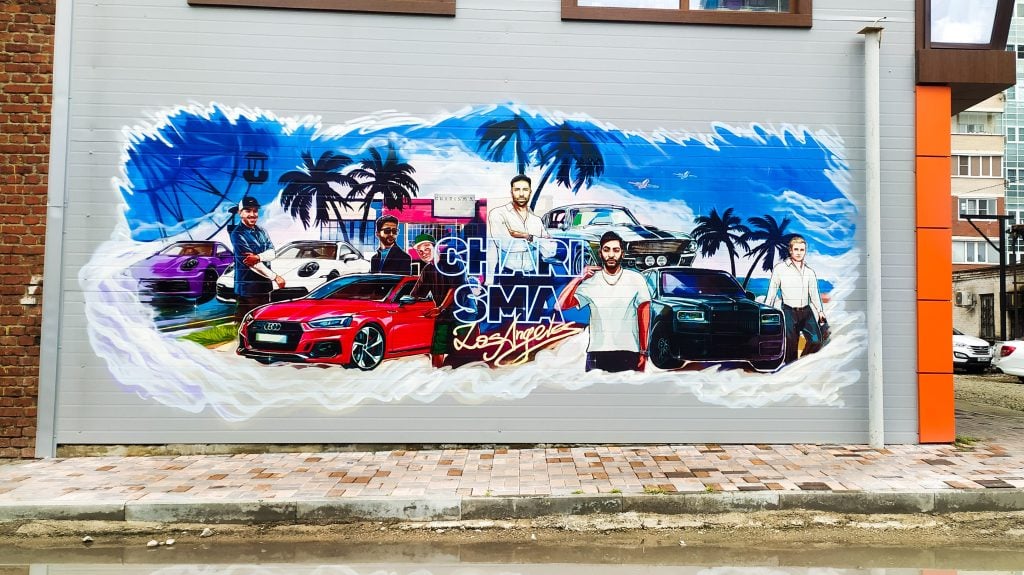
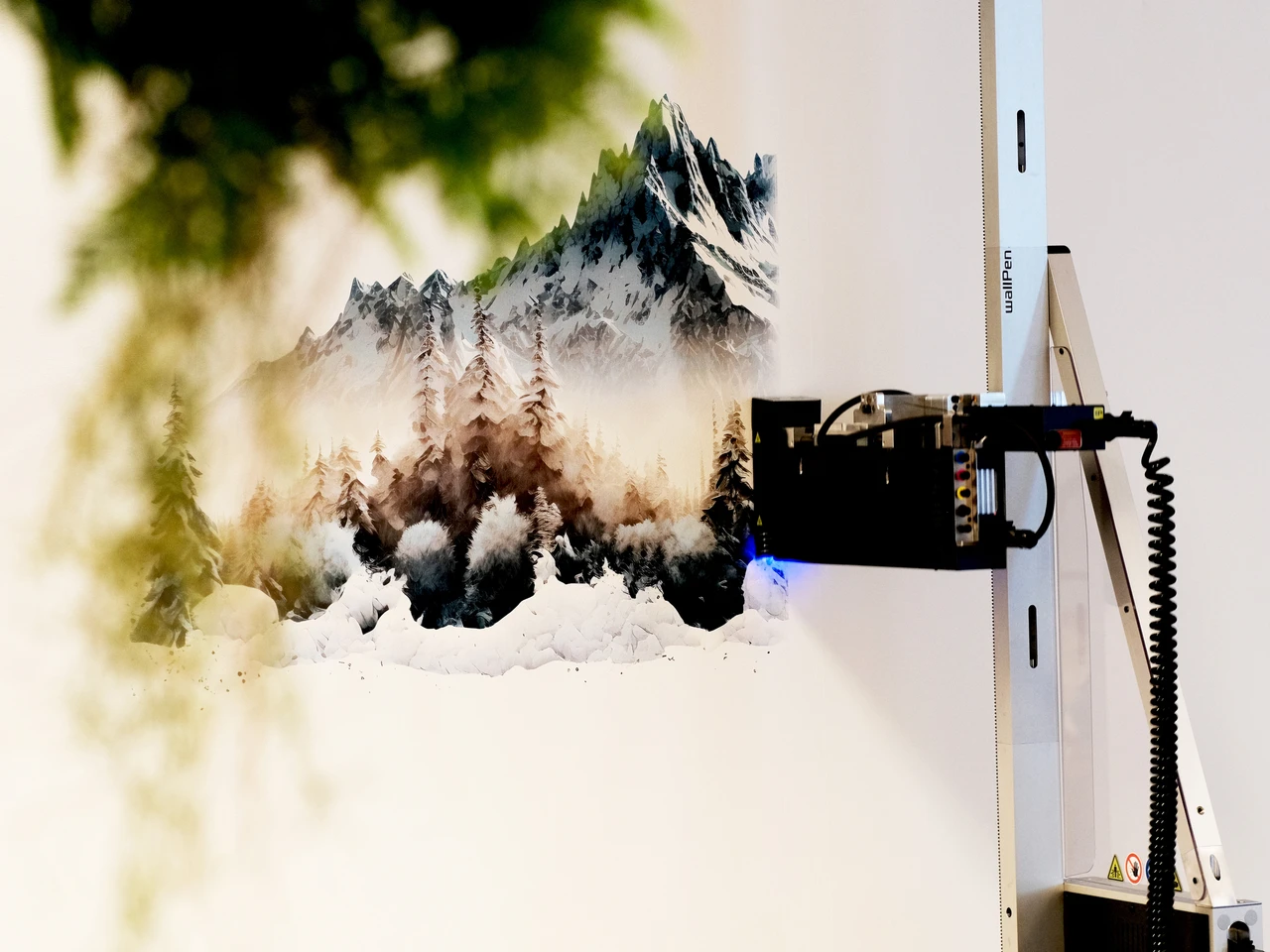
UV printing is generally the stronger starting direction when exterior work is part of the business because UV-cured output is more resistant to moisture and abrasion than basic water-based wall-printing workflows. wallPen, for example, specifically positions its UV system as water- and scratch-resistant and suitable for indoor and outdoor use. wallPen
But “UV” does not mean “permanent outdoors.”
Actual life still depends on:
The wall surface.
Weather exposure.
Sunlight.
Ink formulation.
Protective coating.
So outdoor sample testing remains important.
3. How Do Cost and Maintenance Change?
The cheaper machine is not automatically the cheaper business.
A water-based system may cost less and require a simpler ink system, but it can also limit the types of projects you can accept.
A UV machine usually adds more hardware and maintenance, but can open more applications.
Water-Based Systems Are Usually Simpler
A basic water-based setup does not normally need a UV curing system or the same type of white-ink circulation used on CMYK + White UV machines.
That can reduce:
Maintenance complexity.
Machine weight.
Ink-system complexity.
Operator learning requirements.
For a low-volume startup focused on simple indoor murals, those advantages can be meaningful.
UV Adds White-Ink Maintenance
White ink is useful—but it adds responsibility.
Dense white pigment can settle if it remains stationary.
A professional UV wall mural printer should therefore have an appropriate white-ink circulation or agitation system.
The operator also needs to pay more attention to:
White-ink stability.
Nozzle condition.
UV curing area.
Ink-system maintenance.
This is why you should not buy CMYK + White simply because five colors sound better than four.
Buy it because you expect to sell jobs that need it.
Compare Cost Per Accepted Job
Instead of asking:
“Which ink costs less per liter?”
ask:
“Which machine lets me deliver the jobs my customers actually request?”
Suppose a water-based printer saves money upfront but forces you to reject dark walls, glass and commercial feature surfaces.
Those lost projects are part of the equipment decision.
Likewise, buying an expensive UV system for a business that prints only children's bedrooms may create complexity without generating additional revenue.
A useful cost model is:
Business Cost = Equipment + Consumables + Maintenance + Labor + Jobs You Cannot Accept
That last factor is easy to overlook.
4. Which Wall Printer Should You Buy?
Start with the jobs, not the ink.
Choose Water-Based If
A water-based system deserves serious consideration if your business focuses mainly on indoor decorative murals on light, absorbent walls.
It is particularly attractive when simple operation and lower initial complexity matter more than maximum surface flexibility.
Choose UV If
UV becomes the stronger option when your business needs dark-wall printing, white ink, mixed surfaces, commercial projects or faster project handover.
It also provides more room to expand beyond ordinary painted drywall.
For a growing professional wall printer business, that flexibility can matter more over several years than the initial machine-price difference.
Ask These Questions Before Buying
Before choosing either system, ask yourself:
What surfaces will make up most of my paid jobs?
Will I regularly print dark walls or need white ink?
Are my projects mainly residential or commercial?
How important are fast curing and same-day handover?
Will the extra UV maintenance create enough additional revenue?
If you cannot answer those questions yet, do not choose from the brochure.
Test the Same Job on Both
The best comparison is a real one.
Ask suppliers to print the same artwork on the same type of wall you expect to encounter.
Compare:
Print quality.
Total print time.
Drying or curing.
Adhesion.
Color on the actual surface.
For UV, include at least one dark or non-porous sample.
For water-based printing, use the exact painted or plaster wall type common in your target market.
A real job test will tell you more than comparing two maximum-DPI numbers.
Conclusion
Should you buy a UV or water-based wall printer?
Choose water-based when your business is mainly built around simple indoor murals on light, absorbent walls and you value a lower-complexity workflow.
Choose UV when you need more surface flexibility, white ink, dark-wall capability, commercial applications or faster curing.
The biggest difference is not the ink price.
It is the type of jobs each machine allows you to accept.
A water-based printer can be a perfectly good business tool if your customers mainly want indoor residential decoration.
A UV system becomes more valuable as your business moves toward restaurants, hotels, offices, retail stores and mixed architectural surfaces.
That is why the best wall printing system is not necessarily the one with the highest DPI or the most ink channels.
It is the one that matches the job mix you can actually sell.
Before placing an order, send WallPrintBox your typical wall materials, expected customers, indoor or outdoor applications and whether you need dark-wall printing. The team can recommend a UV or water-based configuration and arrange sample prints on the surfaces you expect to work with before you make the purchase.