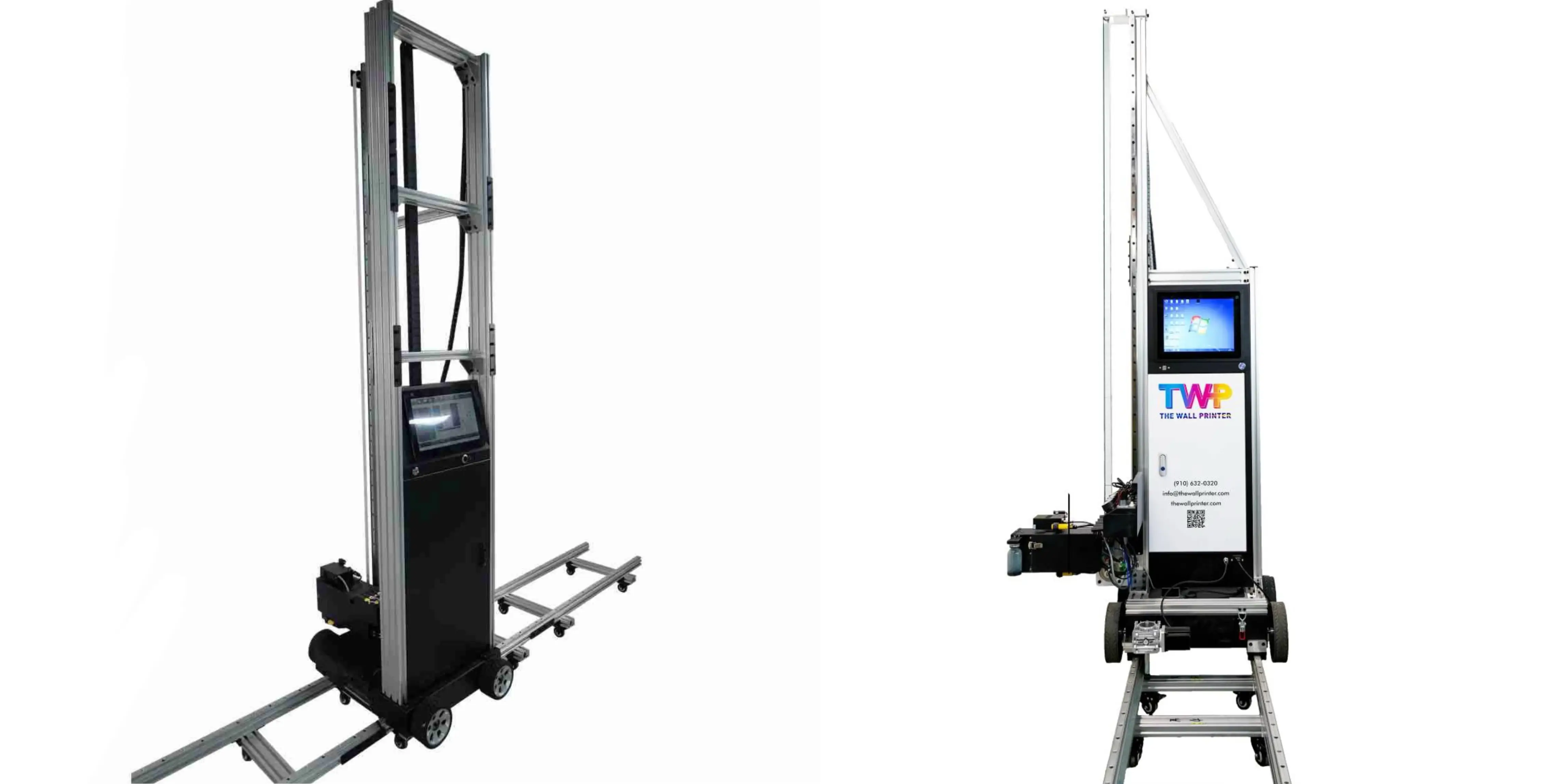
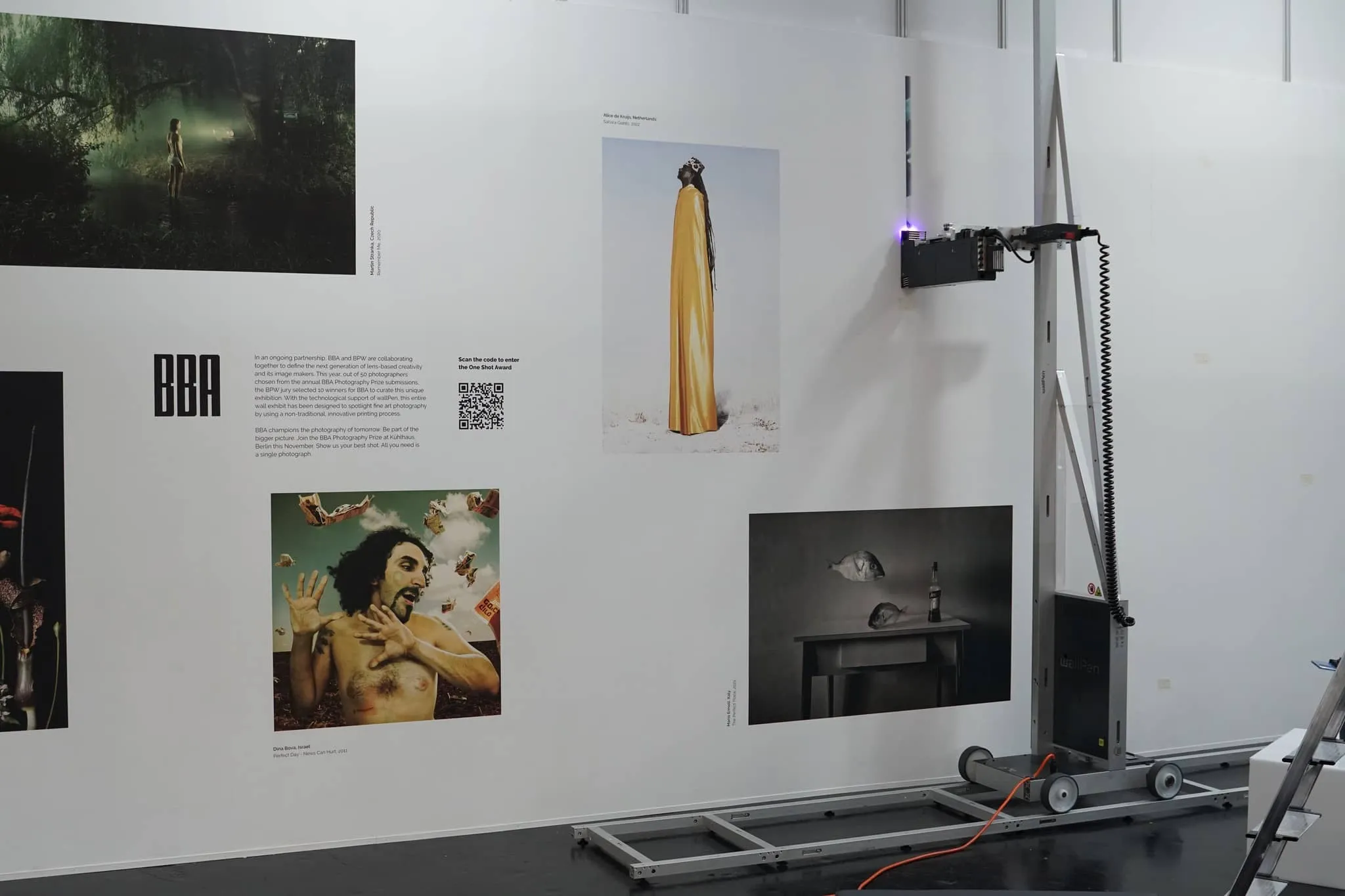
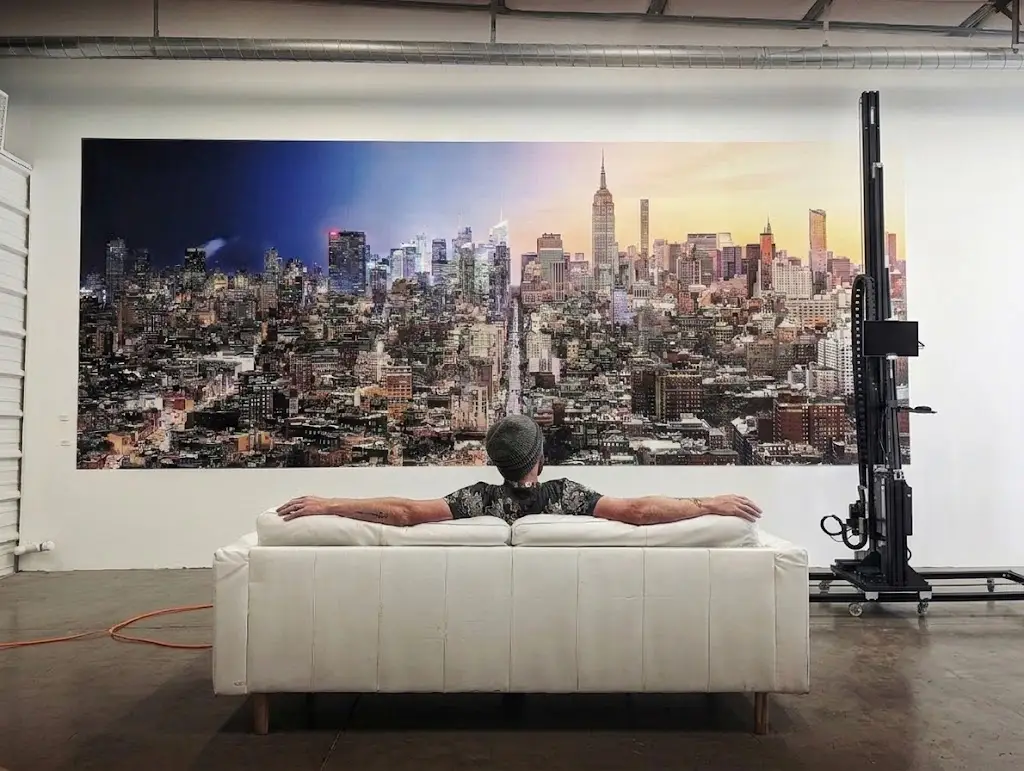
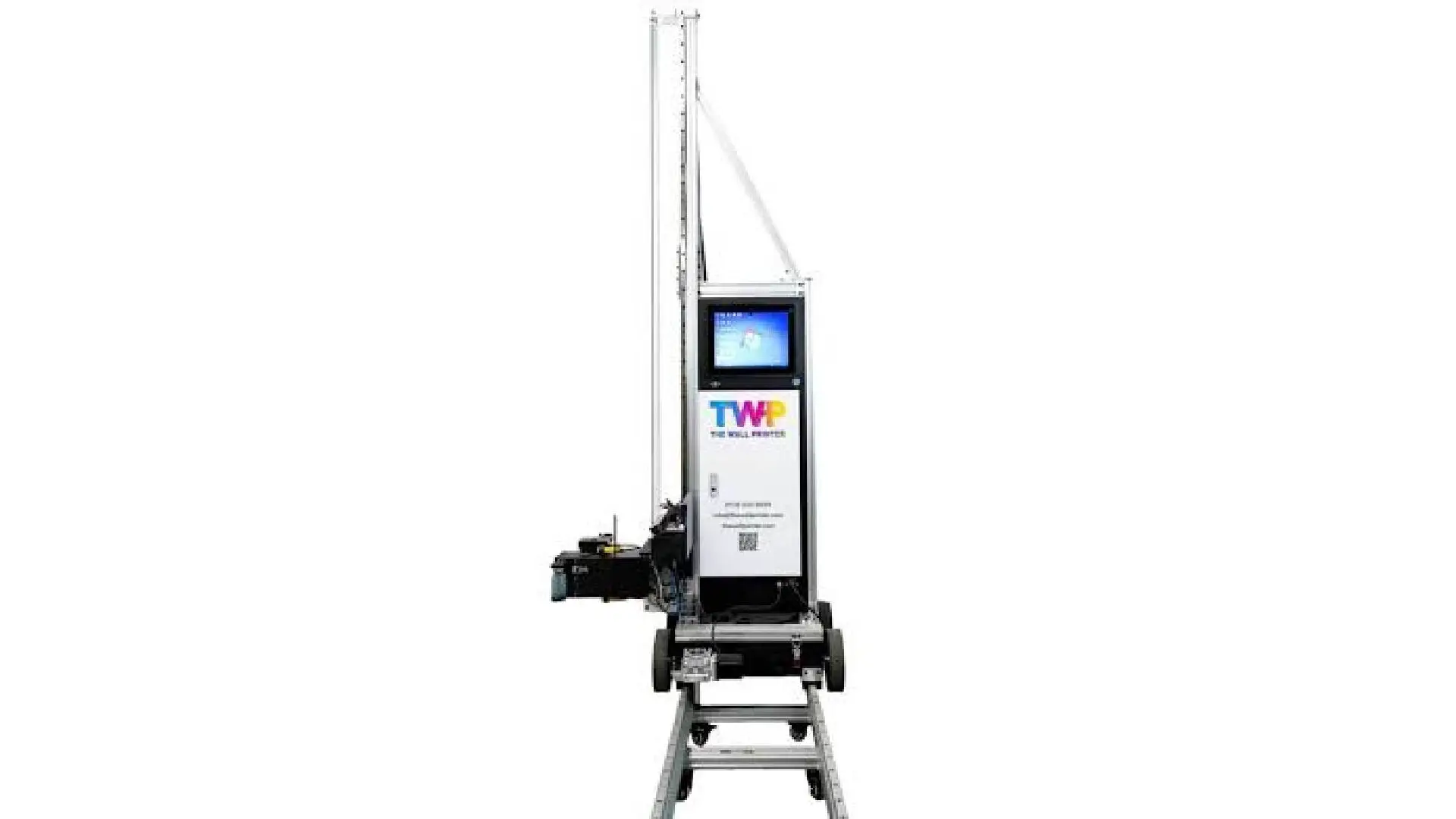
Indoor and outdoor wall printers may look similar, but the working conditions they face are very different.
An indoor machine usually operates on relatively smooth walls, stable floors, and climate-controlled job sites. An outdoor wall printer may need to handle brick, concrete, uneven surfaces, dust, sunlight, humidity, wind, and changing temperatures.
Choosing the wrong configuration can lead to poor adhesion, early fading, slower production, or expensive rework.
However, indoor and outdoor wall printers are not always completely separate machine categories. Many commercial UV wall printers can handle both applications when they are equipped with the right ink system, wall-distance sensing, mechanical structure, and environmental protection.
The real question is not simply whether a machine is labeled “indoor” or “outdoor.” It is whether its configuration matches the walls, conditions, and project volume your business will face.
Indoor vs Outdoor Wall Printer: Quick Comparison
Comparison Factor | Indoor Wall Printer | Outdoor Wall Printer |
|---|---|---|
Typical projects | Homes, offices, restaurants, hotels, retail spaces | Building façades, exterior murals, advertising walls |
Common surfaces | Painted drywall, plaster, smooth interior walls | Brick, concrete, stone, stucco, exterior coatings |
Recommended ink | Water-based or UV, depending on the application | Outdoor-grade UV ink |
White ink | Useful for dark interior walls and glass | Important for dark, colored, or mixed exterior surfaces |
Wall-distance control | Helpful on textured interiors | Essential on uneven masonry and façades |
Machine structure | Portability and fast setup matter most | Stability, dust protection, and surface adaptability matter most |
Main buying priority | Image detail, low odor, workflow efficiency | Adhesion, weather resistance, reliability, and safe operation |
Typical business model | More frequent, smaller projects | Fewer but larger and higher-value projects |
The distinction is clear: indoor printing prioritizes detail and workflow efficiency, while outdoor printing prioritizes durability and environmental adaptability.
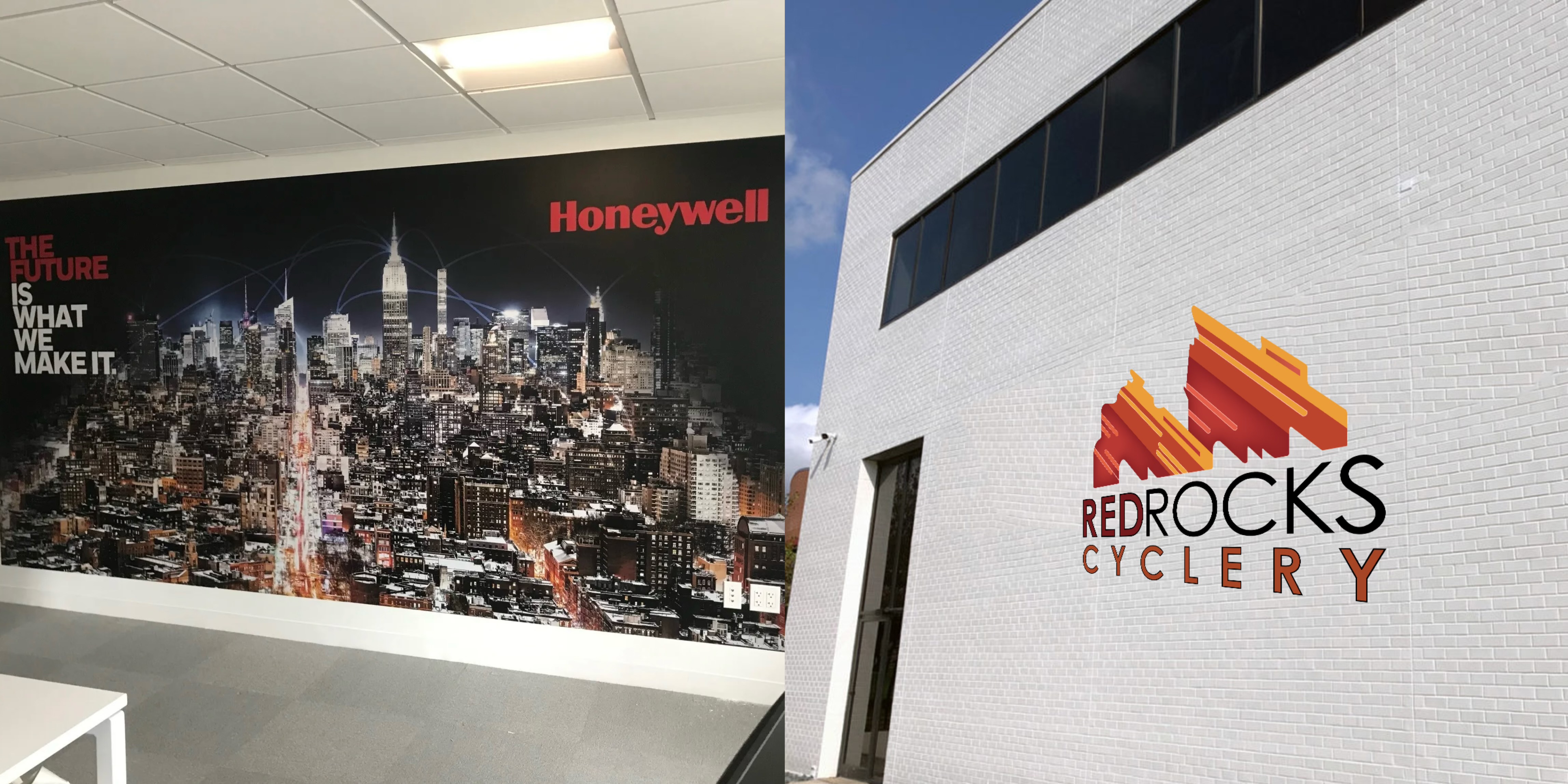
1. Compare the Ink System First
The ink system is usually the most important difference between indoor and outdoor wall printing.
Indoor Wall Printing
Indoor wall printers may use water-based or UV ink.
Water-based systems work well on smooth, absorbent walls such as painted drywall and plaster. They normally produce little odor and can be practical for bedrooms, living rooms, schools, and other occupied spaces.
Their limitation is surface compatibility. Water-based ink depends on the wall absorbing the ink, so it is less suitable for glass, metal, glossy tile, sealed concrete, and many outdoor materials.
UV wall printers provide more flexibility indoors. UV ink cures during printing and can be used on a wider range of prepared materials. A machine with CMYK + White ink can also print brighter colors on dark walls, glass, wood, tile, and other special surfaces.
Outdoor Wall Printing
For outdoor murals, UV-curable ink is usually the safer choice.
UV ink forms a cured layer on the material instead of relying entirely on absorption. It generally provides better resistance to moisture, sunlight, surface contact, and environmental changes than a basic water-based system.
But “UV ink” alone does not guarantee a durable outdoor mural.
The final result still depends on:
The ink formulation;
Wall preparation;
Surface porosity;
Sunlight and climate;
Image coverage;
Whether a primer or protective coating is required.
Ask the supplier to provide outdoor application examples and ink-manufacturer test information. The supplier should also explain which surfaces can be printed directly and which require an adhesion promoter or protective clear coat.
Avoid suppliers who claim their ink works permanently on every outdoor material without preparation.

2. Evaluate the Real Wall Surfaces
Indoor walls are often smoother and more predictable than exterior walls.
A typical residential or commercial interior may use painted drywall, plaster, wood panels, or smooth concrete. These surfaces usually require relatively simple cleaning and calibration.
Outdoor projects are more demanding. Brick joints, rough concrete, stucco, stone, cracks, and uneven coatings can cause the distance between the printhead and wall to change continuously.
This makes automatic wall-distance sensing especially important.
The sensing system should help the machine maintain a stable printhead gap while responding to small surface variations. If the wall moves outside the safe range, the machine should stop or alert the operator before a head collision occurs.
Do not accept “automatic sensing” as a specification without seeing it work.
Ask the supplier to print on visibly textured brick or concrete and demonstrate how the machine responds to uneven areas. A test on a smooth showroom board does not prove outdoor capability.
For exterior applications, you should also inspect the wall before accepting the project. Loose coatings, moisture, dust, salts, cracks, and unstable concrete can cause failure regardless of how advanced the printer is.
An outdoor mural will never be more durable than the wall underneath it.
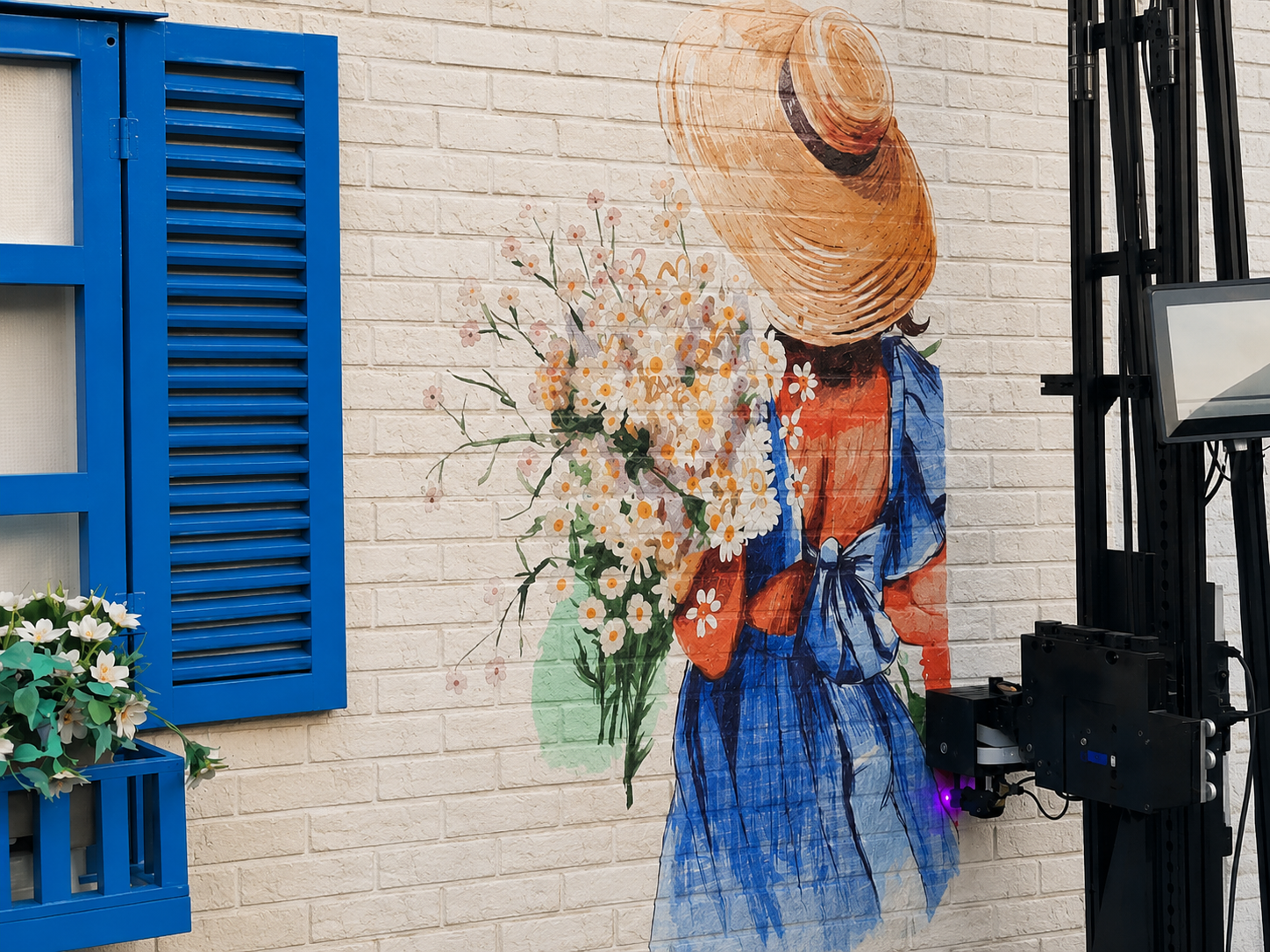
3. Compare Durability Under Real Conditions
Indoor murals generally experience limited rain, direct sunlight, and temperature change. Their main durability requirements are resistance to touching, cleaning, scratches, and normal indoor humidity.
Outdoor murals face constant exposure to sunlight, water, pollution, dust, and temperature changes. As the wall expands and contracts, the printed layer must remain attached without cracking or peeling.
This is why an outdoor wall printer machine should not be evaluated using indoor sample prints alone.
Before purchasing, ask for evidence from projects completed in climates similar to your market. A mural installed in a mild, shaded environment does not prove that the same ink will perform equally well in intense sun, heavy rain, freezing winters, or coastal conditions.
You can also request basic adhesion and resistance tests on your target material. These may include a tape-pull adhesion test, wet wiping, exposure to routine cleaning, and outdoor sample placement.
Exact lifespan promises should always be treated carefully.
A supplier who says a mural will last five or ten years should be able to explain the wall material, ink, climate, exposure level, and protective treatment behind that claim.
A conditional and well-documented durability estimate is more trustworthy than an impressive number with no test conditions.
4. Match Print Quality to Viewing Distance
Indoor murals are often viewed from a short distance. Fine text, faces, gradients, and small details may be inspected from only one or two meters away.
For this reason, indoor projects often benefit from higher-resolution print modes and more passes.
Outdoor murals are usually viewed from farther away. A building façade seen from across a street does not need the same level of microscopic detail as a bedroom mural viewed at arm’s length.
Using the highest DPI on every outdoor project can increase production time and ink use without creating a visible improvement for the customer.
The appropriate resolution depends on:
Viewing distance;
Image detail;
Wall texture;
Printhead configuration;
Required completion time.
For an indoor photograph or detailed illustration, a slower high-quality mode may be justified. For a large exterior graphic, a faster production mode may still look sharp at the intended viewing distance.
Ask the supplier to show the same image printed at different DPI and pass settings. View the samples from the distance your customer will actually use.
The best print mode is not the one with the highest number. It is the one that provides sufficient visible quality at a profitable production speed.
5. Compare Machine Structure and Portability
For indoor work, portability can have a major effect on profitability.
A wall printing machine may need to enter elevators, narrow corridors, apartments, restaurants, shops, and offices. A compact system that can be transported in a van and assembled by one or two operators may allow the business to complete more jobs each week.
Important indoor considerations include packed dimensions, component weight, assembly time, floor-space requirements, and whether the machine can operate close to furniture or corners.
Outdoor work places greater demands on the frame and motion system.
The machine may need to operate on rough ground, temporary platforms, scaffolding, or exterior surfaces exposed to wind and dust. The frame should remain stable during printing, while electrical and control components need reasonable protection from contamination and accidental moisture.
This does not mean an outdoor wall printer should be used in rain. Printing should normally stop during unsuitable weather.
Instead, outdoor readiness means the machine is designed to tolerate more demanding job-site conditions and can be protected during setup, operation, and transport.
A lightweight portable machine may be ideal for indoor residential work but require additional stabilizing measures outdoors. A heavier industrial frame may perform better on a large façade but be unnecessarily difficult to transport for small indoor jobs.
Choose the structure that fits your daily workflow—not the machine that simply looks strongest in a brochure.
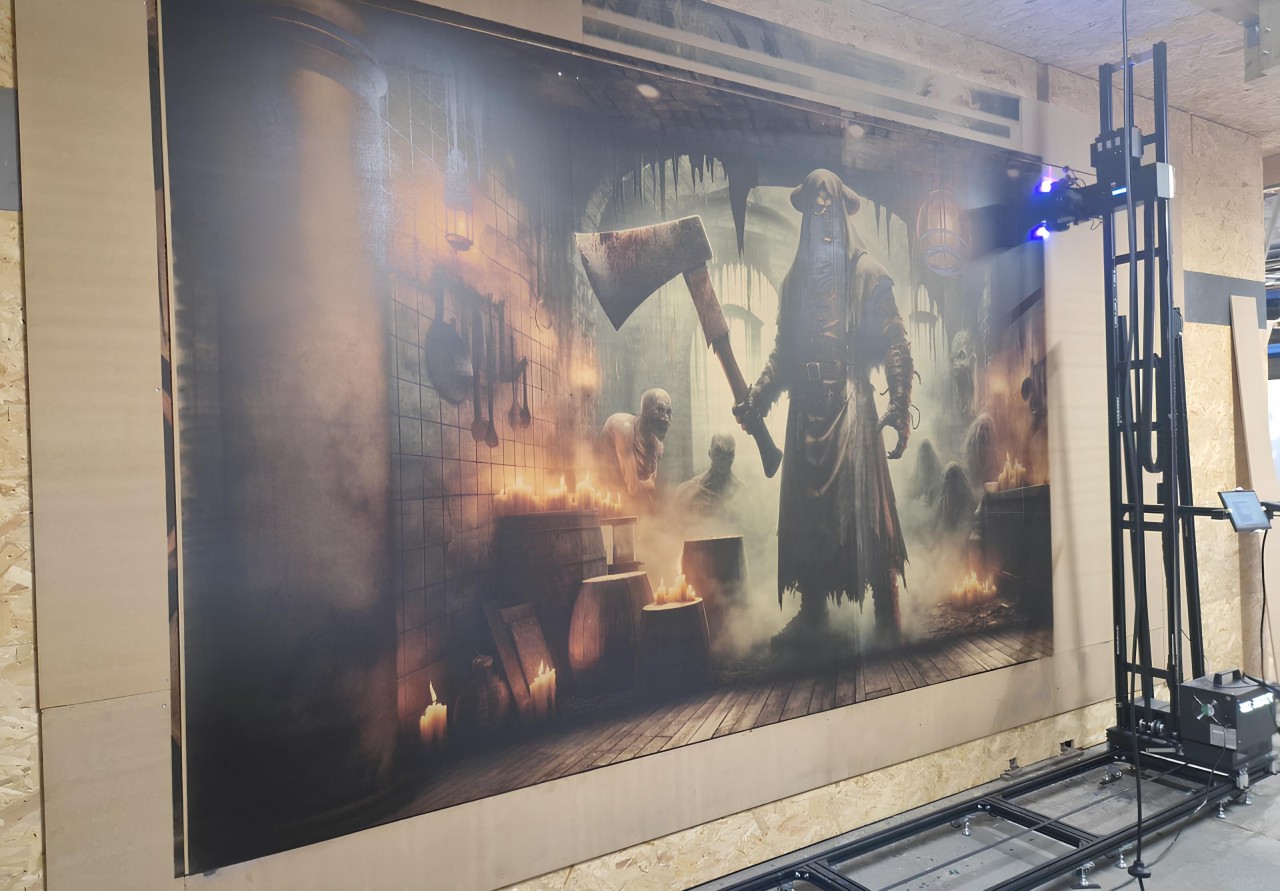
6. Compare Real Production Speed
Advertised print speed should never be accepted without knowing the test conditions.
A supplier may publish a high speed measured on a smooth wall, at low resolution, with a simple image and no white ink. Real customer work may involve higher resolution, more passes, surface calibration, white underprinting, and frequent repositioning.
Indoor projects often require more detail but less wall preparation. Outdoor projects may use lower visible resolution but require more setup, leveling, surface inspection, and weather planning.
For a fair comparison, ask the supplier to show:
Total printed area;
Wall material;
DPI and pass count;
Color-only or color-plus-white mode;
Setup and calibration time;
Complete project time.
The most useful productivity measure is not only square meters per printing hour.
It is the total time from arrival at the job site to a completed, customer-ready mural.
A fast printer that takes two hours to level and calibrate may be less productive than a slightly slower wall printer machine with a faster setup process.
7. Compare Operating Cost and Business Potential
Indoor wall art printing often follows a higher-frequency business model. Residential murals, café walls, office decoration, and retail features may be smaller but easier to schedule regularly.
Outdoor projects are often larger and more valuable, but they may require longer sales cycles, additional permits, access equipment, wall preparation, and weather coordination.
When comparing costs, do not focus only on ink price.
Include:
Machine investment;
Shipping and import costs;
Ink and white ink;
Primer and protective coating;
Labor and setup;
Transportation;
Access equipment;
Maintenance and spare parts;
Rework risk.
A water-based indoor printer may have lower equipment and ink costs, but it also offers a narrower service range.
A UV wall printer may cost more, but a machine capable of both indoor and outdoor work can create revenue from a broader range of projects.
For businesses that expect a mixed project pipeline, buying separate indoor and outdoor machines may not be necessary. A properly configured commercial UV wall printer may handle both, provided its structure, sensors, inks, and support are suitable.
The better investment is the machine that matches your actual order pipeline and can remain productively utilized—not necessarily the one with the lowest purchase price.
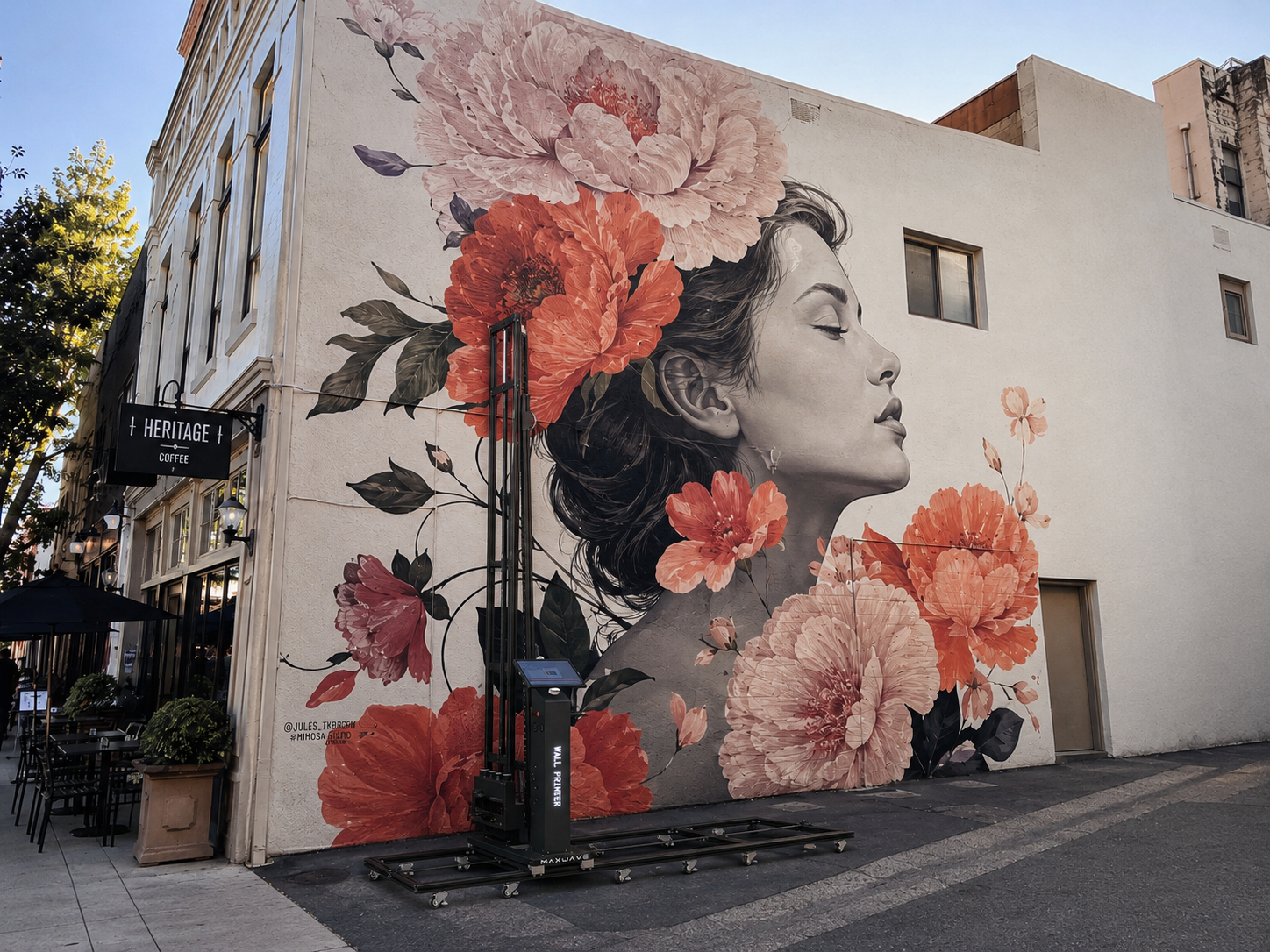
8. Compare Maintenance and Supplier Support
Outdoor work exposes the machine to more dust, temperature changes, and transportation vibration, so inspection and cleaning may need to be more frequent.
Indoor machines still require nozzle checks, printhead cleaning, rail maintenance, ink circulation, and correct shutdown procedures.
UV wall printers with white ink require particular attention because white pigment can settle in the ink lines if circulation and agitation are neglected.
Before purchasing, ask the supplier to demonstrate the complete maintenance routine for both indoor and outdoor use.
Confirm the warranty, printhead coverage, spare-parts prices, technical response process, and whether important components are stocked locally or shipped internationally.
For outdoor operations, ask how dust, humidity, and transportation affect the recommended maintenance schedule.
A machine is only commercially reliable when the supplier can help you keep it running under the conditions in which you actually work.
Which Wall Printer Should You Choose?
Choose an indoor-focused wall printer when nearly all your projects involve homes, offices, cafés, schools, and other controlled interior spaces.
A water-based machine may be sufficient for smooth, light-colored walls. A UV wall printer may still be preferable if indoor customers frequently request dark walls, glass, wood, tile, or more durable commercial finishes.
Choose an outdoor-capable UV wall printer when your business targets façades, exterior advertising walls, concrete, brick, stone, or projects exposed to sunlight and moisture.
The machine should include reliable wall-distance sensing, a stable frame, suitable UV ink, and a workflow that accounts for more demanding site conditions.
Choose a mixed-use commercial UV system when you expect to serve both indoor and outdoor customers. This can reduce the need to purchase two separate machines, but the configuration must be verified on both types of surfaces.
What Should You Test Before Buying?
Before ordering, provide the supplier with one indoor material and one outdoor material commonly used in your market.
Ask them to print the same test image on both.
The image should include photographs, gradients, small text, solid-color areas, and sections that require white ink. Request an unedited video showing setup, wall sensing, print settings, total time, close-up results, and adhesion testing.
Also verify the effective print height, assembly time, transport dimensions, offline software operation, power-loss recovery, included training, warranty terms, and spare-parts availability.
A real indoor-and-outdoor sample test will reveal more than a label printed on the side of the machine.
Conclusion
The choice between an indoor and outdoor wall printer depends on more than where the machine will be used.
Indoor projects generally prioritize fine detail, low odor, portability, fast setup, and efficient operation in controlled spaces.
Outdoor projects require stronger surface adaptability, UV-resistant ink, reliable wall-distance sensing, stable mechanics, and a process designed around weather and uneven masonry.
For businesses serving only standard interior walls, an indoor-focused system may be the most economical choice.
For operators targeting commercial spaces, varied materials, exterior murals, or future business expansion, a properly configured UV wall printer capable of both indoor and outdoor work usually provides greater long-term flexibility.
Before purchasing, compare machines using your real wall materials, expected project sizes, local climate, and monthly workload.
Not sure which configuration fits your projects? Send us your indoor and outdoor wall materials, typical mural dimensions, project location, and expected monthly volume. We can recommend a suitable wall printer setup, arrange sample printing, and provide a complete delivered quotation based on your actual applications.